AIP awards 2026 Johann Wempe Prize to Dr Sebastian Kamann
Dr. Sebastian Kamann receives the 2026 Johann Wempe Prize for his groundbreaking research.
Credit: AIP, Stefan GloedeOn Wednesday, 11 February 2026, the Leibniz Institute for Astrophysics Potsdam (AIP) awarded the Johann Wempe Prize to Dr Sebastian Kamann from Liverpool John Moores University for his outstanding research on the formation and evolution of massive globular clusters.
As part of his work, he succeeded in discovering inactive black holes in star clusters in our galactic neighborhood and developed a software called PampelMUSE for extracting spectra from data cubes of dense stellar fields.
Sebastian Kamann started his research in astronomy after obtaining his degree in physics from the University of Potsdam. He did his doctorate at the AIP, where he was part of the research group on Galaxies and Quasars. He developed the PampelMUSE software, which made it possible for the first time to extract stellar spectra from dense stellar fields. Using the MUSE spectrograph at the Very Large Telescope (VLT) in Chile, several thousand stellar spectra can be measured per observation field. The software is used successfully worldwide and is continuously being further developed.
By measuring over 500,000 individual spectra in 25 globular clusters, Sebastian Kamann was able to characterise the kinematics of the stars in detail. He discovered that most star clusters rotate. In addition, his method contributed to the discovery of three inactive stellar black holes and to the identification of intermediate-mass black holes in star clusters. The observation of globular clusters with the MUSE spectrograph has yielded a wealth of further scientific discoveries: findings on the distinguishability of different populations of stars in globular clusters in the Milky Way, surprising measurements of the frequencies of binary stars and their periods, the influence of stellar rotation on the Hertzsprung-Russell diagram, and the complex kinematics inside globular clusters.
Sebastian Kamann's research provides new insights into stellar evolution, the stellar populations of the Milky Way and our cosmic neighborhood, and the complex internal kinematics of globular clusters. His work contributes to a better understanding of the formation and evolution of these clusters. I
In honour of Prof. Dr. Johann Wempe (1906 – 1980), the last director of the former Astrophysical Observatory of Potsdam (AOP), the AIP grants the Johann Wempe Award, first awarded in 2001, to outstanding scientists.
Further information
Dr. Sebastian Kamann receives the 2026 Johann Wempe Prize for his groundbreaking research.
Credit: AIP, Stefan GloedeOn Wednesday, 11 February 2026, the Leibniz Institute for Astrophysics Potsdam (AIP) awarded the Johann Wempe Prize to Dr Sebastian Kamann from Liverpool John Moores University for his outstanding research on the formation and evolution of massive globular clusters.
As part of his work, he succeeded in discovering inactive black holes in star clusters in our galactic neighborhood and developed a software called PampelMUSE for extracting spectra from data cubes of dense stellar fields.
Sebastian Kamann started his research in astronomy after obtaining his degree in physics from the University of Potsdam. He did his doctorate at the AIP, where he was part of the research group on Galaxies and Quasars. He developed the PampelMUSE software, which made it possible for the first time to extract stellar spectra from dense stellar fields. Using the MUSE spectrograph at the Very Large Telescope (VLT) in Chile, several thousand stellar spectra can be measured per observation field. The software is used successfully worldwide and is continuously being further developed.
By measuring over 500,000 individual spectra in 25 globular clusters, Sebastian Kamann was able to characterise the kinematics of the stars in detail. He discovered that most star clusters rotate. In addition, his method contributed to the discovery of three inactive stellar black holes and to the identification of intermediate-mass black holes in star clusters. The observation of globular clusters with the MUSE spectrograph has yielded a wealth of further scientific discoveries: findings on the distinguishability of different populations of stars in globular clusters in the Milky Way, surprising measurements of the frequencies of binary stars and their periods, the influence of stellar rotation on the Hertzsprung-Russell diagram, and the complex kinematics inside globular clusters.
Sebastian Kamann's research provides new insights into stellar evolution, the stellar populations of the Milky Way and our cosmic neighborhood, and the complex internal kinematics of globular clusters. His work contributes to a better understanding of the formation and evolution of these clusters. I
In honour of Prof. Dr. Johann Wempe (1906 – 1980), the last director of the former Astrophysical Observatory of Potsdam (AOP), the AIP grants the Johann Wempe Award, first awarded in 2001, to outstanding scientists.
Further information
Images
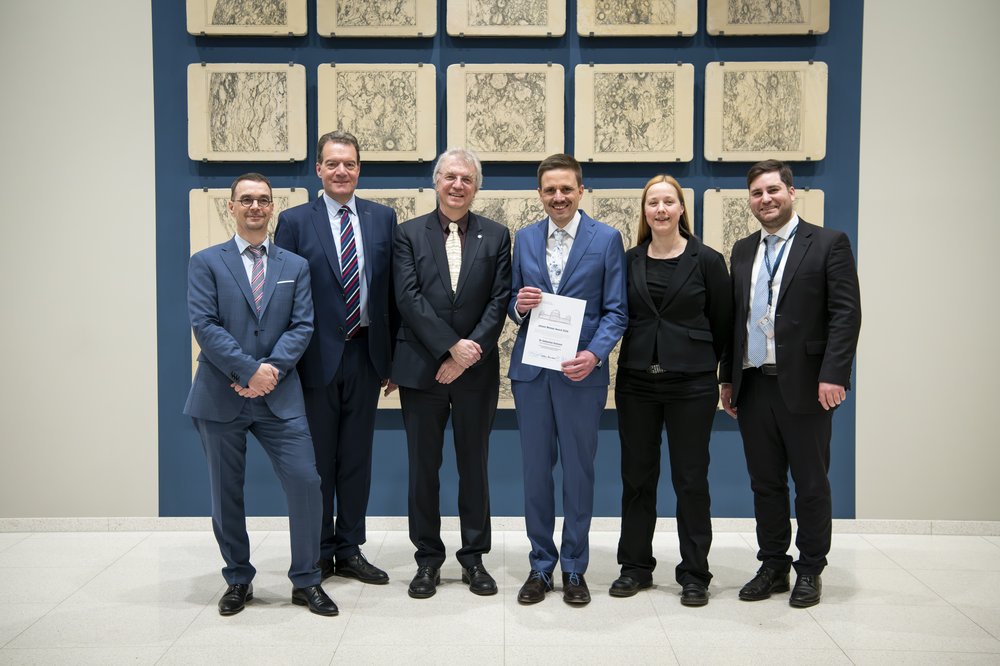
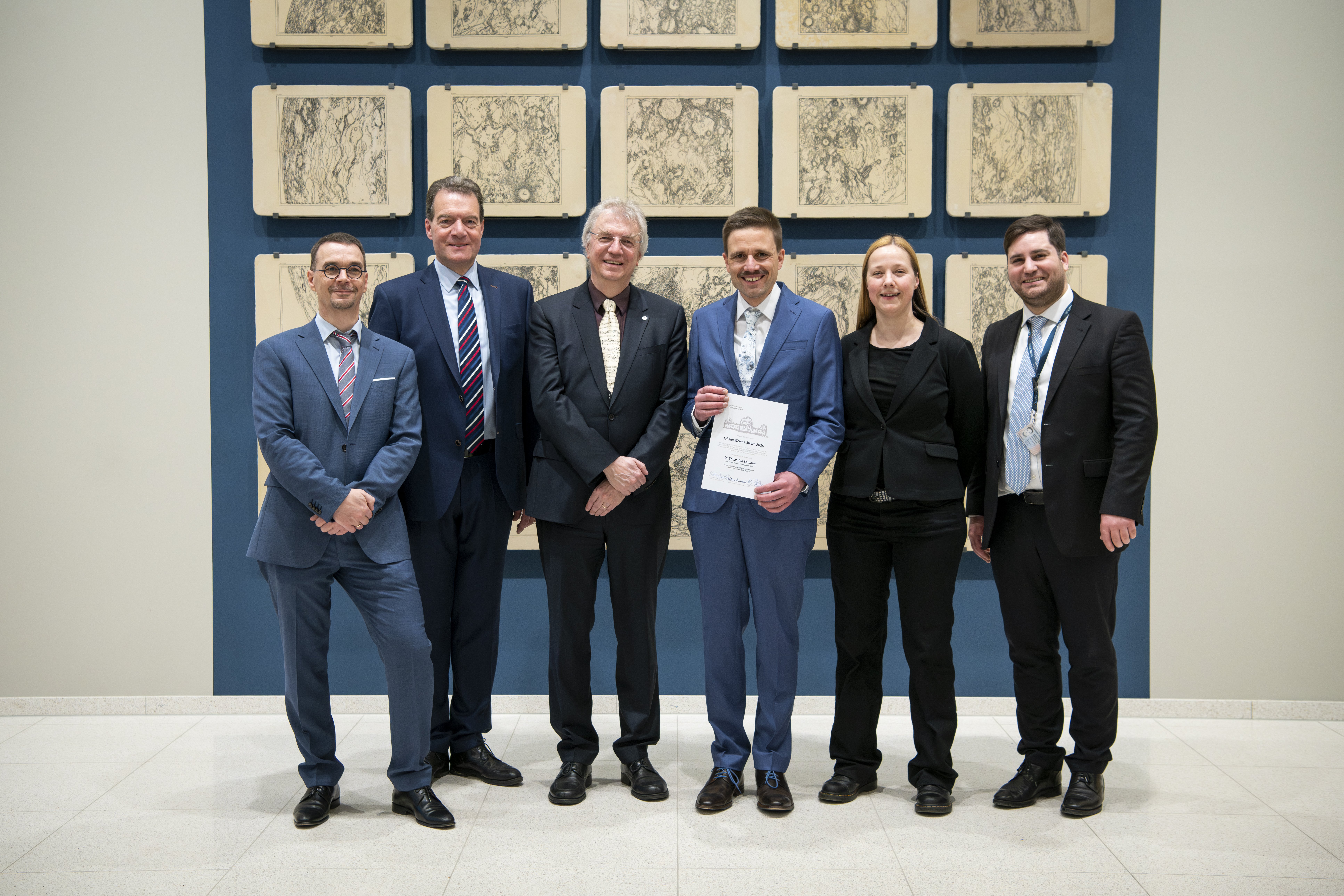
Dr. Sebastian Kamann receives the 2026 Johann Wempe Prize for his groundbreaking research.
Big screen size [1000 x 666, 110 KB]
Original size [7733 x 5155, 4.6 MB]

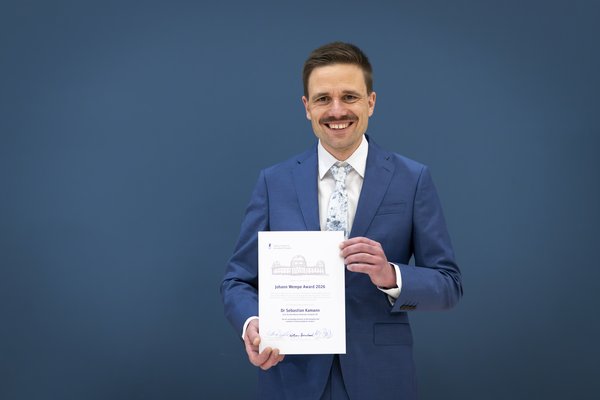
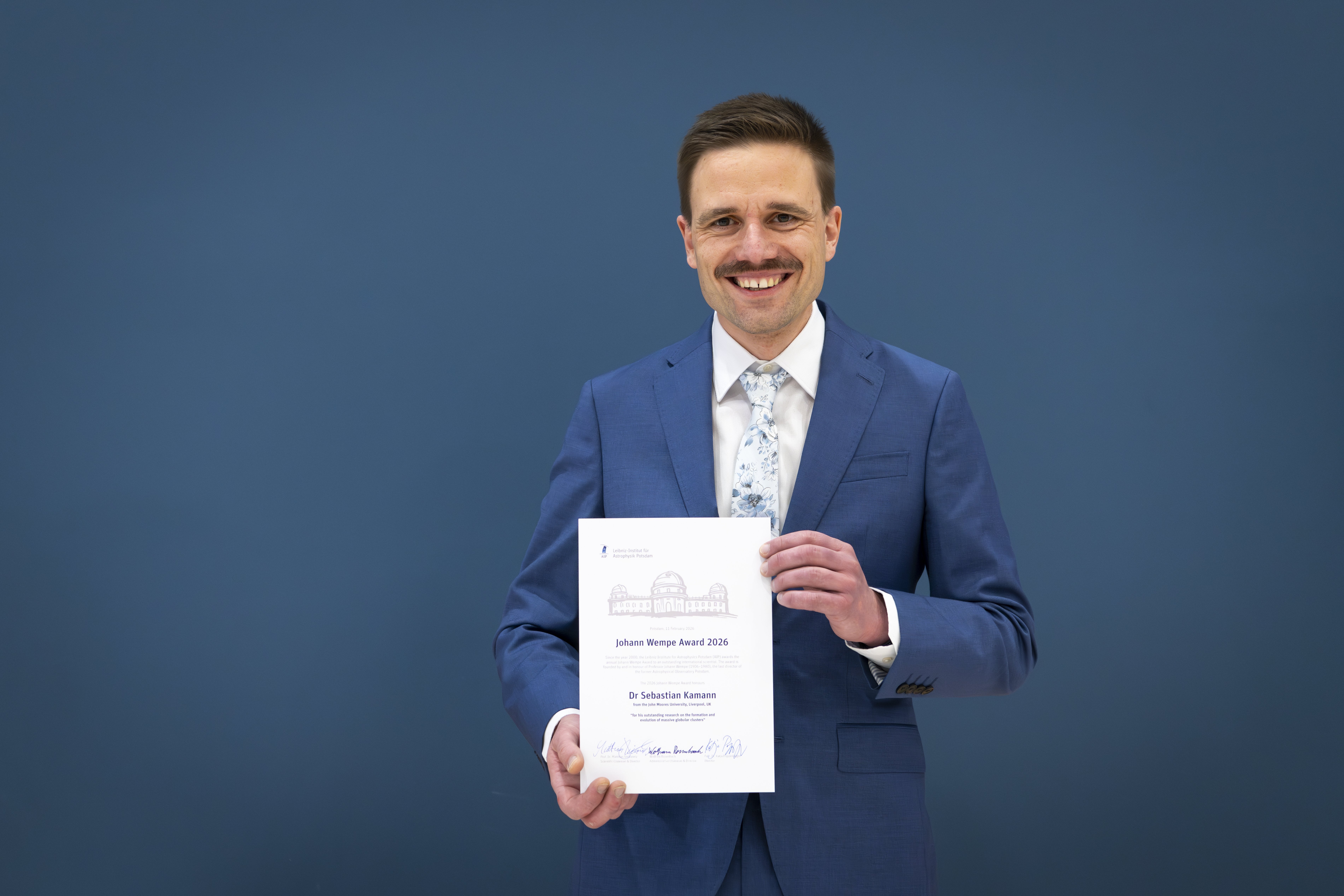
Dr Sebastian Kamann with the certificate for the Johann Wempe Award 2026
Big screen size [1000 x 666, 30 KB]
Original size [7606 x 5071, 4.4 MB]
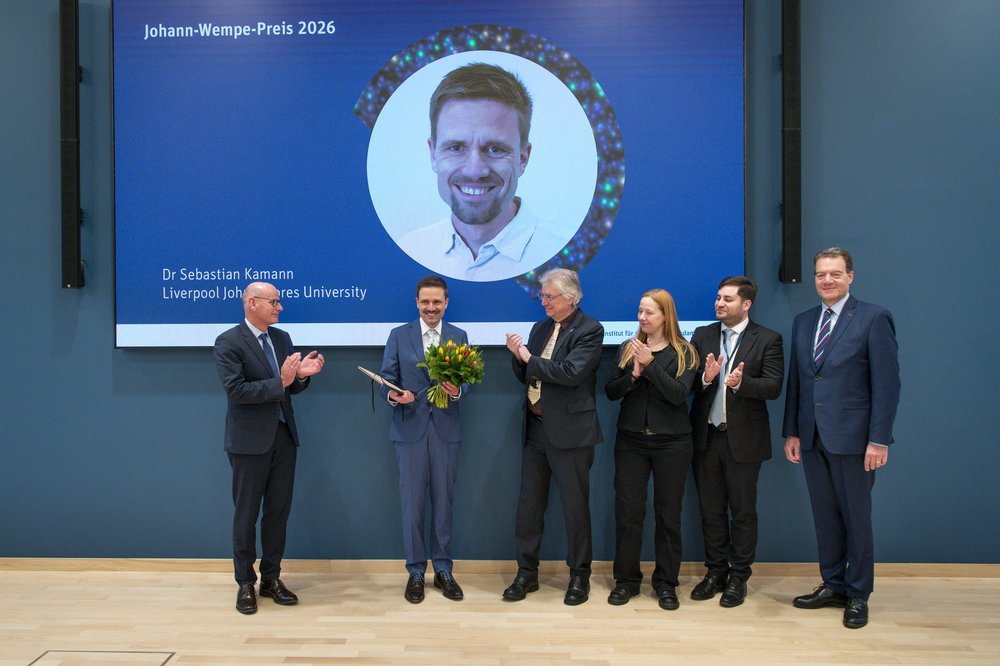
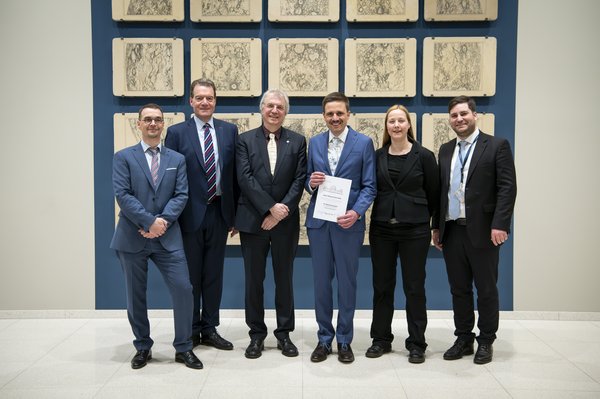
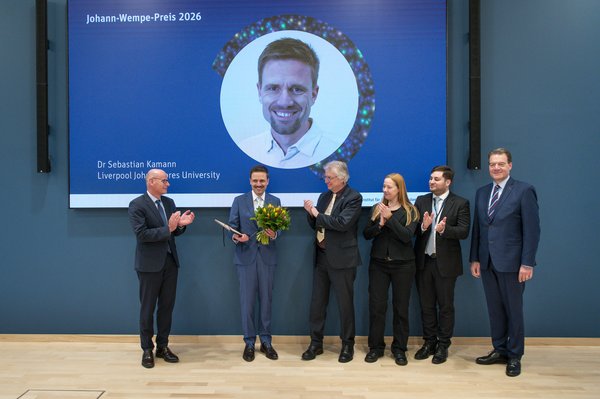
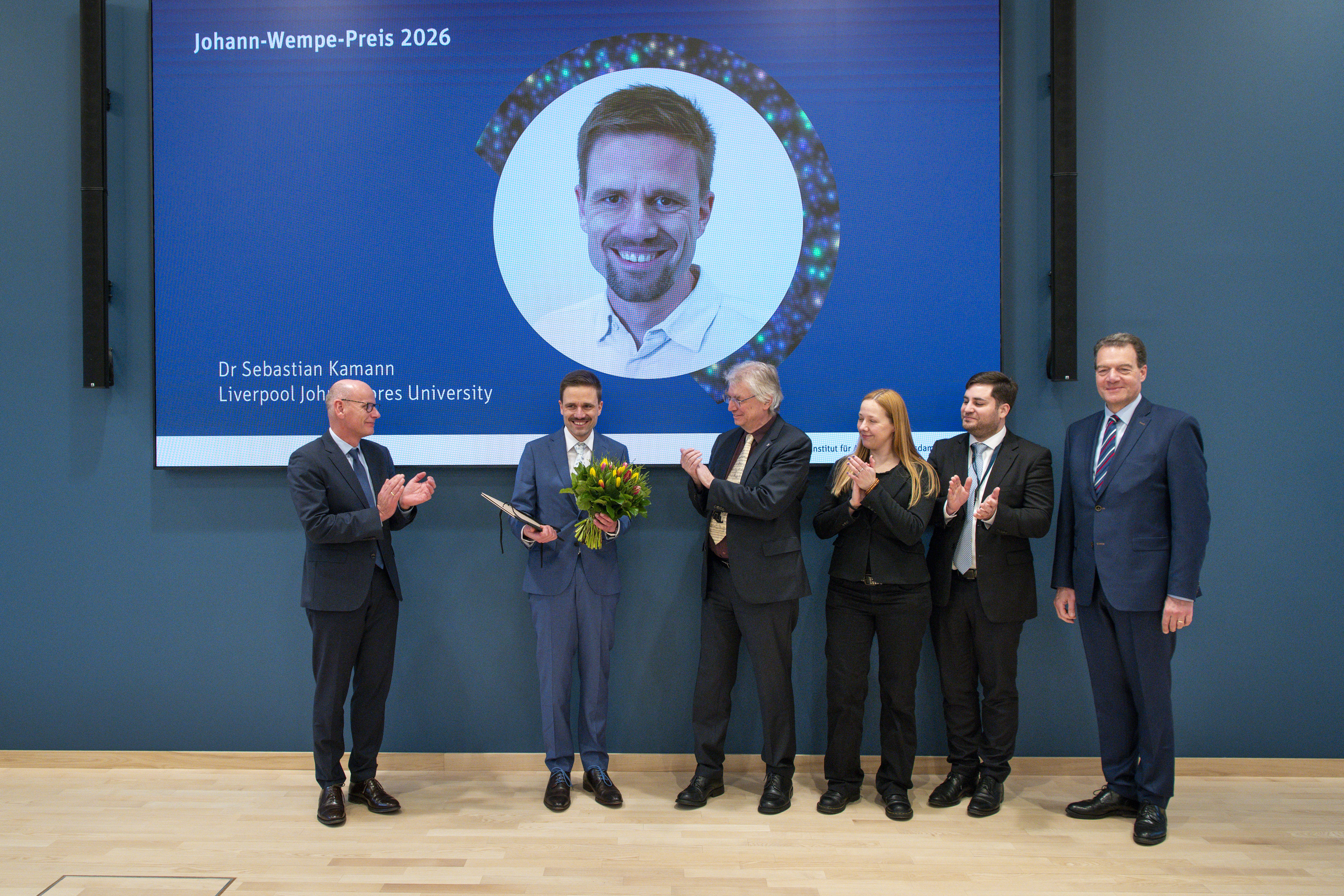
Everyone congratulates the new award winner.
Big screen size [1000 x 666, 90 KB]
Original size [7250 x 4833, 8.8 MB]