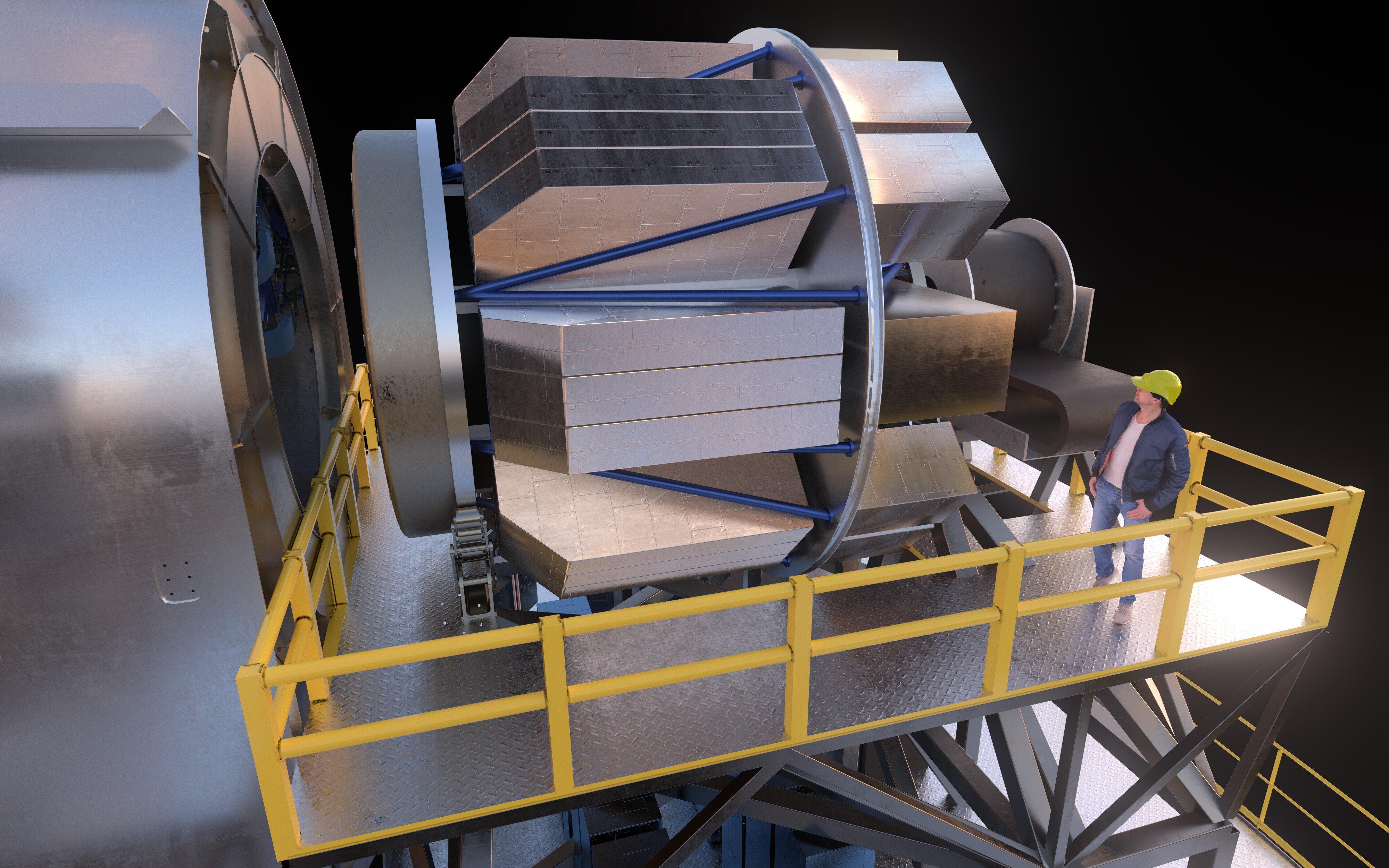
ESO signs agreement for MOSAIC instrument on the ELT
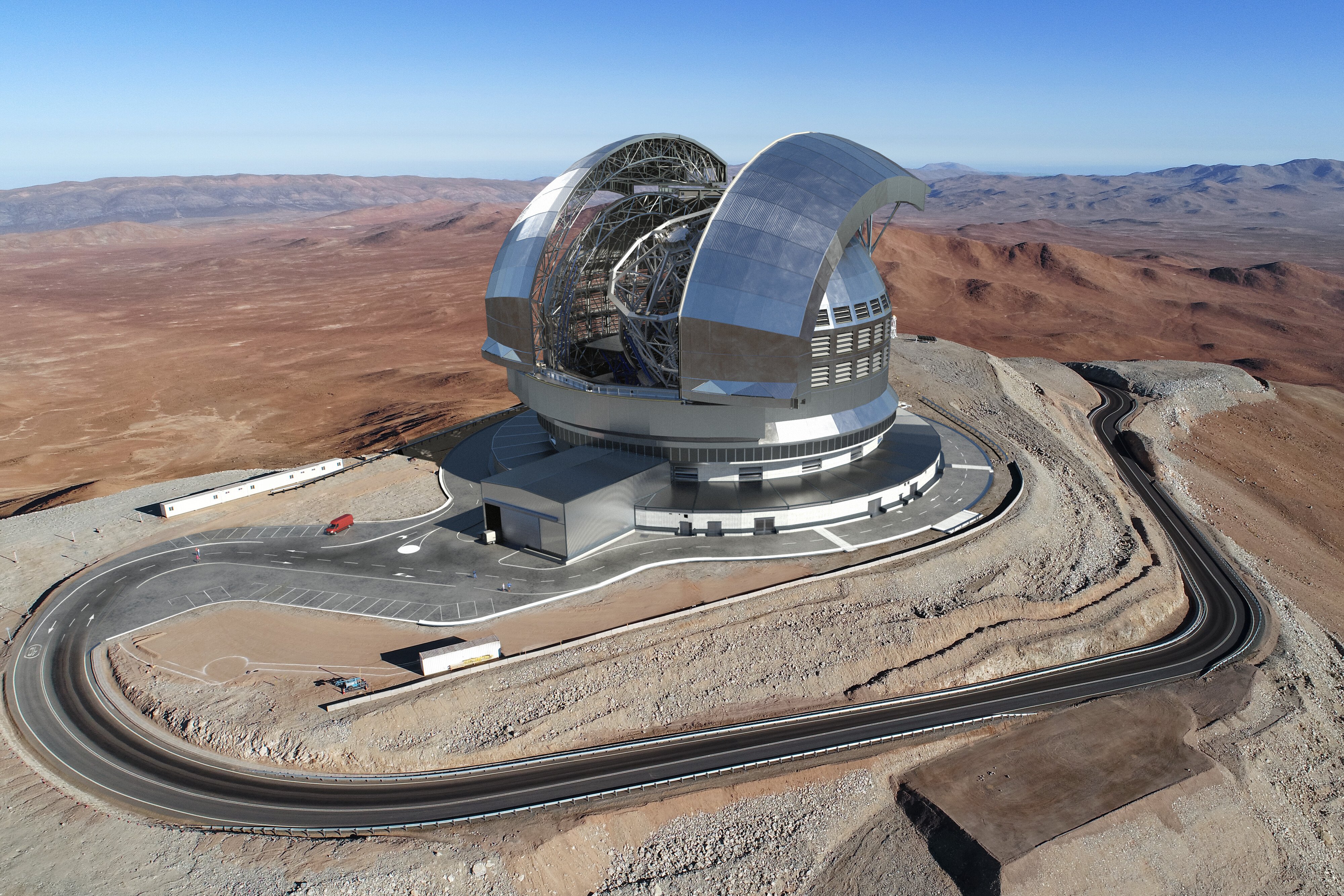
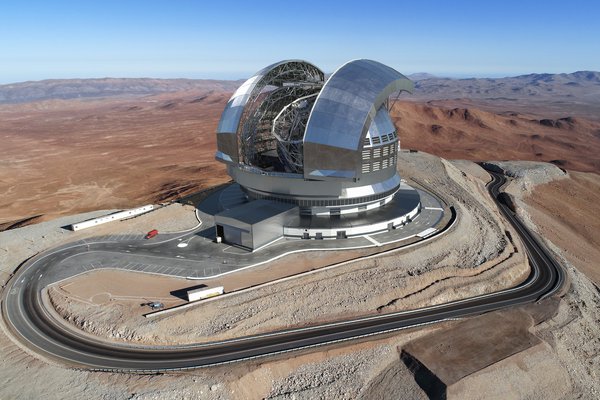
Artist’s impression of the Extremely Large Telescope.
Credit: ESOToday, the European Southern Observatory ESO has signed an agreement with a large international consortium for the design and construction of the Multi-Object Spectrograph (MOSAIC), an instrument for the Extremely Large Telescope (ELT). On what will be the world's largest optical telescope, MOSAIC will simultaneaously measure the light from hundreds of astronomical sources and by that trace the growth of galaxies and the distribution of matter from the Big Bang to the present day. As a consortium member, the Leibniz Institute for Astrophysics Potsdam (AIP) is responsible for part of the technical development of MOSAIC, as well as for preparing its scientific use.
"We are delighted that AIP, with its many years of expertise in multi-object spectroscopy, will be contributing to key work packages of MOSAIC. Our task is to develop and build the complex optical fibre system that will guide the starlight from the telescope to the spectrographs," says Dr Andreas Kelz, head of the 3D and Multi-Object Spectroscopy department at the AIP.
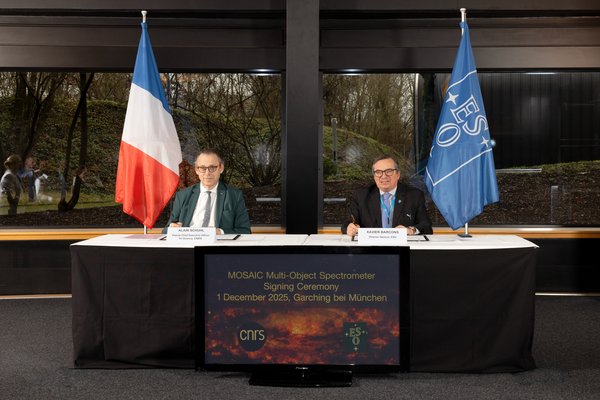
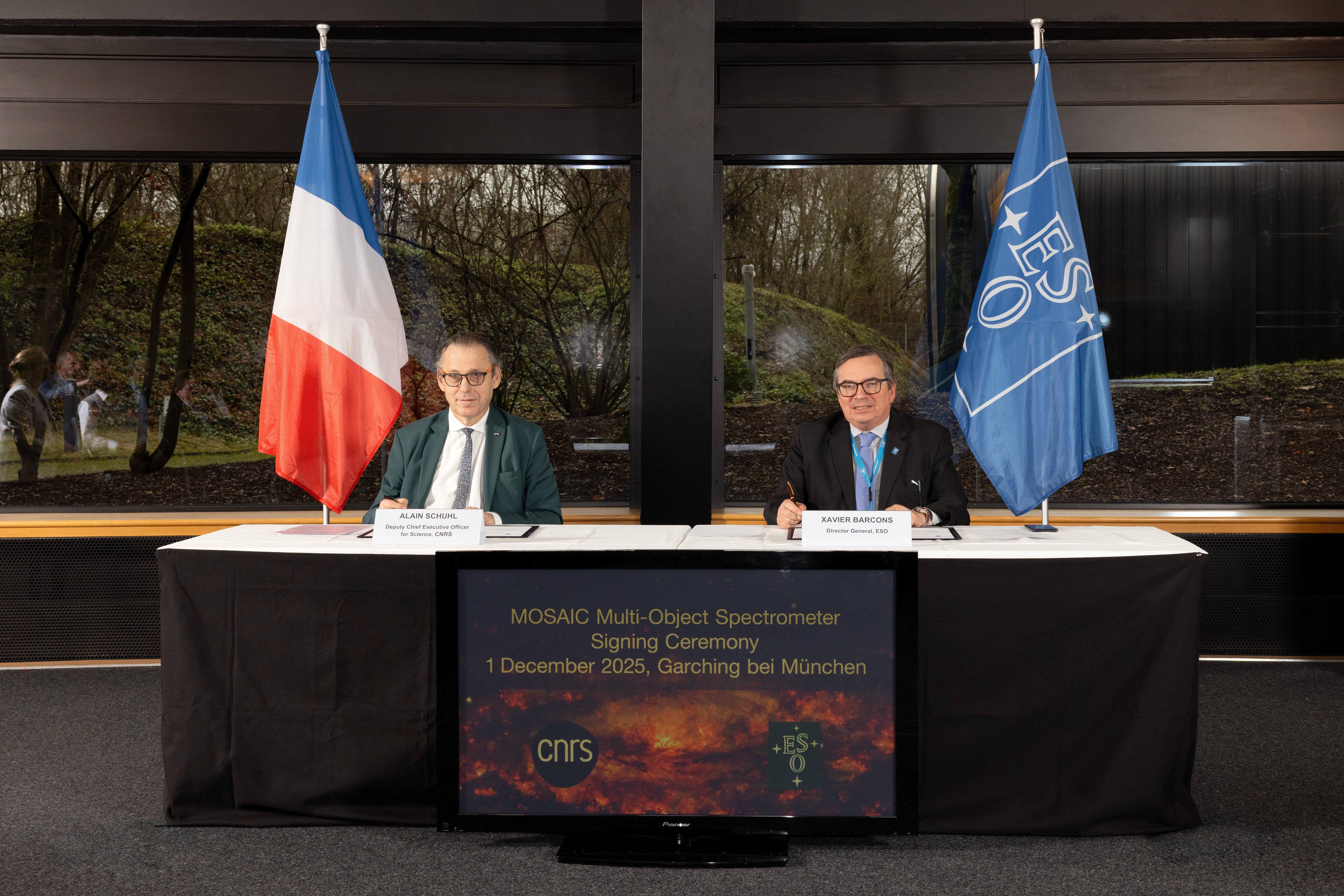
The agreement was signed by ESO’s Director General Xavier Barcons and Alain Schuhl, the Deputy CEO for Science at the French National Centre for Scientific Research (CNRS), the institution leading the MOSAIC consortium. Also in attendance were Alexandre Vulic [TBC], the Consul General of France in Munich, and the MOSAIC Principal Investigator Roser Pello from Marseille Astrophysics Laboratory and Co-Principal Investigator Mathieu Puech from the Paris Observatory, in addition to other dignitaries from ESO, CNRS and the MOSAIC consortium. The signing took place at the ESO Headquarters in Garching, Germany.
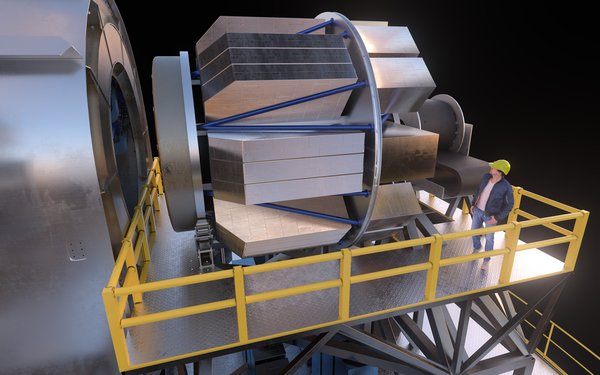
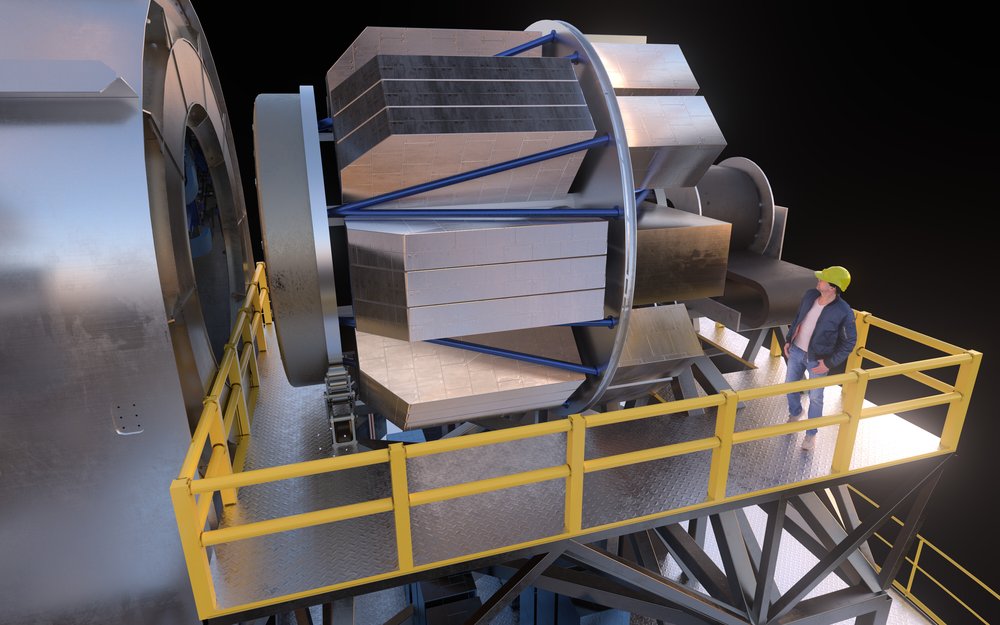
MOSAIC is a powerful spectrograph: an instrument that splits light into its component wavelengths, so astronomers can determine important properties of astronomical objects, such as their chemical composition or temperature. The instrument will use the widest possible field of view provided by the ELT, operating in both visible and near-infrared light, and will be able to analyse the light for more than two hundred objects simultaneously.
"MOSAIC will conduct the first exhaustive inventory of matter in the early Universe, lifting the veil on how matter is distributed within and between galaxies and greatly advancing our understanding of how present-day galaxies formed and evolved.", explains Dr Davor Krajnović, the AIP representative on the MOSAIC science team and a coordinator of the consortium science working group “Inventory of matter”. “It is a versatile instrument allowing studies of the first galaxies and the intergalactic medium, star formation and chemical enrichment histories, mass assembly of galaxies, dark matter, transient phenomena and discovering electromagnetic counterparts of multi-messenger events”.
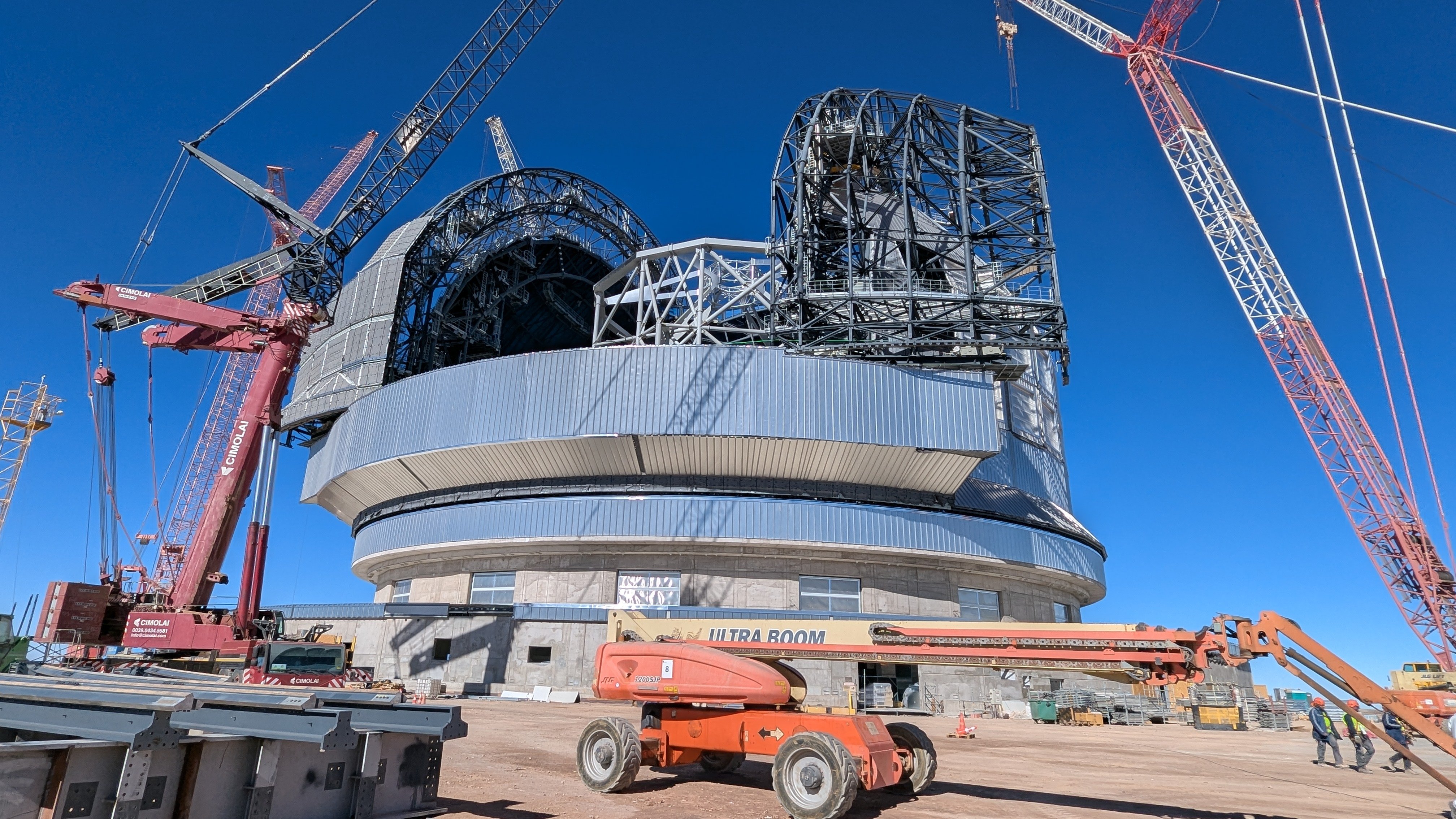
ESO’s ELT is currently under construction in Chile’s Atacama Desert, a unique place on Earth to observe the skies.
More Information
The MOSAIC project is developed by an international consortium composed of research institutes in 13 countries, which are:
- Austria: University of Vienna; Institute of Science and Technology Austria (ISTA);
- Brazil: National Astrophysics Laboratory; University of São Paulo;
- Finland: University of Helsinki; Finnish Centre for Astronomy with ESO, University of Turku;
- France: National Institute for Earth Sciences and Astronomy at the National Centre for Scientific Research (CNRS-INSU); UNité d'Ingénierie et de Développements Instrumentaux pour l'Astrophysique (UNIDIA) and Laboratoire d'étude de l'Univers et des phénomènes eXtrêmes (LUX); Institute for Research in Astrophysics and Planetology at the University of Toulouse; Marseille Astrophysics Laboratory. Laboratoire Joseph-Louis Lagrange (LAGRANGE);
- Germany: Leibniz Institute for Astrophysics Potsdam; State Observatory Heidelberg (LSW);
- Italy: INAF Roma;
- Netherlands: Netherlands Research School for Astronomy; University of Amsterdam
- Portugal: Centro de Investigação em Astronomia/Astrofísica da Universidade do Porto; FCiências.ID - Universidade de Lisboa;
- Spain: Universidad Complutense de Madrid; Instituto de Astrofísica de Andalucía,IAA-CSIC;
- Sweden: Stockholm University; Lund University; Uppsala University;
- Switzerland: University of Geneva; École polytechnique fédérale de Lausanne
- United Kingdom: Durham University; University of Oxford / RAL Space; UK Astronomy Technology Centre;
- United States: University of Michigan; Space Telescope Science Institute.
Further information
ESO Announcement:
https://www.eso.org/public/announcements/ann25008/
MOSAIC-Website: http://www.mosaic-elt.eu/
Images
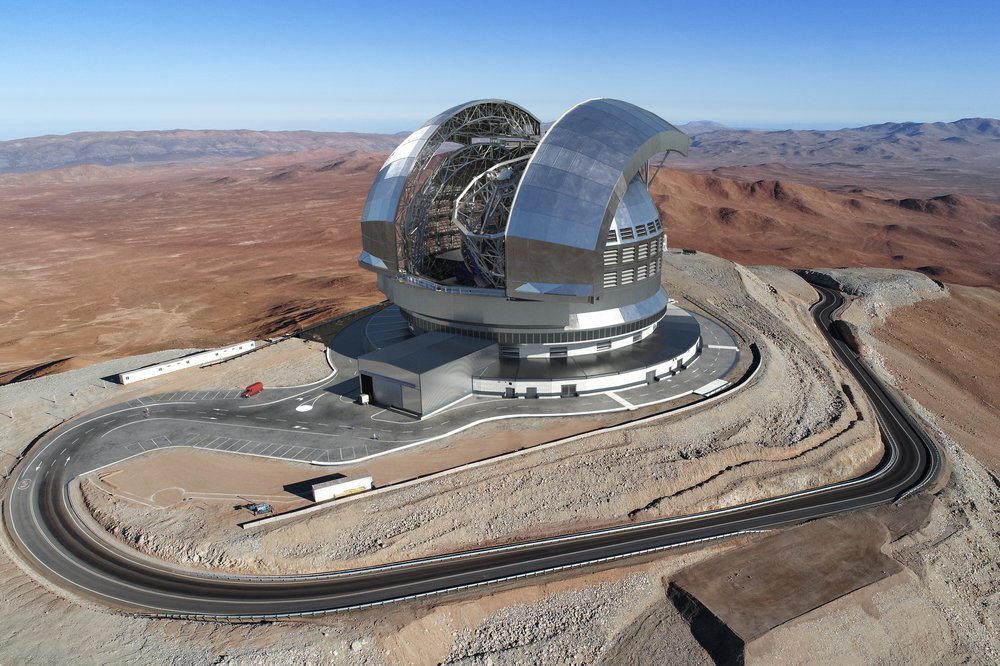
Artist’s impression of the Extremely Large Telescope.
Big screen size [1000 x 666, 160 KB]
Original size [4000 x 2667, 2.5 MB]
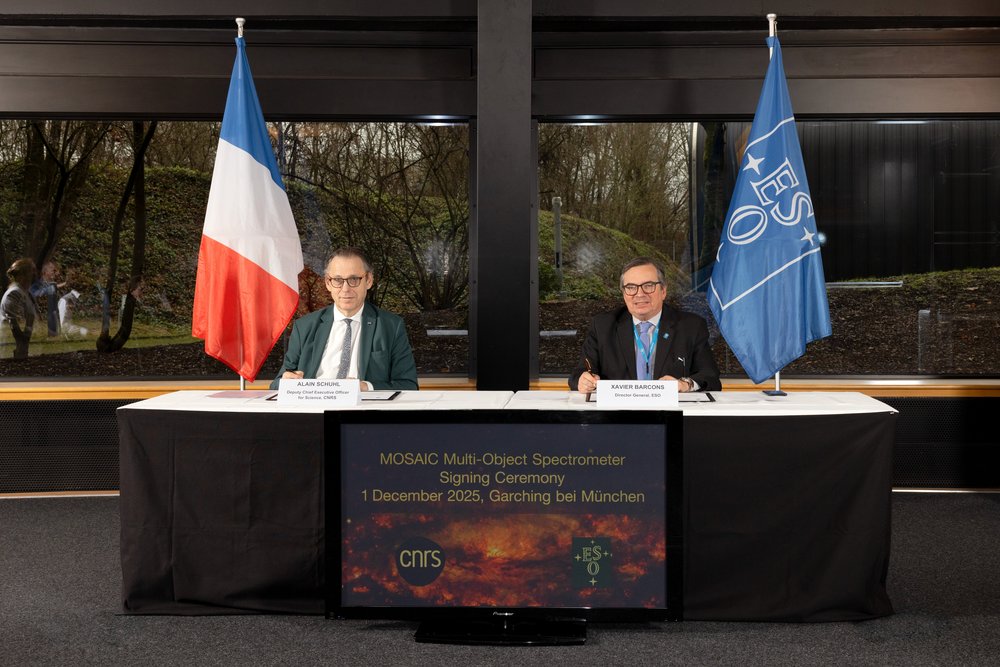
Alain Schuhl (Deputy Chief Executive Officer for Science, CNRS) and Xavier Barcons (Director General, ESO) sign the contract for the Multi-Object Spectrograph (MOSAIC)
Big screen size [1000 x 667, 130 KB]
Original size [6676 x 4453, 5.6 MB]
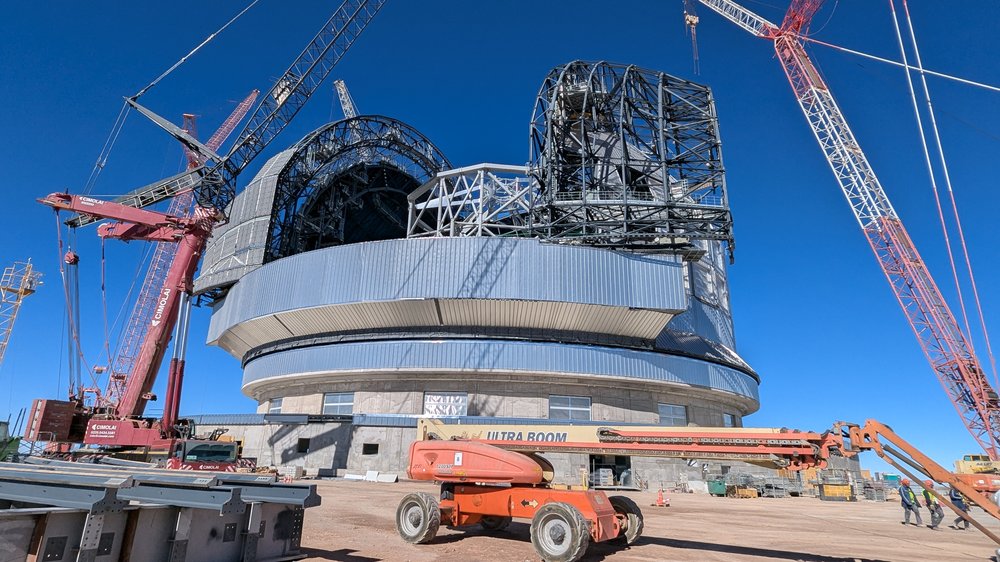
The construction site of the ELT in July 2025.
Big screen size [1000 x 562, 150 KB]
Original size [4032 x 2268, 1.6 MB]
Big screen size [1000 x 625, 100 KB]
Original size [4000 x 2500, 1.2 MB]