Babelsberg Starry Night on 19th February 2026
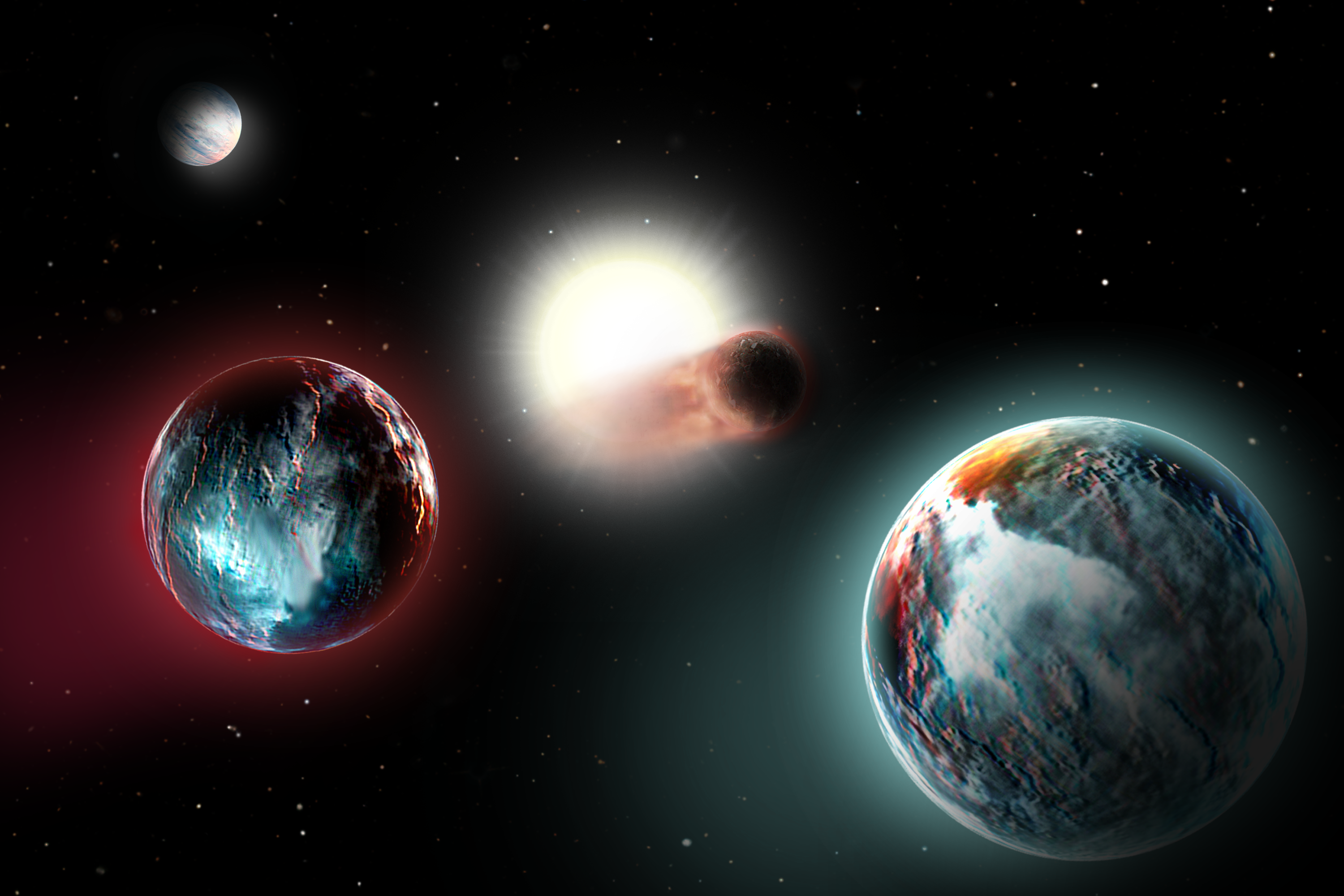
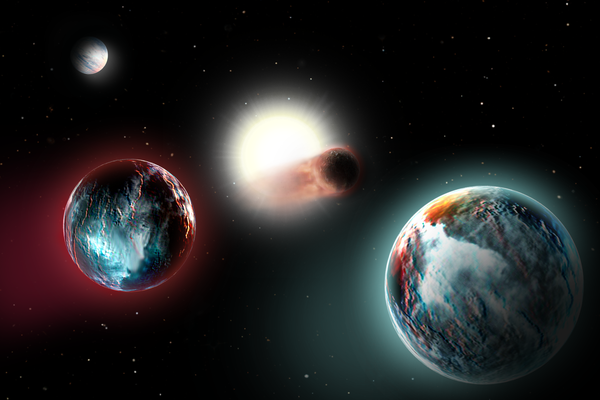
Artist’s rendition of planets around a far star. So far over 6000 exoplanets have been discovered.
Credit: AIP/J. FohlmeisterThe Leibniz Institute for Astrophysics Potsdam (AIP) invites to a live Babelsberg Starry Night on Thursday, 19.02.2026 at the research campus Babelsberg with Director Prof. Dr. Katja Poppenhäger talking about „Exoplanets – Strange worlds around far stars”. The same night, the YouTube-Channel Urknall, Weltall und das Leben publishes a virtual lecture by Dr. Ramona Augustin regarding the circumgalactic medium, the gas surrounding galaxies. Both lectures are held in German.
In the “Babelsberg Starry Nights” lecture series, AIP scientists talk about their current research topics. On Thursday, 19th February at 7.15 p.m. Prof. Dr. Katja Poppenhäger, director of the research department “Stars, Sun and Exoplanets” gives a live lecture on „Exoplanets – Strange worlds around far stars” at the AIP campus in Babelsberg.
Similar to our Sun, a lot of stars are orbited by planets. These exoplanets are many light years away from us, but we can still learn a lot about and from them. In her lecture, Prof. Dr. Katja Poppenhäger explains the basics of exoplanet research and whisks away listeners to a journey beyond the solar system. How do different planetary systems work? How is it possible to discover an exoplanet? How can scientists analyse its atmosphere? And could we find extraterrestrial life on these exoplanets?
The lecture is held at campus Babelsberg (An der Sternwarte 16, 14482 Potsdam) in the Maria-Margaretha-Kirch-Haus and starts at 7.15 p.m. Admission is free. Afterwards, we offer tours around the campus, and if the sky is clear, observations using one of the historic reflecting telescopes.
For those who cannot make it to the live lecture, there is another opportunity: At the same evening, a new lecture of the Virtual Babelsberg Starry Nights will be published. Dr. Ramona Augustin, astrophysicist in the research group Galaxies and Quasars, speaks about “Searching for hidden matter: the circumgalactic medium”. This is the gas contained in the halos around galaxies. It plays an important role in the development of galaxies but stays invisible to the naked eye. Using modern spectroscopic methods it is possible to find and analyze this gas and therefore understand more about the emergence and further development of galaxies. The video will be published at 8 p.m. on the YouTube channel Urknall, Weltall und das Leben (Big Bang, Space and Life).
Live Lecture:
Prof. Dr. Katja Poppenhäger: „ Exoplanets – Strange worlds around far stars“ (in German)
Time: 19.02.2026, 7:15 p.m.
Location: conference room Maria-Margaretha-Kirch-Haus, AIP, An der Sternwarte 16, 14482 Potsdam
Virtueller Vortrag:
Dr. Ramona Augustin: „Searching for hidden matter: the circumgalactic medium“ (in German)
Time: 19.02.2026, 20 Uhr
YouTube channel Urknall, Weltall und das Leben
More lectures from this series:
Live Babelsberg Starry Nights: https://www.aip.de/en/pr/public-events/babelsberg-starry-nights-live/
Virtual Babelsberg Starry Nights: https://www.aip.de/en/babelsberger-sternennaechte/
Artist’s rendition of planets around a far star. So far over 6000 exoplanets have been discovered.
Credit: AIP/J. FohlmeisterThe Leibniz Institute for Astrophysics Potsdam (AIP) invites to a live Babelsberg Starry Night on Thursday, 19.02.2026 at the research campus Babelsberg with Director Prof. Dr. Katja Poppenhäger talking about „Exoplanets – Strange worlds around far stars”. The same night, the YouTube-Channel Urknall, Weltall und das Leben publishes a virtual lecture by Dr. Ramona Augustin regarding the circumgalactic medium, the gas surrounding galaxies. Both lectures are held in German.
In the “Babelsberg Starry Nights” lecture series, AIP scientists talk about their current research topics. On Thursday, 19th February at 7.15 p.m. Prof. Dr. Katja Poppenhäger, director of the research department “Stars, Sun and Exoplanets” gives a live lecture on „Exoplanets – Strange worlds around far stars” at the AIP campus in Babelsberg.
Similar to our Sun, a lot of stars are orbited by planets. These exoplanets are many light years away from us, but we can still learn a lot about and from them. In her lecture, Prof. Dr. Katja Poppenhäger explains the basics of exoplanet research and whisks away listeners to a journey beyond the solar system. How do different planetary systems work? How is it possible to discover an exoplanet? How can scientists analyse its atmosphere? And could we find extraterrestrial life on these exoplanets?
The lecture is held at campus Babelsberg (An der Sternwarte 16, 14482 Potsdam) in the Maria-Margaretha-Kirch-Haus and starts at 7.15 p.m. Admission is free. Afterwards, we offer tours around the campus, and if the sky is clear, observations using one of the historic reflecting telescopes.
For those who cannot make it to the live lecture, there is another opportunity: At the same evening, a new lecture of the Virtual Babelsberg Starry Nights will be published. Dr. Ramona Augustin, astrophysicist in the research group Galaxies and Quasars, speaks about “Searching for hidden matter: the circumgalactic medium”. This is the gas contained in the halos around galaxies. It plays an important role in the development of galaxies but stays invisible to the naked eye. Using modern spectroscopic methods it is possible to find and analyze this gas and therefore understand more about the emergence and further development of galaxies. The video will be published at 8 p.m. on the YouTube channel Urknall, Weltall und das Leben (Big Bang, Space and Life).
Live Lecture:
Prof. Dr. Katja Poppenhäger: „ Exoplanets – Strange worlds around far stars“ (in German)
Time: 19.02.2026, 7:15 p.m.
Location: conference room Maria-Margaretha-Kirch-Haus, AIP, An der Sternwarte 16, 14482 Potsdam
Virtueller Vortrag:
Dr. Ramona Augustin: „Searching for hidden matter: the circumgalactic medium“ (in German)
Time: 19.02.2026, 20 Uhr
YouTube channel Urknall, Weltall und das Leben
More lectures from this series:
Live Babelsberg Starry Nights: https://www.aip.de/en/pr/public-events/babelsberg-starry-nights-live/
Virtual Babelsberg Starry Nights: https://www.aip.de/en/babelsberger-sternennaechte/
Images
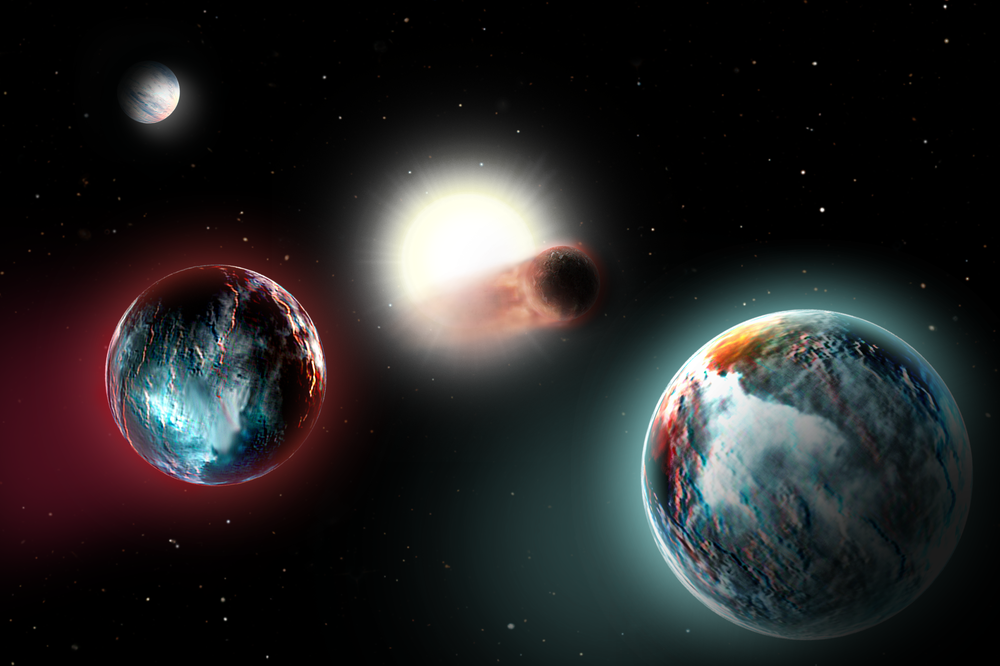
Artist’s rendition of planets around a far star. So far over 6000 exoplanets have been discovered.
Big screen size [1000 x 666, 520 KB]
Original size [3000 x 2000, 3.4 MB]
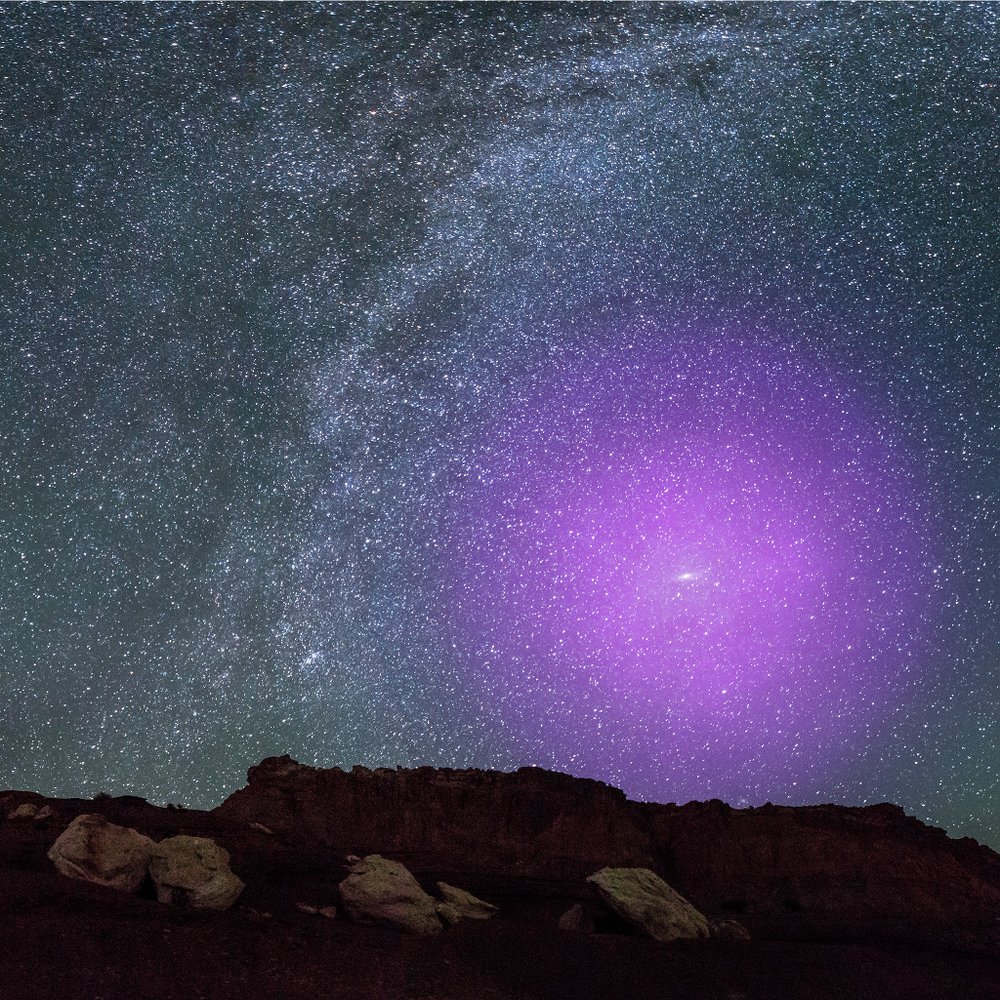
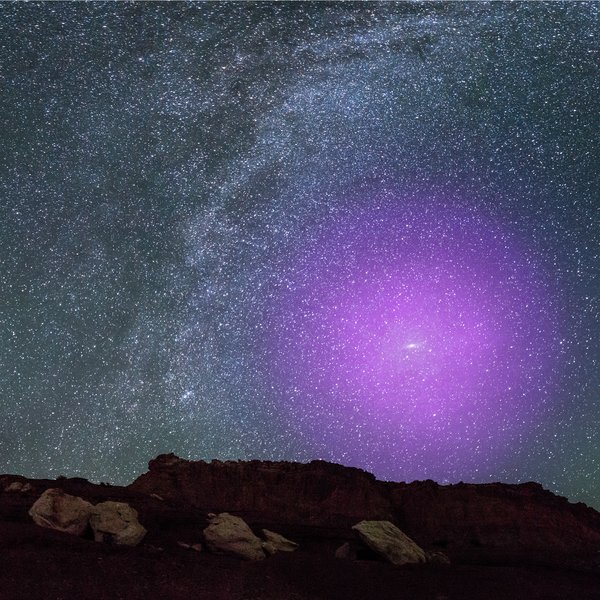
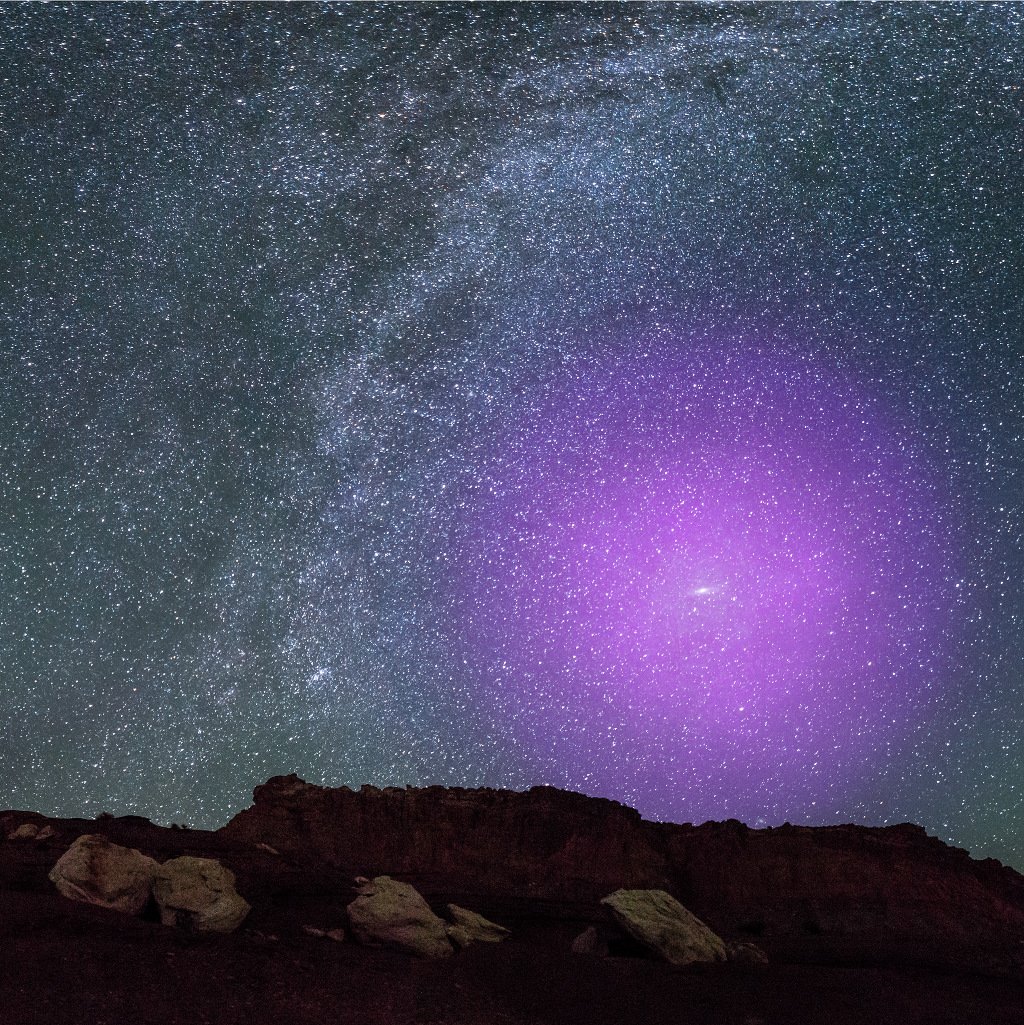
Illustration of the gas halo surrounding our neighbour galaxy Andromeda. The galaxy itself is only visible to the naked eye as a foggy spot; if the gas halo was visible, it would occupy a large part of the night sky.
Big screen size [1000 x 1000, 330 KB]
Original size [1024 x 1025, 340 KB]