Girls' Day/Future Day Brandenburg 2026
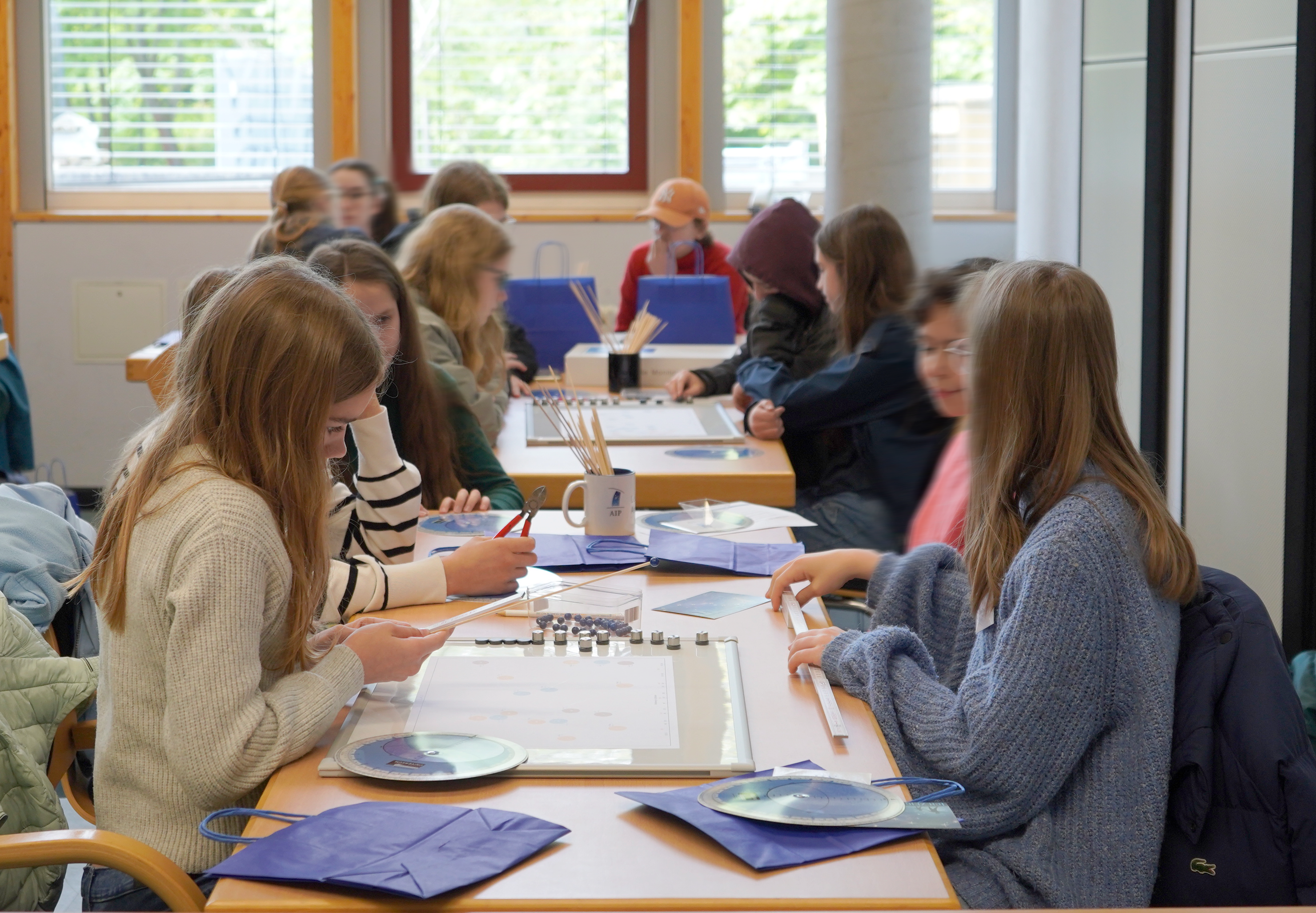
Participants enjoying crafts at Girls' Day
Credit: AIP/T. BergemannAs part of the Girls' Day / Future Day Brandenburg on April 23, 2026, twenty female students can gain exciting insights into the fascinating world of astronomy and the work at an astrophysical research institute.
Offer 1: Learn about the work at the Leibniz Institute for Astrophysics Potsdam
What do we see when we look at the stars? How do we know that galaxies are moving? And what exactly is a light curve? We are taking you on an exciting journey through astrophysics. Discover what we are researching – from the sun and the stars to mysterious black holes. Talk to our scientists, test your knowledge with Astro-Connect-Four and experiment with a thermal imaging camera to see what is otherwise hidden from our eyes.
On 23 April 2026, 20 female students will once again have the opportunity to gain insight into the work of an astrophysicist at the Leibniz Institute for Astrophysics (AIP) as part of Girls' Day / Future Day Brandenburg. Girls aged 11 to 16 who are interested in physics, mathematics or computer science will have the opportunity to explore the AIP campus from 9 a.m. to 2 p.m., visit our telescopes and learn more about the exciting world of modern astronomy.
What can you look forward to?
- Get to know our institute, visit our telescopes and our workshops.
- Experience our galaxy in virtual reality.
- Take the opportunity to meet female scientists from the AIP and ask them your questions
- Test your knowledge in an astro-four-in-a-row game.
Please register via one of the following portals:
- Girls' Day: www.girls-day.de
- Zukunftstag Brandenburg: https://zukunftstagbrandenburg.de/
Offer 2: Electronics laboratory in astrophysics (for girls and boys from 8th class onwards)
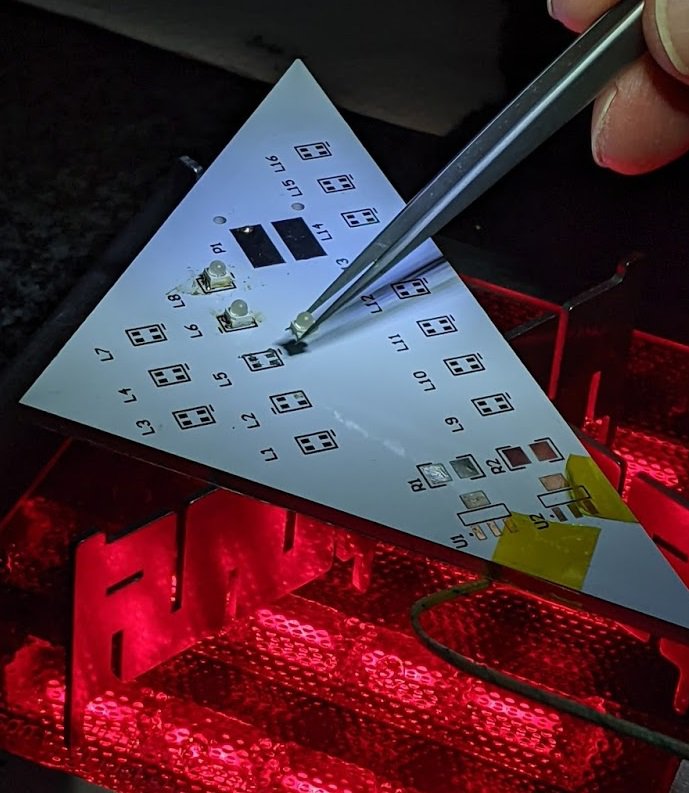
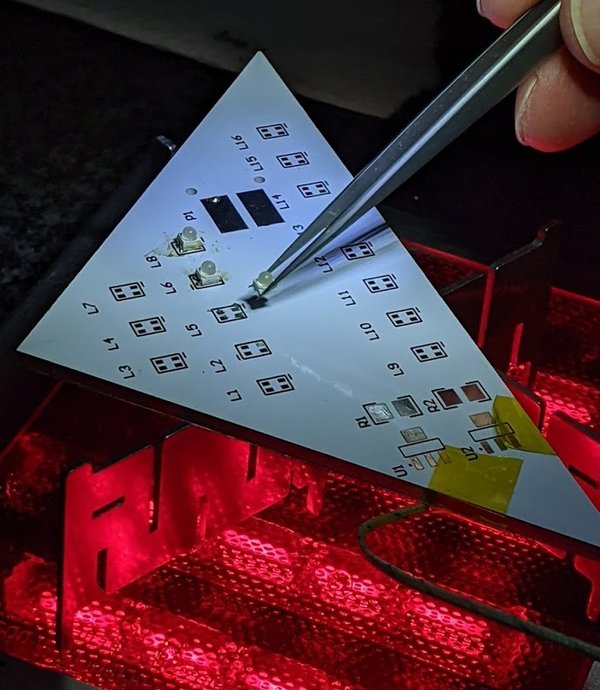
Soldering light emitting diodes above a heating plate.
Credit: AIP/H. Önel, 2021How do electronics and the stars match each other? What does an electronic engineer actually do at a research institute for astrophysics? The Zukunftstag Brandenburg gives you the chance to become part of our electronics laboratory for a day. You'll be given a small project to work on under supervision and will practice handling a soldering iron. In addition, you will get insights into the apprenticeship as an electronics technician for devices and systems at the Leibniz Institute for Astrophysics Potsdam (AIP).
Unfortunately, we can only invite a small number of participants because there are only a few places available. That's why we want to know from you: What fascinates you about electronics?
Please send us an e-mail to: presse@aip.de
This is what you can expect:
- Visit the electronics lab and get hands-on experience
- Get to know our institute and visit the telescopes
- Questions and answers about the profession and apprenticeship at the AIP
Participants enjoying crafts at Girls' Day
Credit: AIP/T. BergemannAs part of the Girls' Day / Future Day Brandenburg on April 23, 2026, twenty female students can gain exciting insights into the fascinating world of astronomy and the work at an astrophysical research institute.
Offer 1: Learn about the work at the Leibniz Institute for Astrophysics Potsdam
What do we see when we look at the stars? How do we know that galaxies are moving? And what exactly is a light curve? We are taking you on an exciting journey through astrophysics. Discover what we are researching – from the sun and the stars to mysterious black holes. Talk to our scientists, test your knowledge with Astro-Connect-Four and experiment with a thermal imaging camera to see what is otherwise hidden from our eyes.
On 23 April 2026, 20 female students will once again have the opportunity to gain insight into the work of an astrophysicist at the Leibniz Institute for Astrophysics (AIP) as part of Girls' Day / Future Day Brandenburg. Girls aged 11 to 16 who are interested in physics, mathematics or computer science will have the opportunity to explore the AIP campus from 9 a.m. to 2 p.m., visit our telescopes and learn more about the exciting world of modern astronomy.
What can you look forward to?
- Get to know our institute, visit our telescopes and our workshops.
- Experience our galaxy in virtual reality.
- Take the opportunity to meet female scientists from the AIP and ask them your questions
- Test your knowledge in an astro-four-in-a-row game.
Please register via one of the following portals:
- Girls' Day: www.girls-day.de
- Zukunftstag Brandenburg: https://zukunftstagbrandenburg.de/
Offer 2: Electronics laboratory in astrophysics (for girls and boys from 8th class onwards)
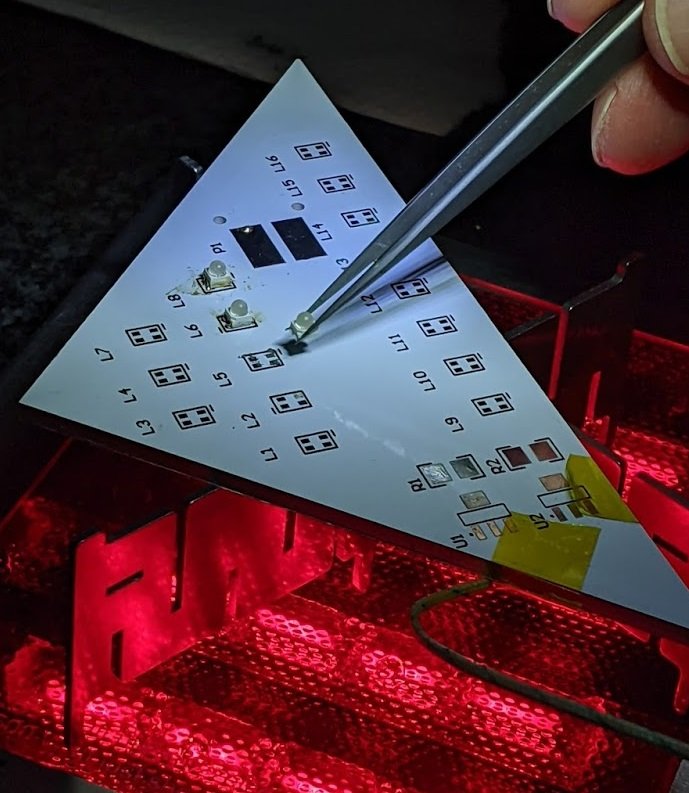
Soldering light emitting diodes above a heating plate.
Credit: AIP/H. Önel, 2021How do electronics and the stars match each other? What does an electronic engineer actually do at a research institute for astrophysics? The Zukunftstag Brandenburg gives you the chance to become part of our electronics laboratory for a day. You'll be given a small project to work on under supervision and will practice handling a soldering iron. In addition, you will get insights into the apprenticeship as an electronics technician for devices and systems at the Leibniz Institute for Astrophysics Potsdam (AIP).
Unfortunately, we can only invite a small number of participants because there are only a few places available. That's why we want to know from you: What fascinates you about electronics?
Please send us an e-mail to: presse@aip.de
This is what you can expect:
- Visit the electronics lab and get hands-on experience
- Get to know our institute and visit the telescopes
- Questions and answers about the profession and apprenticeship at the AIP
Images
Soldering light emitting diodes above a heating plate.