Live Babelsberg Starry Night at 19th March 2026
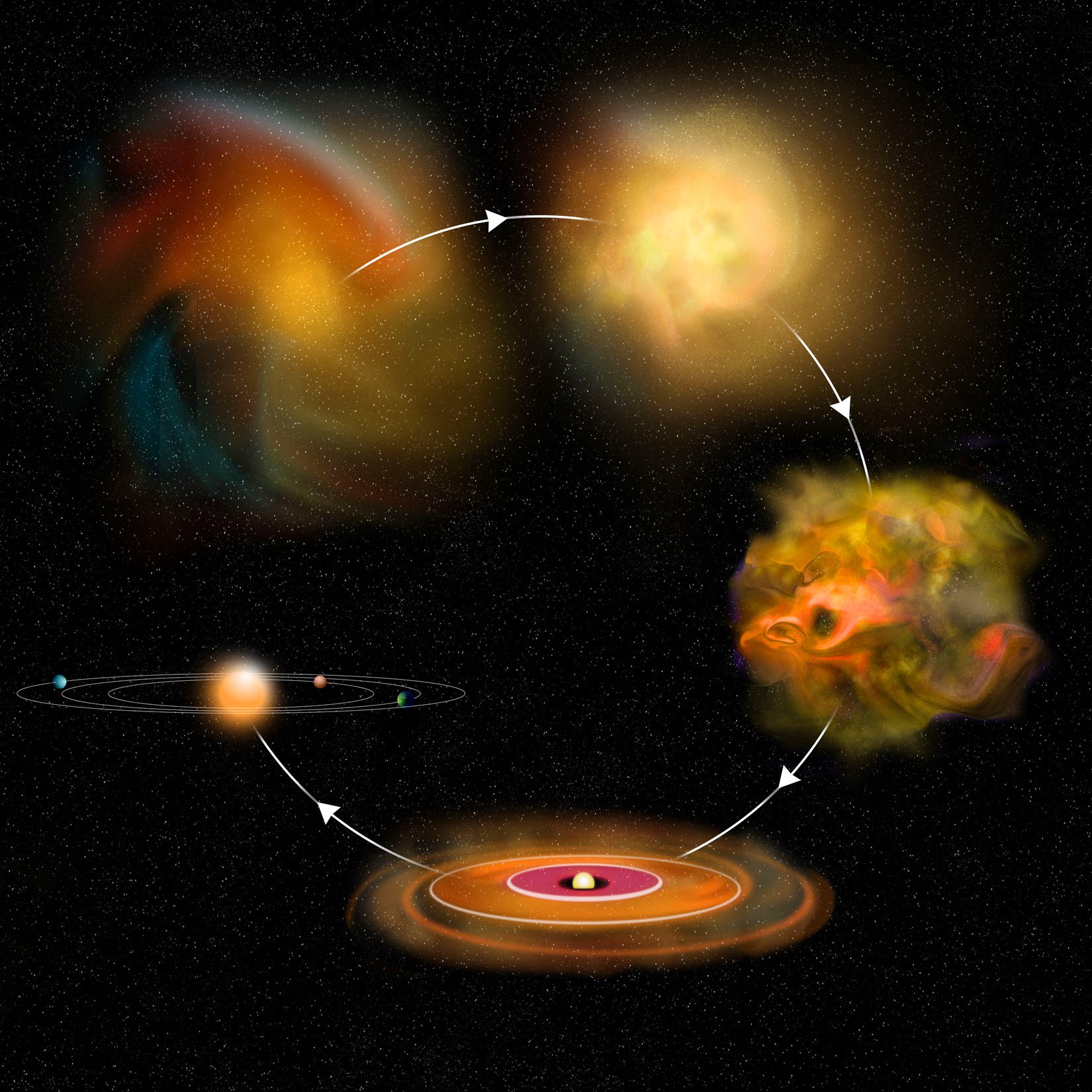
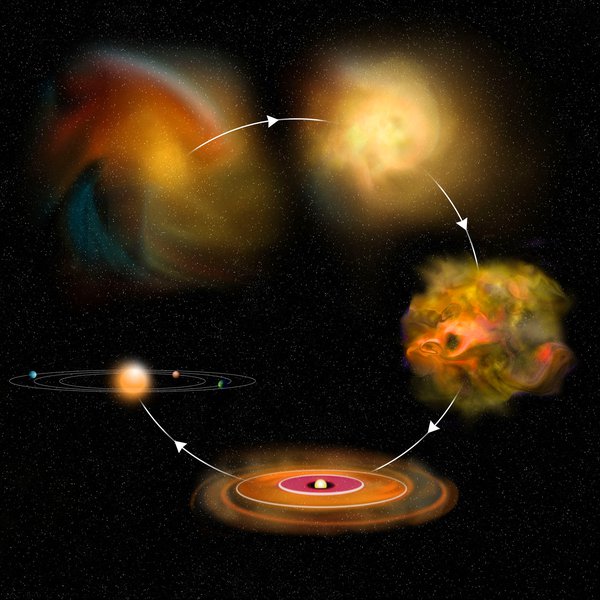
Artist's impression of the process of star formation. Interstellar clouds of gas and dust contract, flatten and spin up while they do so. A star is finally born in the centre; planets may form from the disc of leftover material.
Credit: Bill Saxton/NRAO/AUI/NSFOn Thursday, 19 March 2026, starting at 7:15 pm, the Leibniz Institute for Astrophysics Potsdam (AIP) once again invites to a Babelsberg Starry Night Live at the AIP research campus in Babelsberg. The eventing will feature a lecture by Dr. Oliver Gressel on star dust, protoplanetary disks and fluid mechanics. On the same evening, the YouTube channel Urknall, Weltall und das Leben will premire a virtual lecture by Dr. Christian Vocks on space weather. Please note that both lectures will be given in German.
Dr. Oliver Gressel, head of the Magnetohydrodynamics and Turbulence research group at the AIP, will give a live lecture entitled ‘Much Ado About Stardust – Fluid Mechanics of Planet Formation’ (in German). Planets form in protoplanetary accretion disks, flat gas clouds around young stars. The gas, with its different charge carriers, is bound to magnetic fields that influence the movement of matter within the disks. To better understand these movements, researchers work with computer simulations to study magnetic fields in the disks. Oliver Gressel explains how these disks develop, how planets form, and to what extent they move to other locations after their formation.
Admission is free and no prior registration is required. After the lecture, visitors are invited to join a guided tour of the AIP research campus in Babelsberg. If the night sky is clear, there will also be an opportunity to observe the night sky through one of the institute’s historic reflecting telescopes.
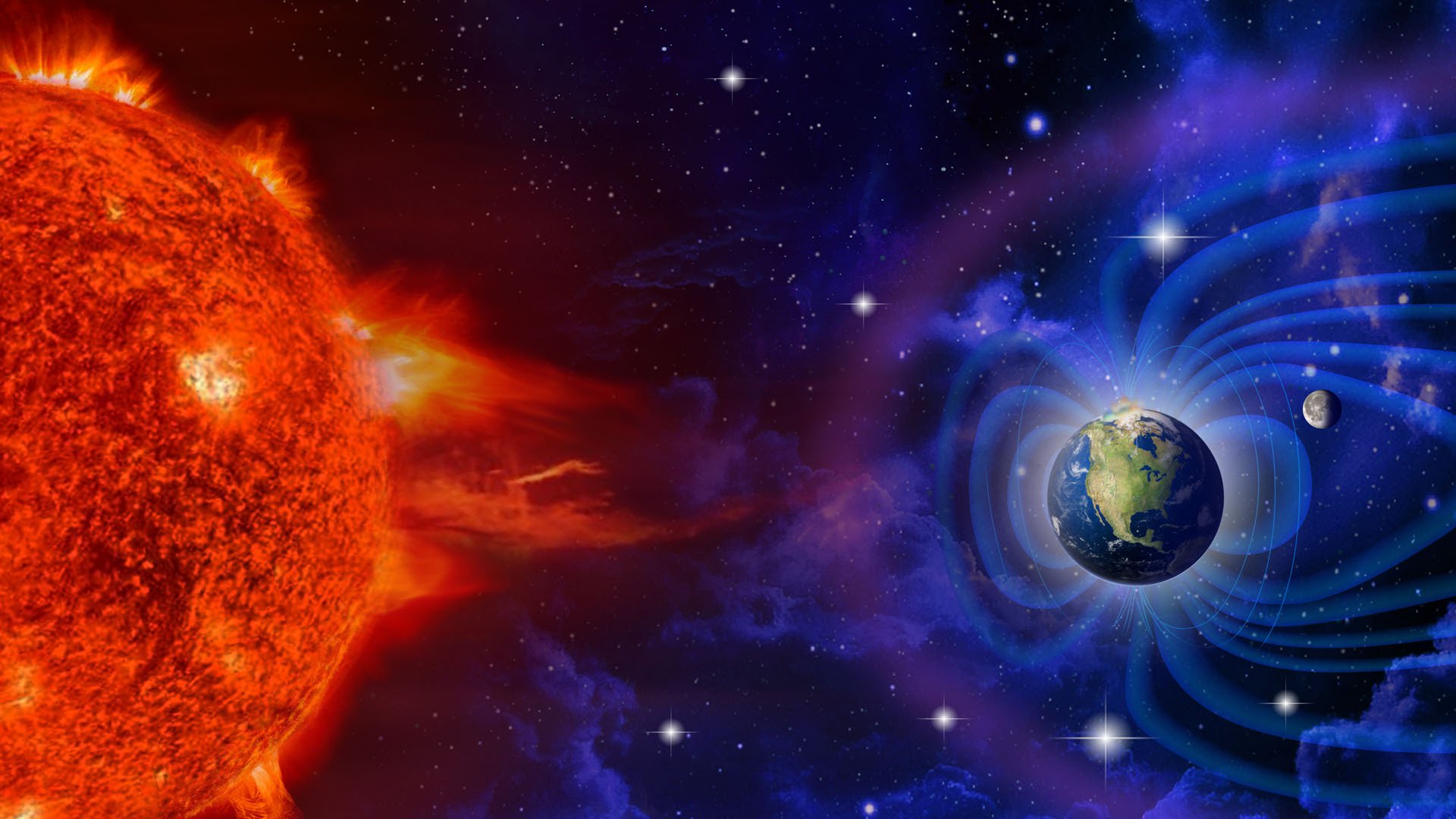
On the same evening, a new lecture from the virtual Babelsberg Starry Nights series will be posted on YouTube: Dr Christian Vocks, scientist in the Solar Physics research group, will talk about ‘Space weather – what's going on out there?’ (in German). The activity of the Sun is visible in its 11-year sunspot cycle. The strong magnetic fields in sunspots can store energy, which can be released suddenly in solar flares and coronal mass eruptions. Solar activity has a significant impact on the Earth and near-Earth space, although the Earth's magnetic field protects us from the direct effects. This influence is called ‘space weather’. In his lecture, Christian Vocks presents the cause and mechanisms of solar activity and discusses the impact of space weather on the Earth and our technical systems. The video will be published at 8 p.m. on the YouTube channel Urknall, Weltall und das Leben (Big Bang, Space and Life).
Live Lecture:
Dr. Oliver Gressel: ‘Much Ado About Stardust – Fluid Mechanics of Planet Formation’ (in German)
Time: 19.03.2026, 7:15 p.m., entry: 6:45 p.m.
Location: conference room Maria-Margaretha-Kirch-Haus, AIP, An der Sternwarte 16, 14482 Potsdam
Virtueller Vortrag:
Dr. Christian Vocks: ‘Space weather – what's going on out there?’ (in German).
Time: 19.03.2026, 20 Uhr
YouTube channel Urknall, Weltall und das Leben
More lectures from this series:
Live Babelsberg Starry Nights: https://www.aip.de/en/pr/public-events/babelsberg-starry-nights-live/
Virtual Babelsberg Starry Nights: https://www.aip.de/en/babelsberger-sternennaechte/
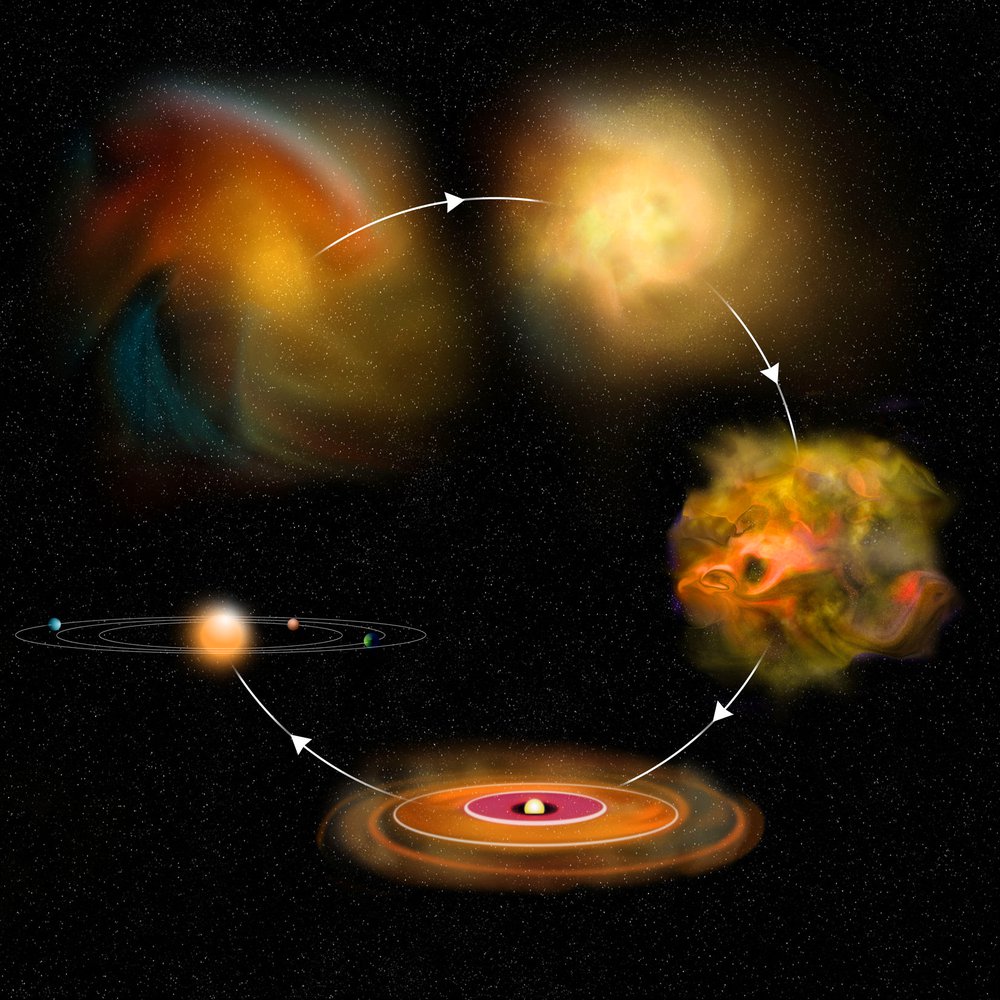
Artist's impression of the process of star formation. Interstellar clouds of gas and dust contract, flatten and spin up while they do so. A star is finally born in the centre; planets may form from the disc of leftover material.
Credit: Bill Saxton/NRAO/AUI/NSFOn Thursday, 19 March 2026, starting at 7:15 pm, the Leibniz Institute for Astrophysics Potsdam (AIP) once again invites to a Babelsberg Starry Night Live at the AIP research campus in Babelsberg. The eventing will feature a lecture by Dr. Oliver Gressel on star dust, protoplanetary disks and fluid mechanics. On the same evening, the YouTube channel Urknall, Weltall und das Leben will premire a virtual lecture by Dr. Christian Vocks on space weather. Please note that both lectures will be given in German.
Dr. Oliver Gressel, head of the Magnetohydrodynamics and Turbulence research group at the AIP, will give a live lecture entitled ‘Much Ado About Stardust – Fluid Mechanics of Planet Formation’ (in German). Planets form in protoplanetary accretion disks, flat gas clouds around young stars. The gas, with its different charge carriers, is bound to magnetic fields that influence the movement of matter within the disks. To better understand these movements, researchers work with computer simulations to study magnetic fields in the disks. Oliver Gressel explains how these disks develop, how planets form, and to what extent they move to other locations after their formation.
Admission is free and no prior registration is required. After the lecture, visitors are invited to join a guided tour of the AIP research campus in Babelsberg. If the night sky is clear, there will also be an opportunity to observe the night sky through one of the institute’s historic reflecting telescopes.
On the same evening, a new lecture from the virtual Babelsberg Starry Nights series will be posted on YouTube: Dr Christian Vocks, scientist in the Solar Physics research group, will talk about ‘Space weather – what's going on out there?’ (in German). The activity of the Sun is visible in its 11-year sunspot cycle. The strong magnetic fields in sunspots can store energy, which can be released suddenly in solar flares and coronal mass eruptions. Solar activity has a significant impact on the Earth and near-Earth space, although the Earth's magnetic field protects us from the direct effects. This influence is called ‘space weather’. In his lecture, Christian Vocks presents the cause and mechanisms of solar activity and discusses the impact of space weather on the Earth and our technical systems. The video will be published at 8 p.m. on the YouTube channel Urknall, Weltall und das Leben (Big Bang, Space and Life).
Live Lecture:
Dr. Oliver Gressel: ‘Much Ado About Stardust – Fluid Mechanics of Planet Formation’ (in German)
Time: 19.03.2026, 7:15 p.m., entry: 6:45 p.m.
Location: conference room Maria-Margaretha-Kirch-Haus, AIP, An der Sternwarte 16, 14482 Potsdam
Virtueller Vortrag:
Dr. Christian Vocks: ‘Space weather – what's going on out there?’ (in German).
Time: 19.03.2026, 20 Uhr
YouTube channel Urknall, Weltall und das Leben
More lectures from this series:
Live Babelsberg Starry Nights: https://www.aip.de/en/pr/public-events/babelsberg-starry-nights-live/
Virtual Babelsberg Starry Nights: https://www.aip.de/en/babelsberger-sternennaechte/
Images
Artist's impression of the process of star formation. Interstellar clouds of gas and dust contract, flatten and spin up while they do so. A star is finally born in the centre; planets may form from the disc of leftover material.
Big screen size [1000 x 1000, 190 KB]
Original size [1650 x 1650, 460 KB]
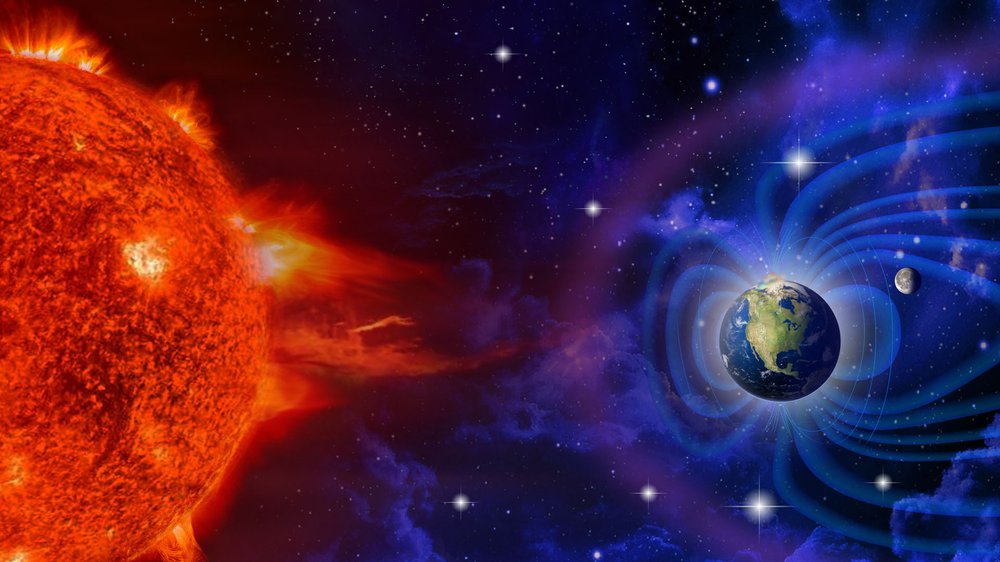
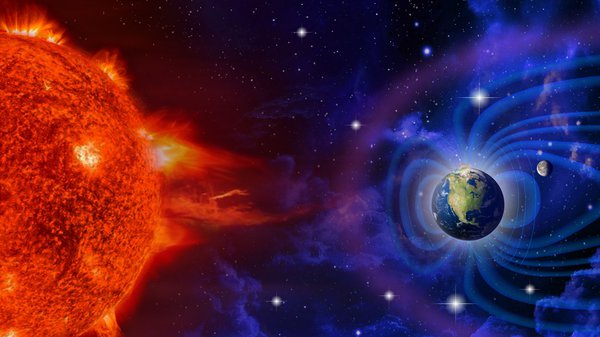
The Sun’s activity has a strong influence on Earth. The magnetic fields play an important role.
Big screen size [1000 x 562, 90 KB]
Original size [1920 x 1080, 220 KB]