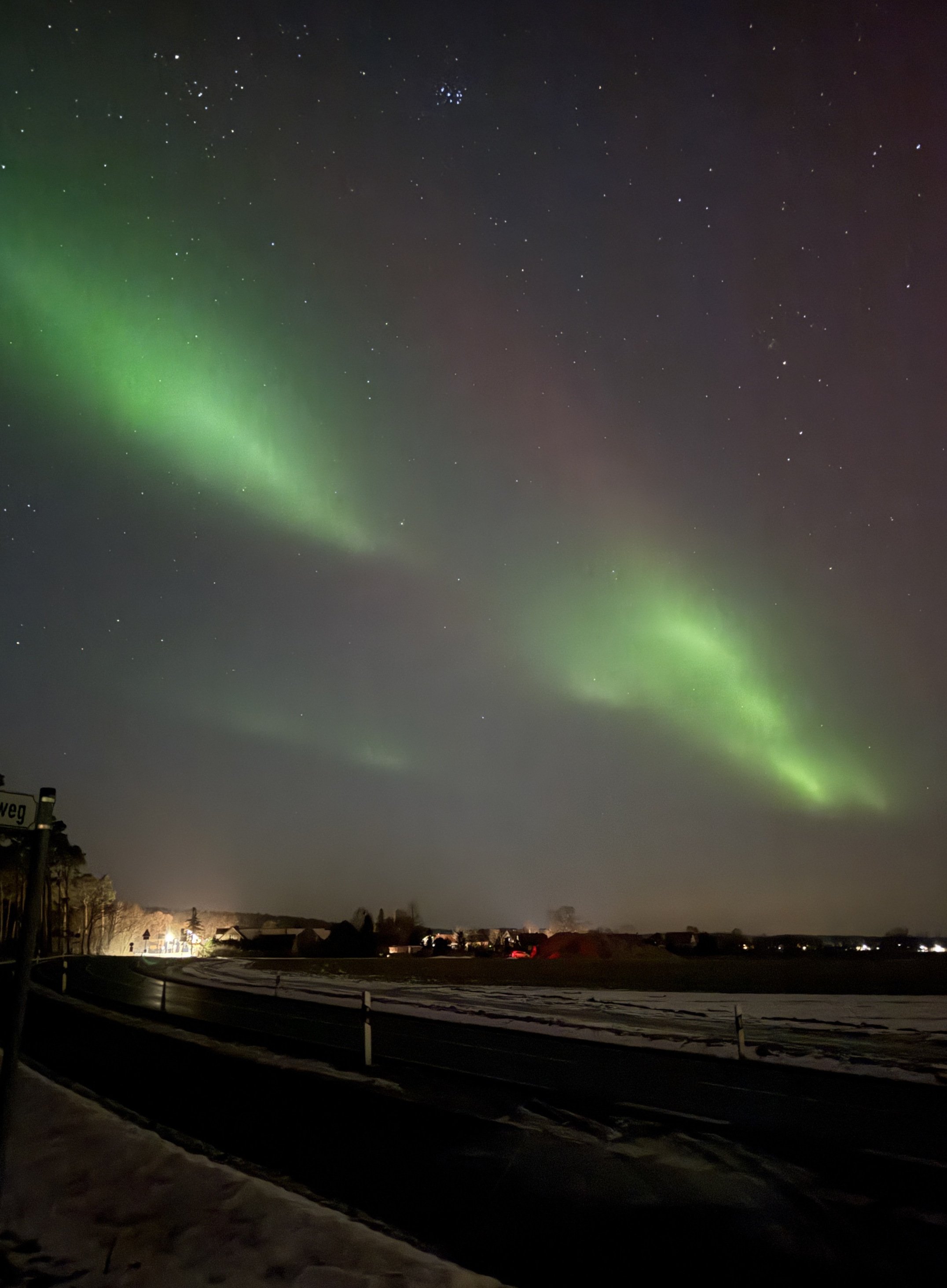
Northern Lights above Potsdam and the AIP
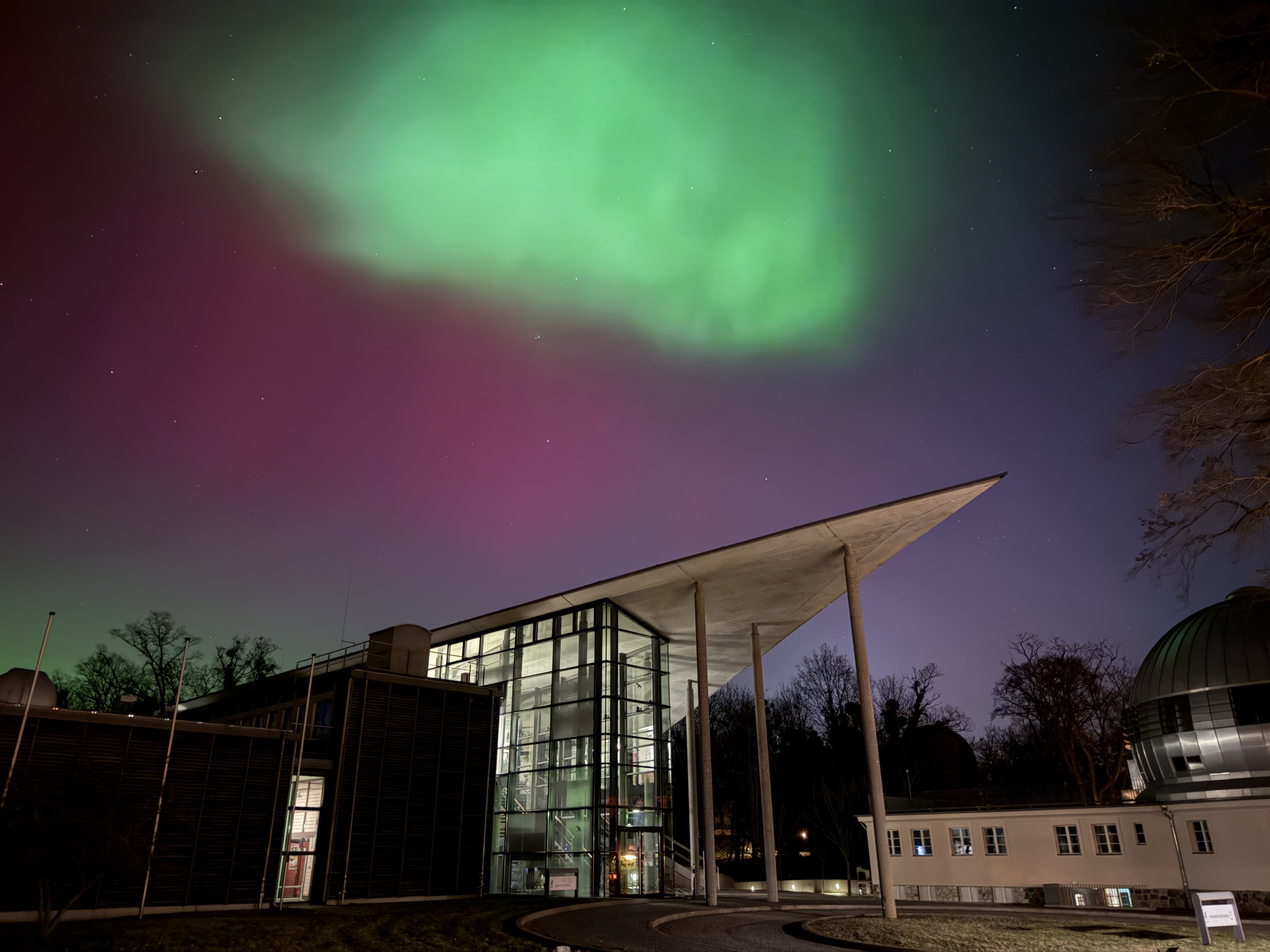
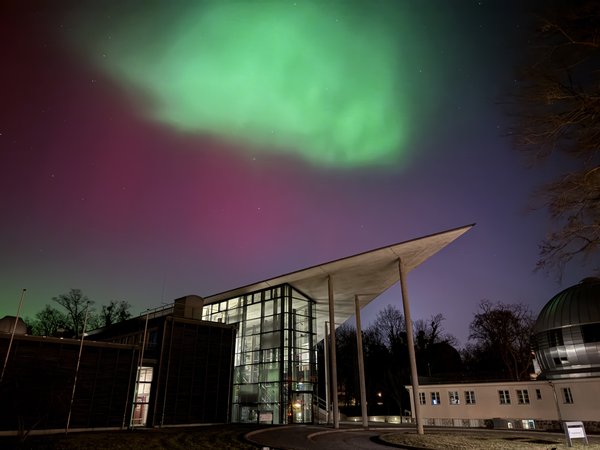
The bright green veil in the sky above the Schwarzschild House is clearly visible in this photograph with longer exposure.
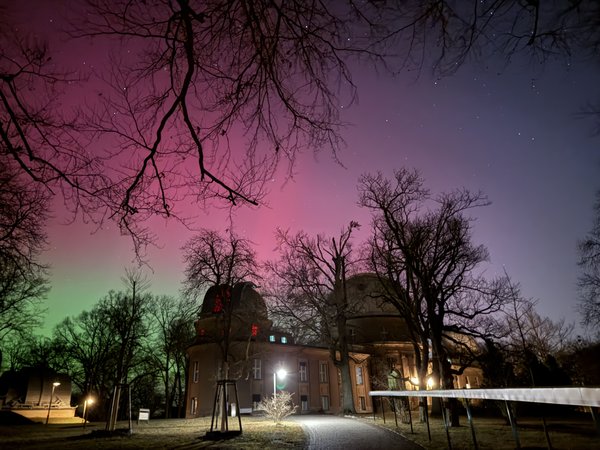
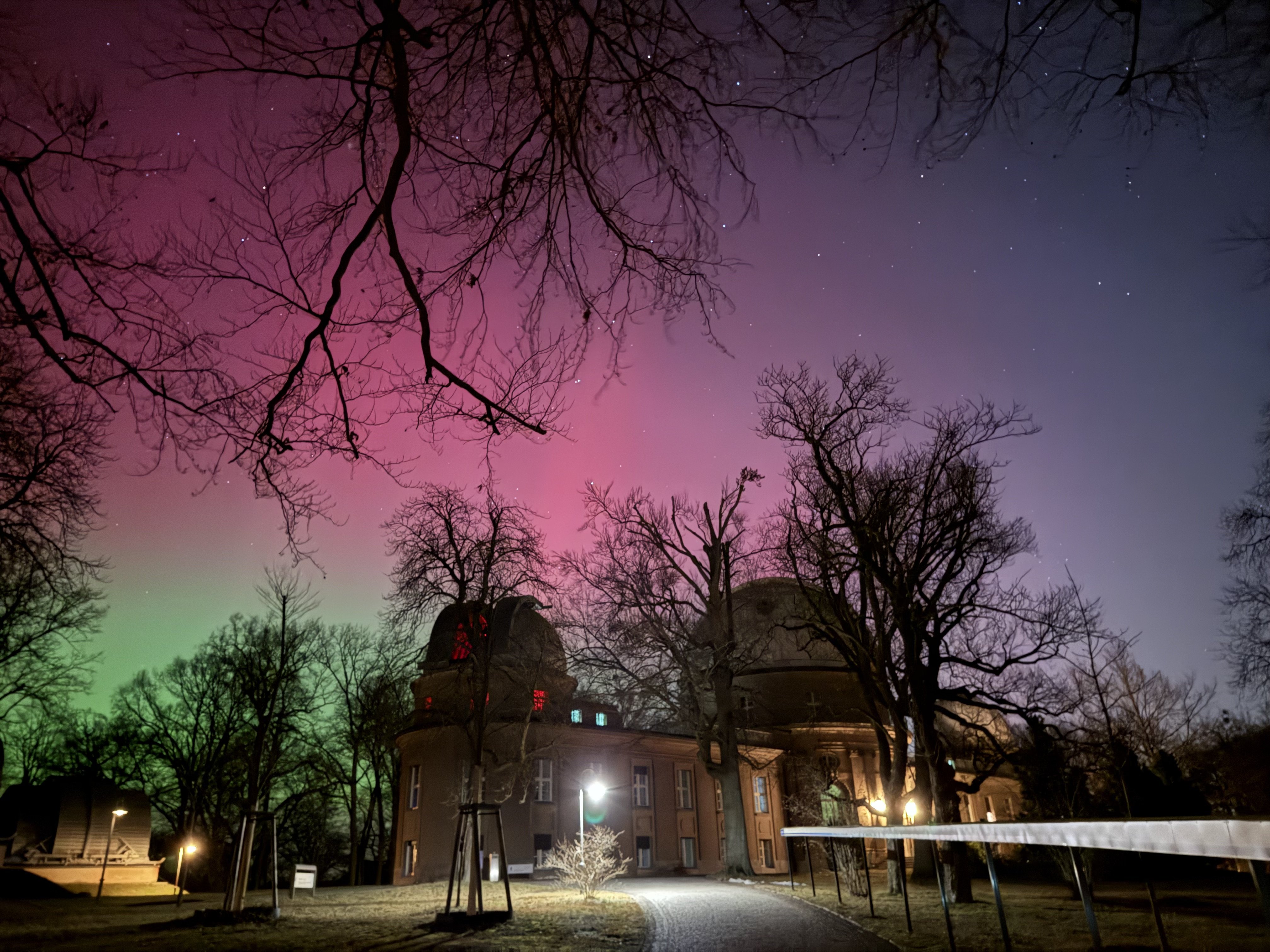
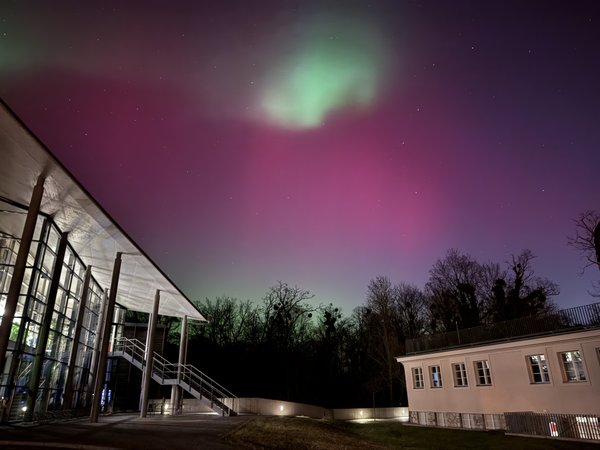
Credit: AIP/Song TanDuring the night of 19th to 20th January, colleagues at the AIP managed to capture images of the Northern Lights above Potsdam and even above the AIP campus. The celestial phenomenon was triggered by a solar flare that occurred at around 6 p.m. on 18 January 2026. The solar wind released by the flare reached Earth during the night, creating colourful veils in the sky.
Auroras are rare but breathtaking natural phenomena. They are caused by strong solar storms, which are currently occurring more frequently in the eleven-year cycle of solar activity. The glowing veils of green, red, and violet light appear in the sky when the sun ejects high-energy particles into space and they reach Earth. When these particles enter the Earth's atmosphere and interact with the Earth's magnetic field, they excite oxygen or nitrogen molecules to emit light.
Auroras occur mainly around the geomagnetic poles. Their intensity depends on the strength of the solar storms, the composition of the atmosphere, and geomagnetic activity. They illustrate the protective magnetic field of our Earth.
The AIP studies the Sun and its activity, stellar physics and exoplanets, as well as the interactions between stars and their planets. Recently, Dr Nikoleta Ilić Petković offered insights into her field of research in a lecture published on YouTube (https://youtu.be/fqcv-N2GpQs), explaining that, alongside fascinating phenomena such as aurorae and tides, planets actually can in turn influence their host stars as well.
Images
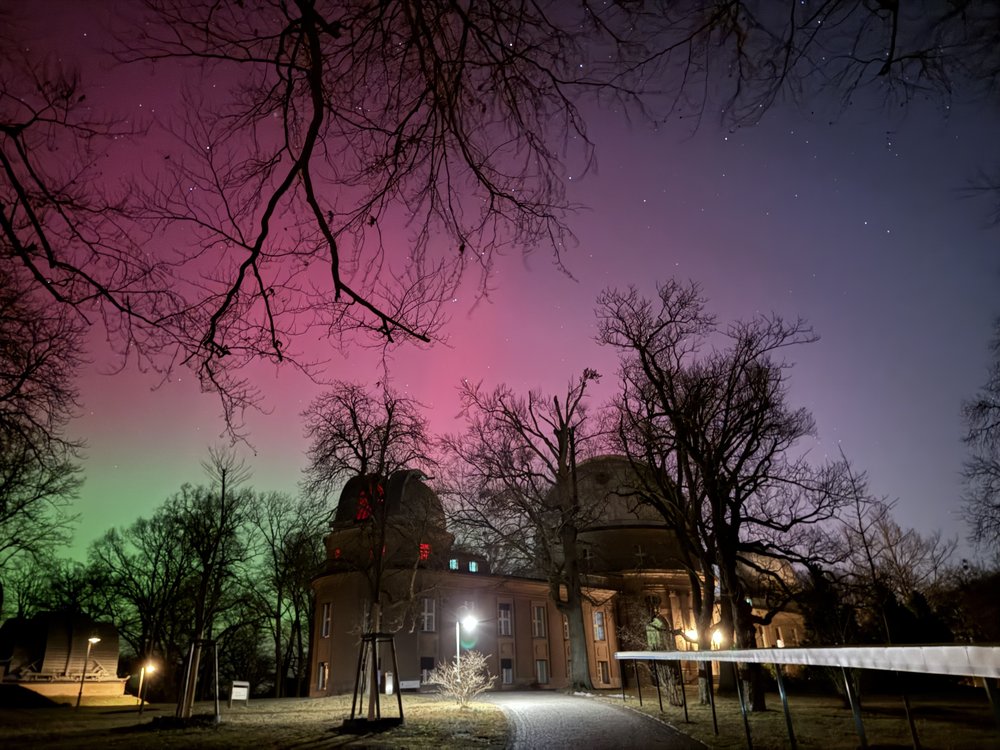
Northern Lights above the Humboldthaus at the AIP research campus in Babelsberg
Big screen size [1000 x 750, 160 KB]
Original size [4032 x 3024, 1.6 MB]
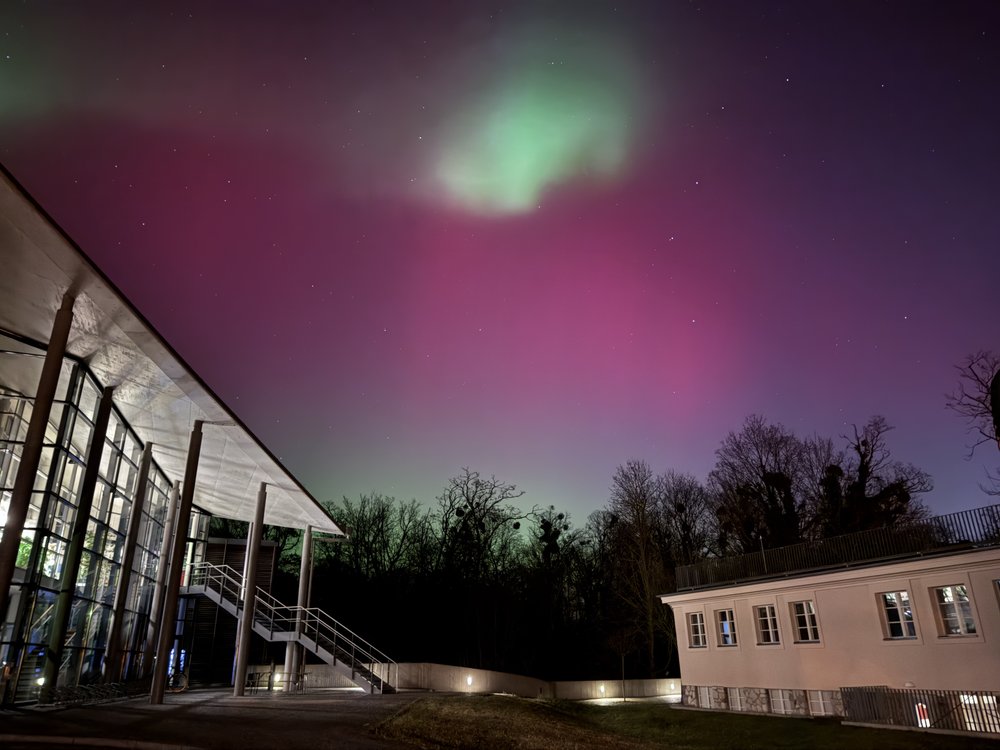
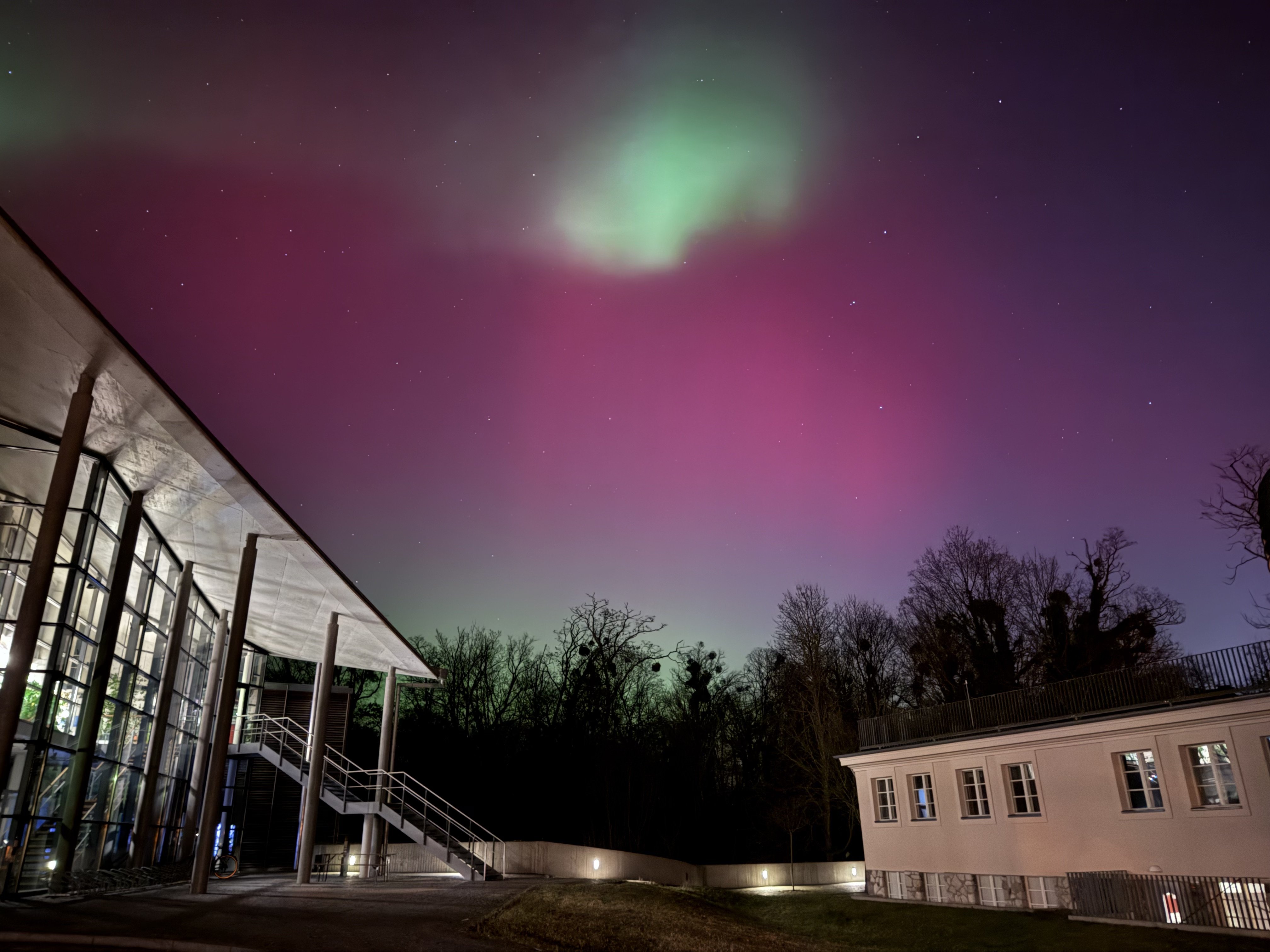
Northern Lights between the Schwarzschildhaus and the librabry of the AIP
Big screen size [1000 x 750, 100 KB]
Original size [4032 x 3024, 980 KB]
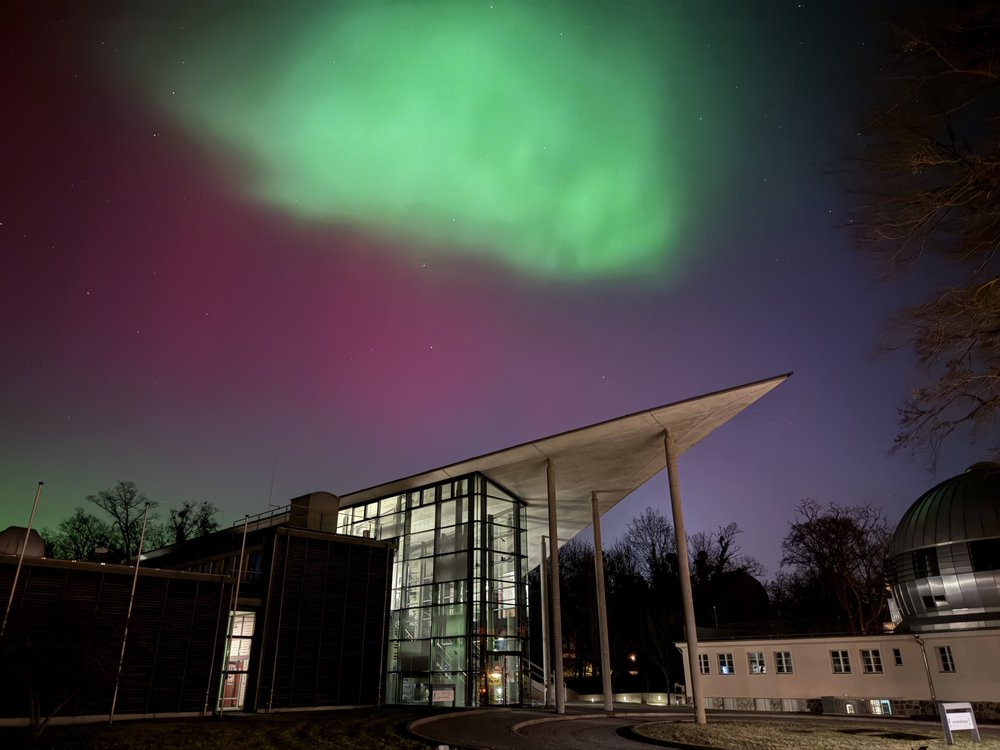
The bright green veil in the sky above the Schwarzschild House is clearly visible in this photograph with longer exposure.
Big screen size [1000 x 750, 80 KB]
Original size [4032 x 3024, 910 KB]
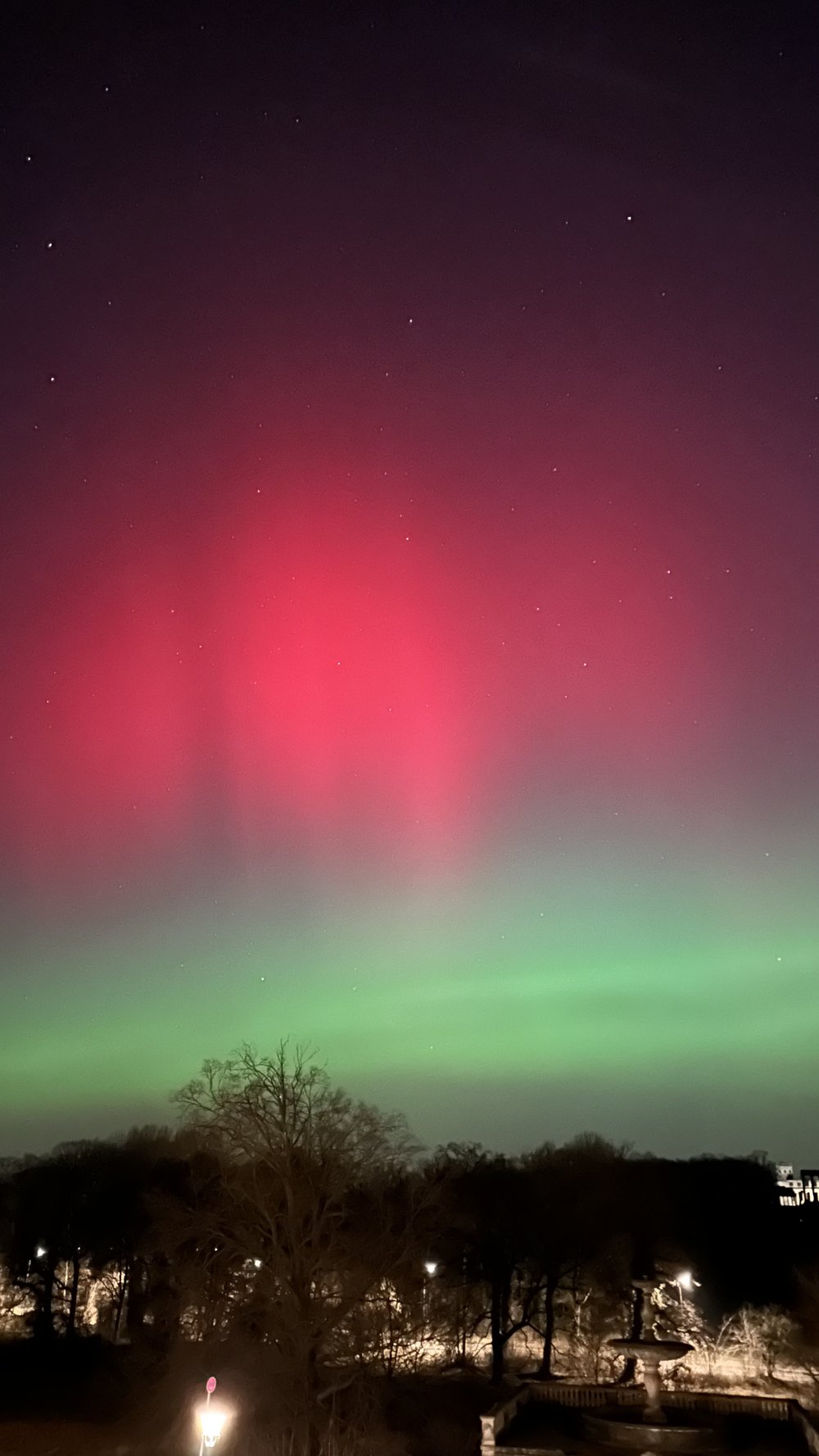
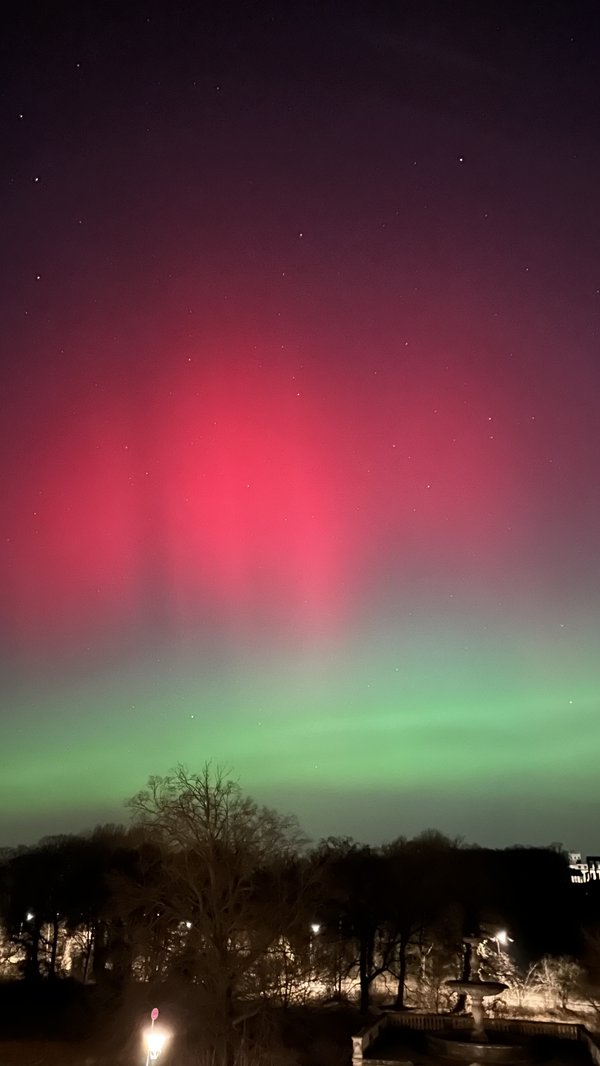
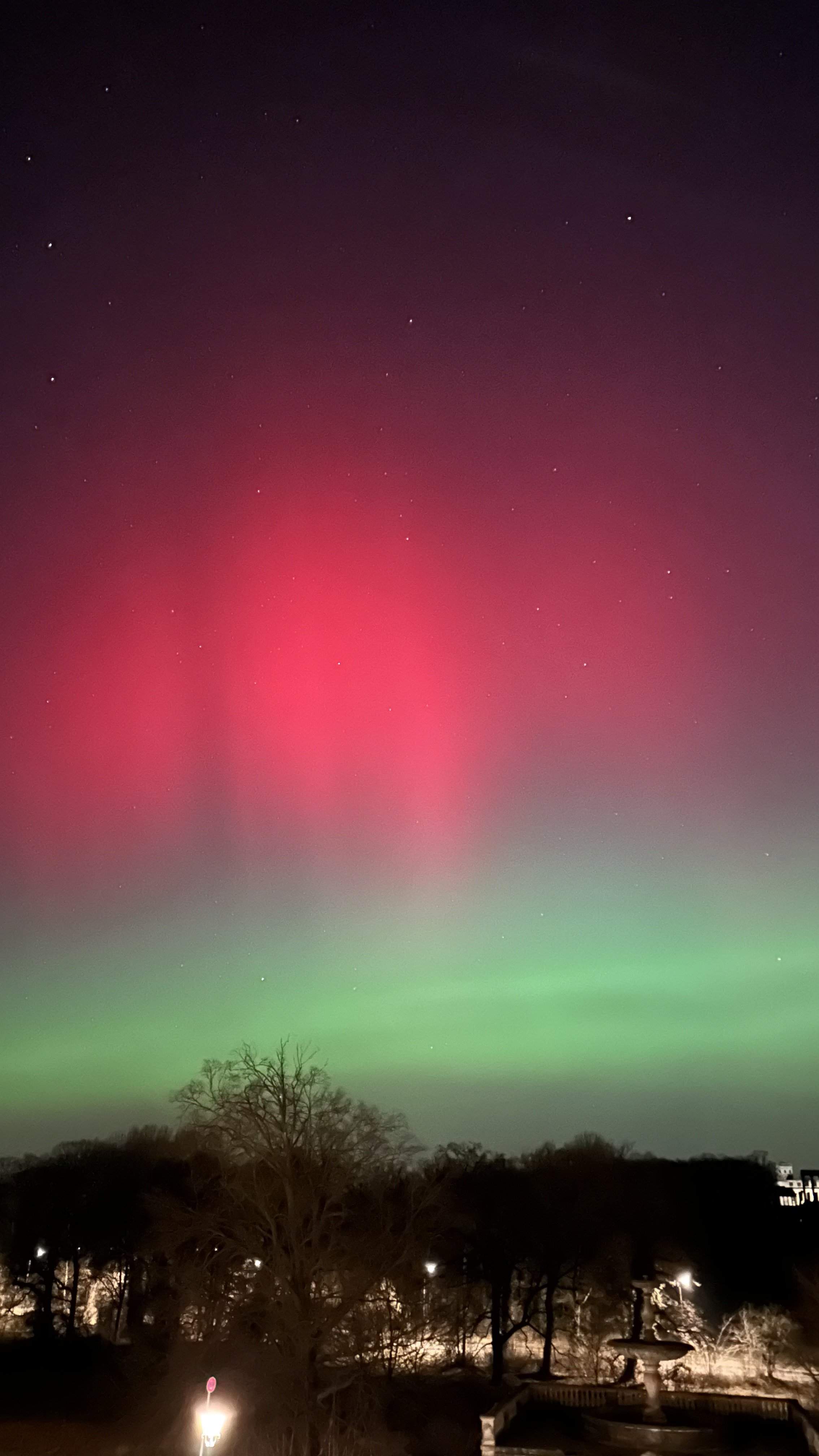
Red glow above Sanssouci Park in Potsdam
Big screen size [1000 x 1777, 150 KB]
Original size [2268 x 4032, 820 KB]
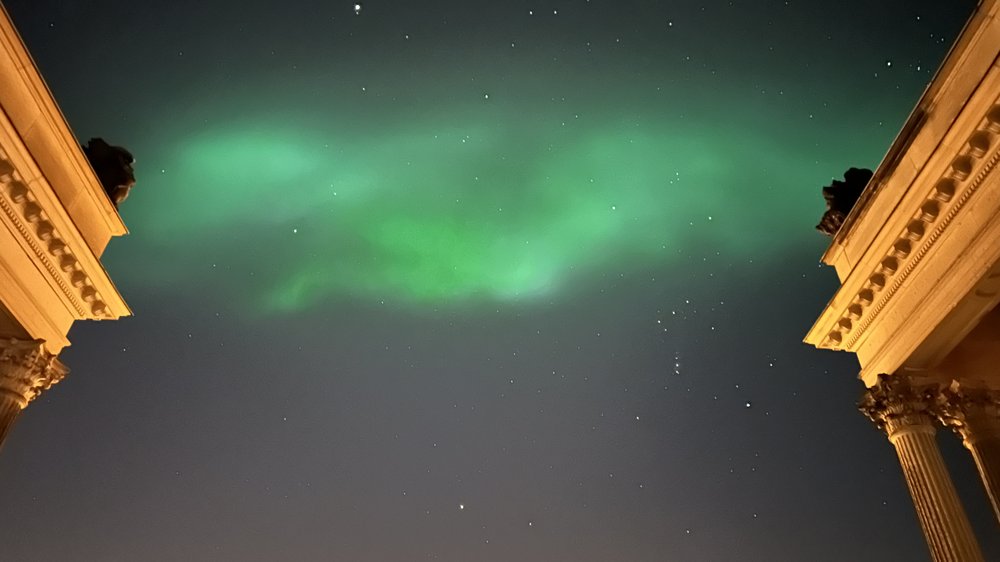
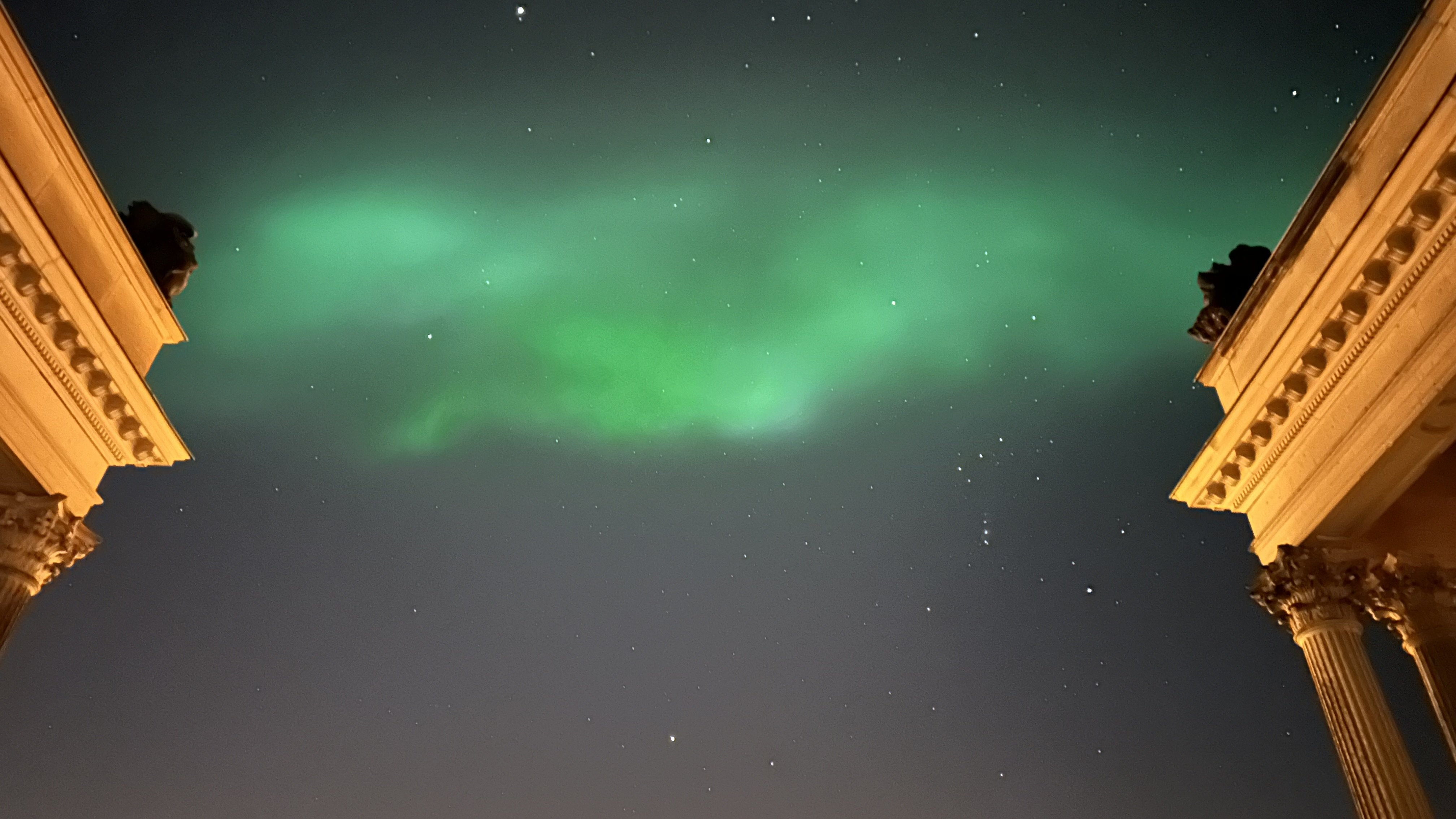
Green veil in the constellation Orion above Park Sanssouci
Big screen size [1000 x 562, 50 KB]
Original size [4032 x 2268, 880 KB]
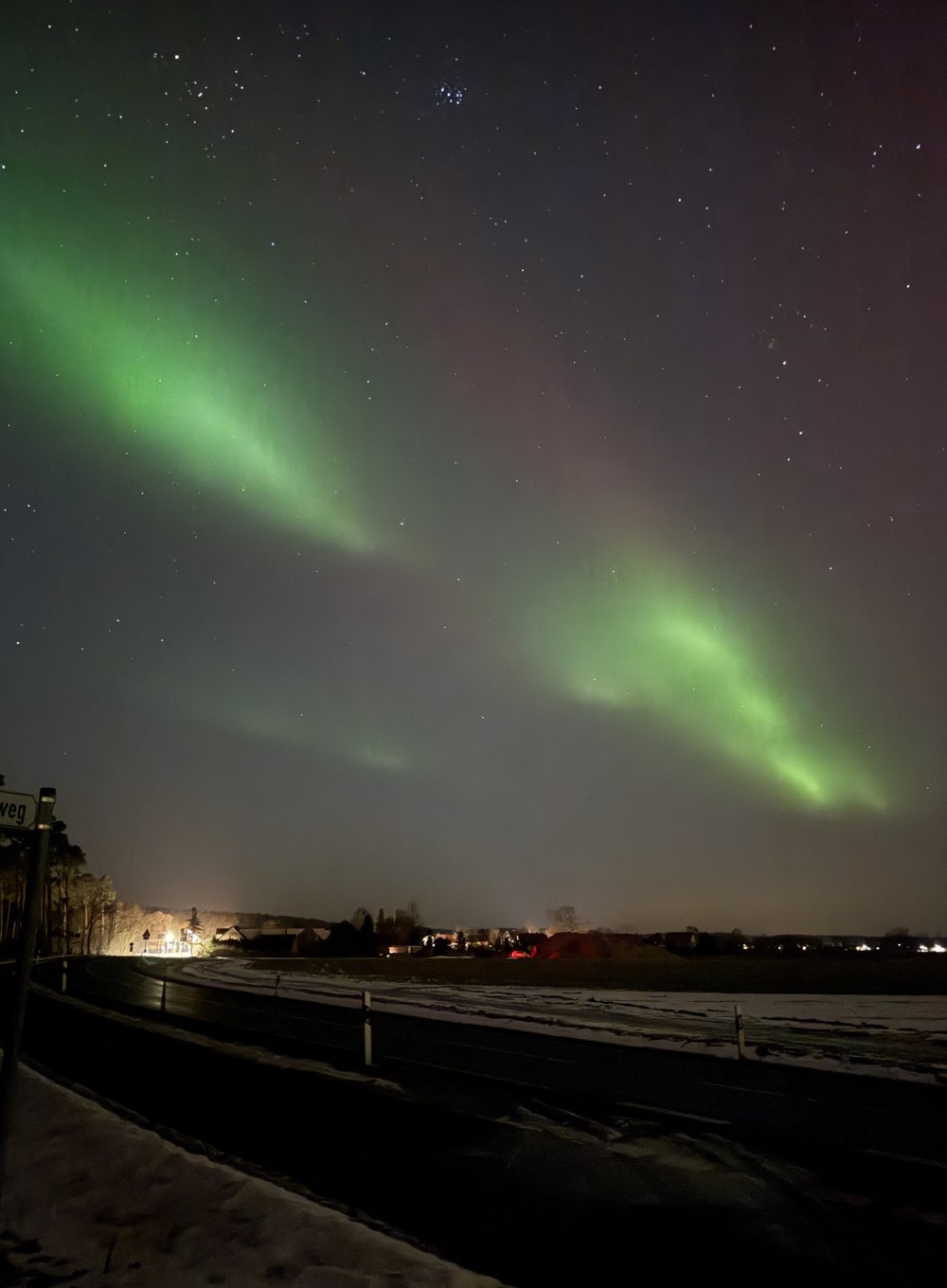
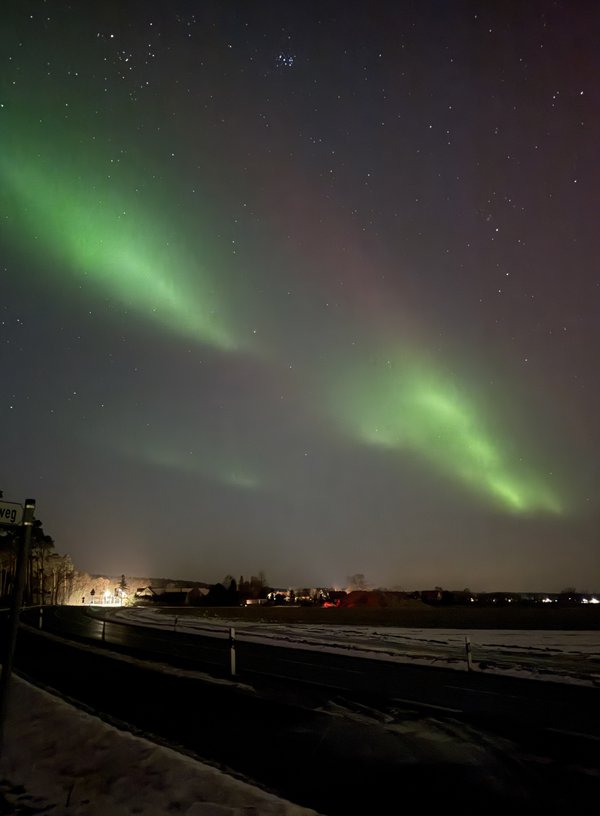
Northern Lights around Fichtenwalde, close to Potsdam
Big screen size [1000 x 1360, 90 KB]
Original size [2152 x 2928, 440 KB]