New research group to explore the evolution of the Magellanic Clouds
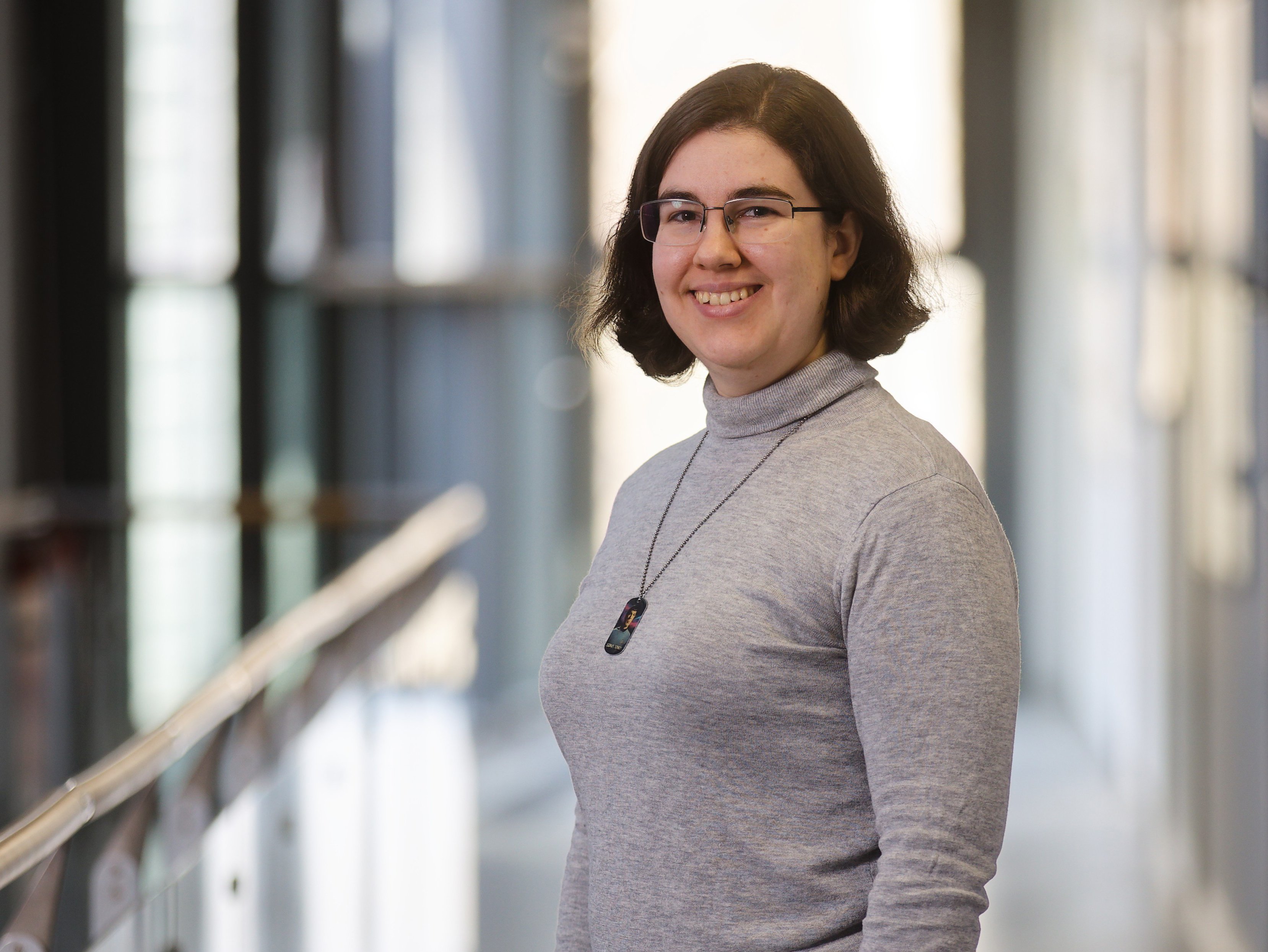
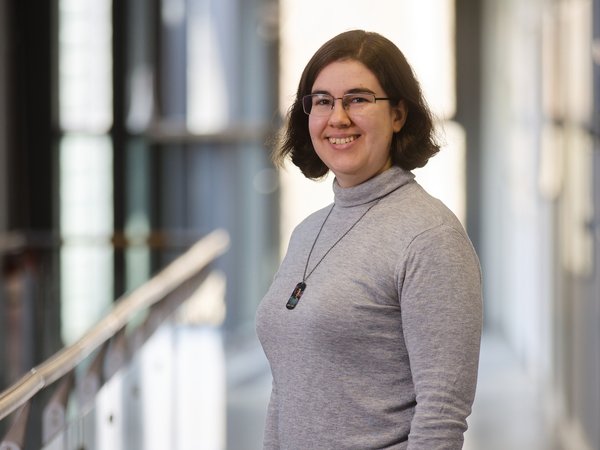
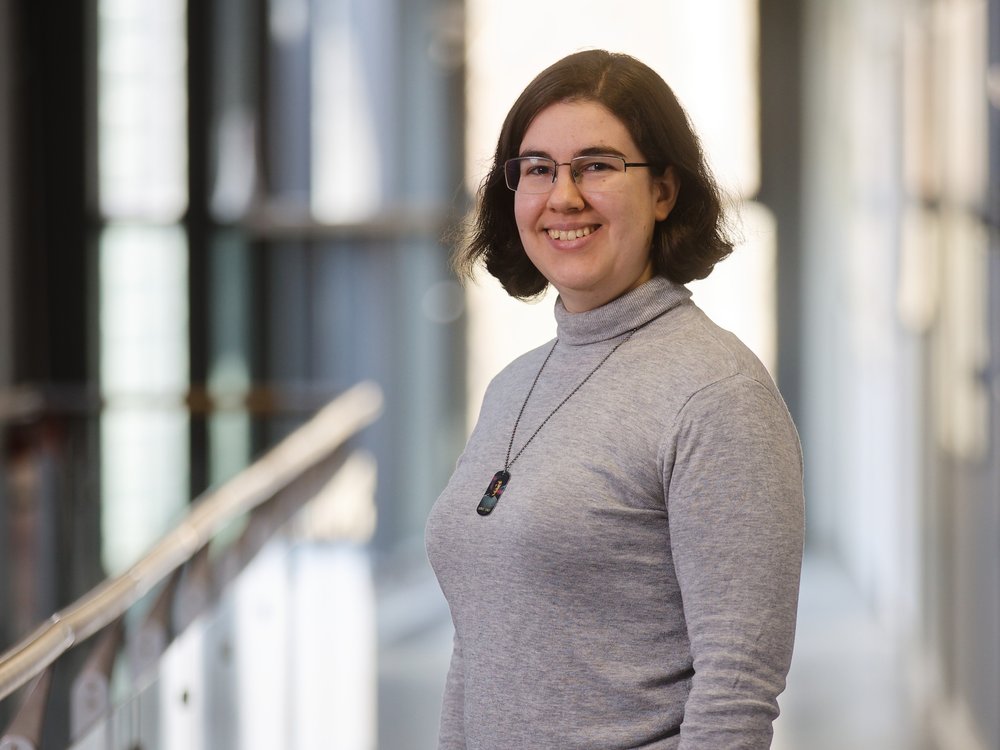
Dr Lara Cullinane
Credit: AIP/SpikermannDr Lara Cullinane has been awarded a prestigious Leibniz Junior Research Group to investigate the evolution of the Magellanic Clouds, our nearest galactic neighbours. Her project, titled ’Chronicling the Clouds: Chemodynamics of the Most Massive Dwarf Galaxies’ will use the cutting-edge 4MOST instrument to uncover how these galaxies formed, evolved, and interacted over billions of years.
The group will be based at the Leibniz Institute for Astrophysics Potsdam (AIP) and will begin its work in 2026. “My work involves looking in detail at the photometric, kinematic, and chemical properties of resolved stellar populations in nearby galaxies in order to trace their history, and learn more about the processes that drive their evolution across cosmic time,” says Lara Cullinane.
The Large and Small Magellanic Clouds are key laboratories for studying galaxy evolution, mass assembly, and the long-term impact of gravitational interactions. Yet many aspects of their past remain unclear. By harnessing data from the groundbreaking spectroscopic 4MOST survey, the new Junior Research Group will reconstruct their chemical enrichment, star-formation history, and dynamical evolution with unprecedented detail. The project is exceptionally timely, aligns closely with upcoming observational facilities, and opens wide-ranging opportunities for collaboration across the astronomical community.
Lara Cullinane received her PhD from the Australian National University in 2021. She subsequently spent two years as an Assistant Research Scientist at Johns Hopkins University before joining AIP as a postdoctoral researcher in February 2024.
The Leibniz Junior Research Groups program provides outstanding early-career scientists with the opportunity to establish their own independent research groups, offering excellent working conditions, competitive resources, and strong networking prospects. It is designed for postdoctoral researchers with an exceptional track record who aspire to secure a professorship or equivalent leadership role.
With the addition of Lara Cullinane’s group, AIP will host three Leibniz Junior Research Groups, joining those led by Rainer Weinberger and Marcel Pawlowski.
Dr Lara Cullinane
Credit: AIP/SpikermannDr Lara Cullinane has been awarded a prestigious Leibniz Junior Research Group to investigate the evolution of the Magellanic Clouds, our nearest galactic neighbours. Her project, titled ’Chronicling the Clouds: Chemodynamics of the Most Massive Dwarf Galaxies’ will use the cutting-edge 4MOST instrument to uncover how these galaxies formed, evolved, and interacted over billions of years.
The group will be based at the Leibniz Institute for Astrophysics Potsdam (AIP) and will begin its work in 2026. “My work involves looking in detail at the photometric, kinematic, and chemical properties of resolved stellar populations in nearby galaxies in order to trace their history, and learn more about the processes that drive their evolution across cosmic time,” says Lara Cullinane.
The Large and Small Magellanic Clouds are key laboratories for studying galaxy evolution, mass assembly, and the long-term impact of gravitational interactions. Yet many aspects of their past remain unclear. By harnessing data from the groundbreaking spectroscopic 4MOST survey, the new Junior Research Group will reconstruct their chemical enrichment, star-formation history, and dynamical evolution with unprecedented detail. The project is exceptionally timely, aligns closely with upcoming observational facilities, and opens wide-ranging opportunities for collaboration across the astronomical community.
Lara Cullinane received her PhD from the Australian National University in 2021. She subsequently spent two years as an Assistant Research Scientist at Johns Hopkins University before joining AIP as a postdoctoral researcher in February 2024.
The Leibniz Junior Research Groups program provides outstanding early-career scientists with the opportunity to establish their own independent research groups, offering excellent working conditions, competitive resources, and strong networking prospects. It is designed for postdoctoral researchers with an exceptional track record who aspire to secure a professorship or equivalent leadership role.
With the addition of Lara Cullinane’s group, AIP will host three Leibniz Junior Research Groups, joining those led by Rainer Weinberger and Marcel Pawlowski.
Images
Dr Lara Cullinane
Big screen size [1000 x 750, 90 KB]
Original size [3316 x 2490, 890 KB]