Virtual lecture: Babelsberg Starry Night on 18 December 2025
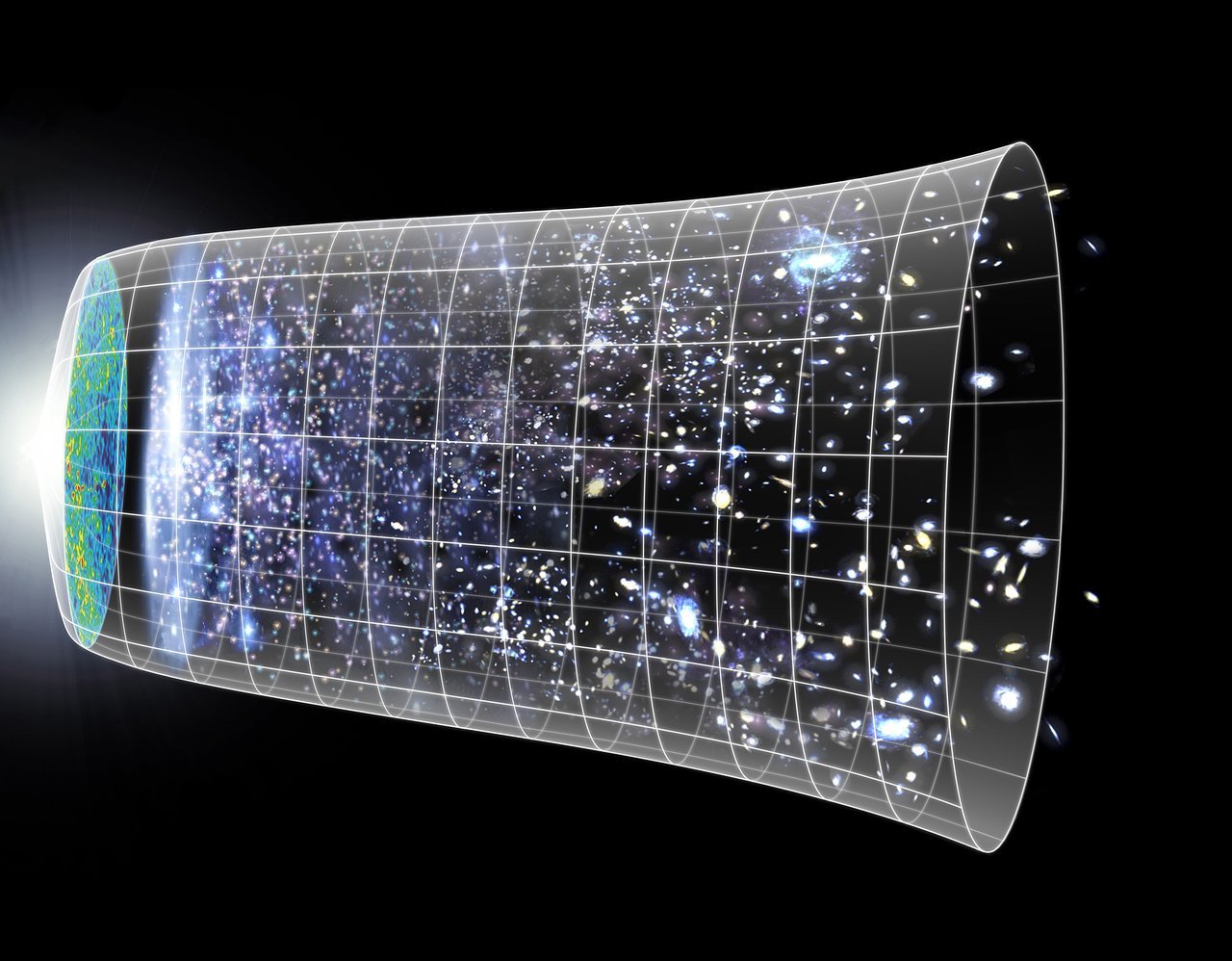
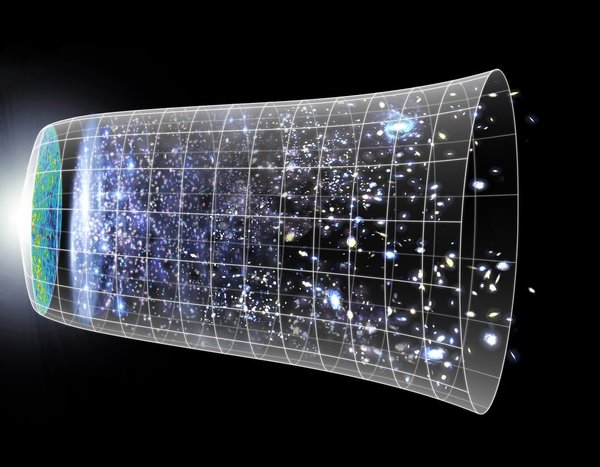
Since the Big Bang about 14 billion years ago, the Universe has been expanding. The expansion rate is given by the Hubble constant, its exact value is still under debate.
Credit: NASA/WMAP Science TeamThe next lecture of the Virtual Babelsberg Starry Nights of the Leibniz Institute for Astrophysics Potsdam (AIP) entitled “What’s wrong with the Hubble constant” (in German) by Prof. Dr. Matthias Steinmetz, will focus on determining this constant and the expansion of the Universe. The video of the lecture will be broadcast on the YouTube channel “Urknall, Weltall und das Leben” (Big Bang, Universe and Life) from Thursday, 18.12.2025.
Prof. Dr. Matthias Steinmetz is a scientific director at the AIP and talks in this public lecture about the Hubble constant. This quantity describes the current expansion rate of the Universe and is central to our understanding of its age and evolution. However, despite more precise measurement methods—from standard candles such as supernovae to acoustic oscillations in the early cosmos—the results show discrepancies. Is the cause systematic errors in the measurements, or does this point to new physics beyond the Standard Model? In this lecture, Matthias Steinmetz sheds light on the background to this fundamental discrepancy and discusses the most promising approaches.
Usually on the 3rd Thursday of each month, starting at 8 p.m., the lectures of the Babelsberg Starry Nights become available at
https://www.aip.de/babelsberger-sternennaechte
and via the YouTube channels "Urknall, Weltall und das Leben" (Big Bang, Universe and Life) and "videowissen" and can be viewed afterwards at any time.
Since the Big Bang about 14 billion years ago, the Universe has been expanding. The expansion rate is given by the Hubble constant, its exact value is still under debate.
Credit: NASA/WMAP Science TeamThe next lecture of the Virtual Babelsberg Starry Nights of the Leibniz Institute for Astrophysics Potsdam (AIP) entitled “What’s wrong with the Hubble constant” (in German) by Prof. Dr. Matthias Steinmetz, will focus on determining this constant and the expansion of the Universe. The video of the lecture will be broadcast on the YouTube channel “Urknall, Weltall und das Leben” (Big Bang, Universe and Life) from Thursday, 18.12.2025.
Prof. Dr. Matthias Steinmetz is a scientific director at the AIP and talks in this public lecture about the Hubble constant. This quantity describes the current expansion rate of the Universe and is central to our understanding of its age and evolution. However, despite more precise measurement methods—from standard candles such as supernovae to acoustic oscillations in the early cosmos—the results show discrepancies. Is the cause systematic errors in the measurements, or does this point to new physics beyond the Standard Model? In this lecture, Matthias Steinmetz sheds light on the background to this fundamental discrepancy and discusses the most promising approaches.
Usually on the 3rd Thursday of each month, starting at 8 p.m., the lectures of the Babelsberg Starry Nights become available at
https://www.aip.de/babelsberger-sternennaechte
and via the YouTube channels "Urknall, Weltall und das Leben" (Big Bang, Universe and Life) and "videowissen" and can be viewed afterwards at any time.
Images
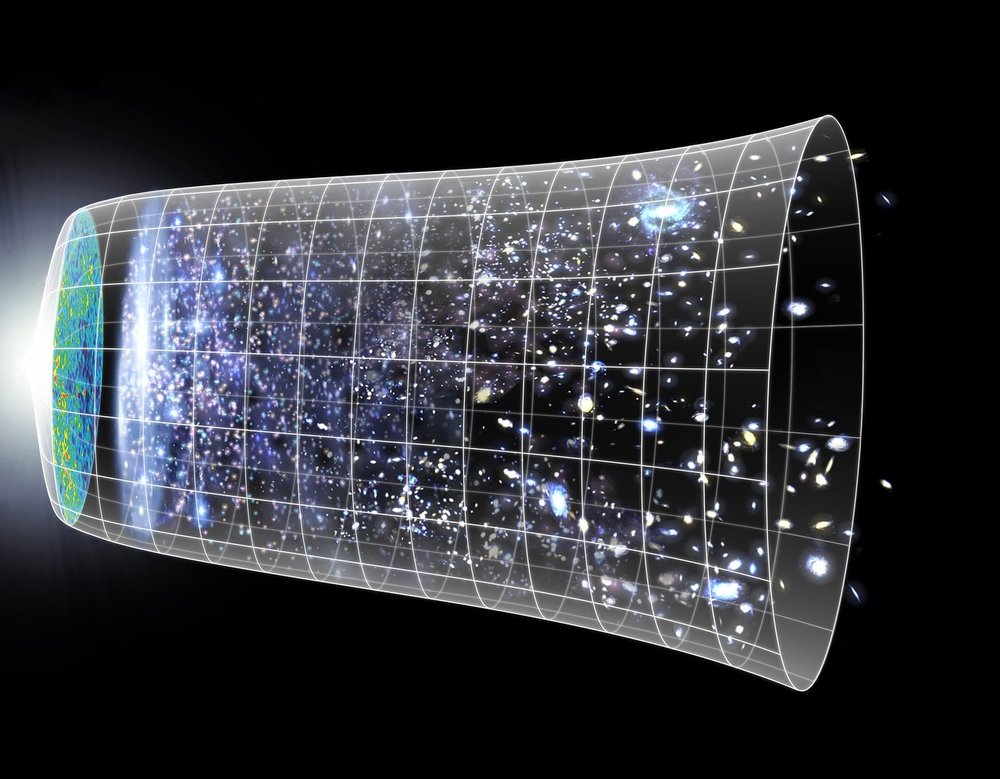
Since the Big Bang about 14 billion years ago, the Universe has been expanding. The expansion rate is given by the Hubble constant, its exact value is still under debate.
Big screen size [1000 x 779, 120 KB]
Original size [1280 x 998, 180 KB]