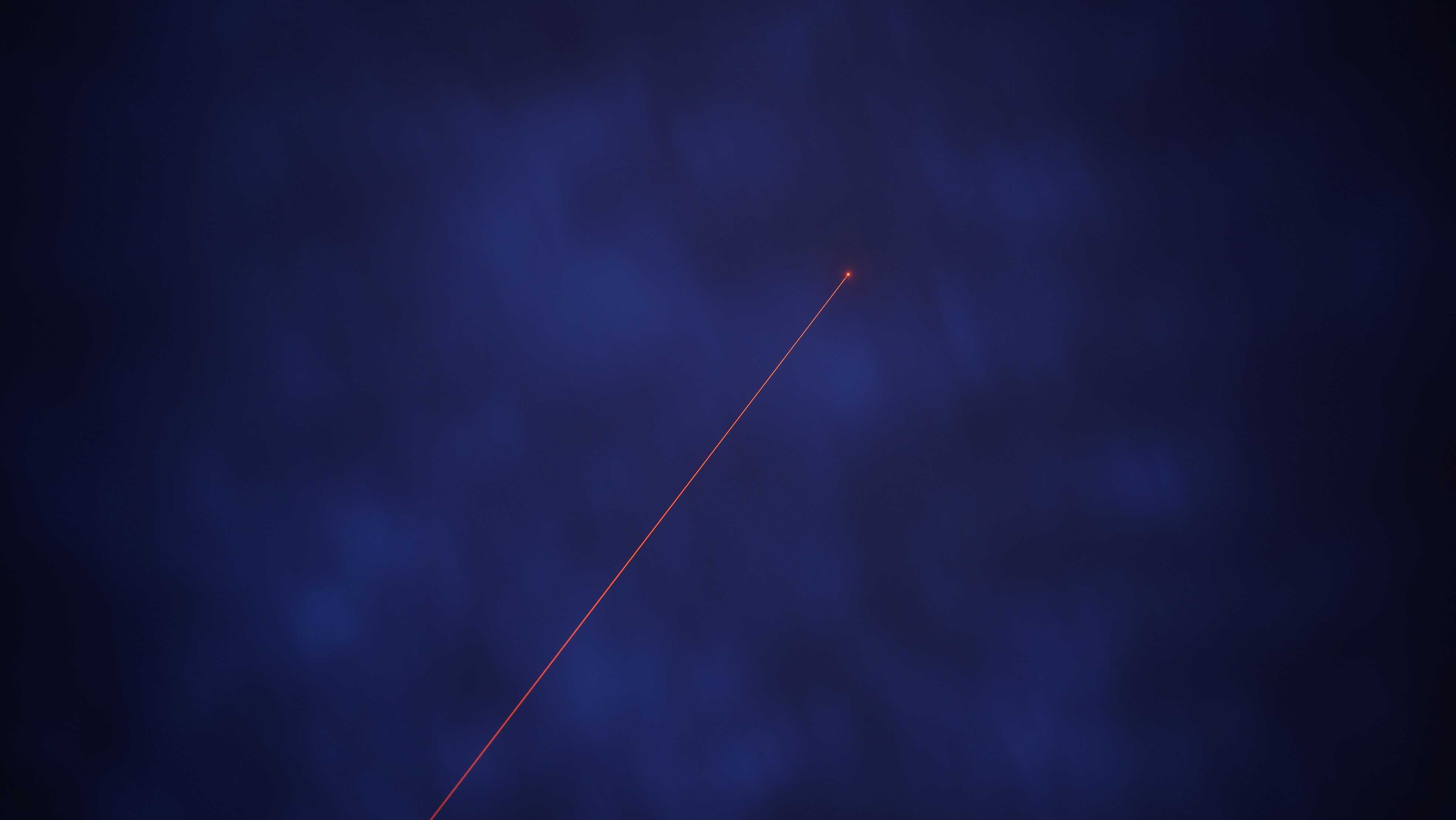
Artificial Star Above Potsdam: How Berlin Laser Technology Helps Explore the Universe
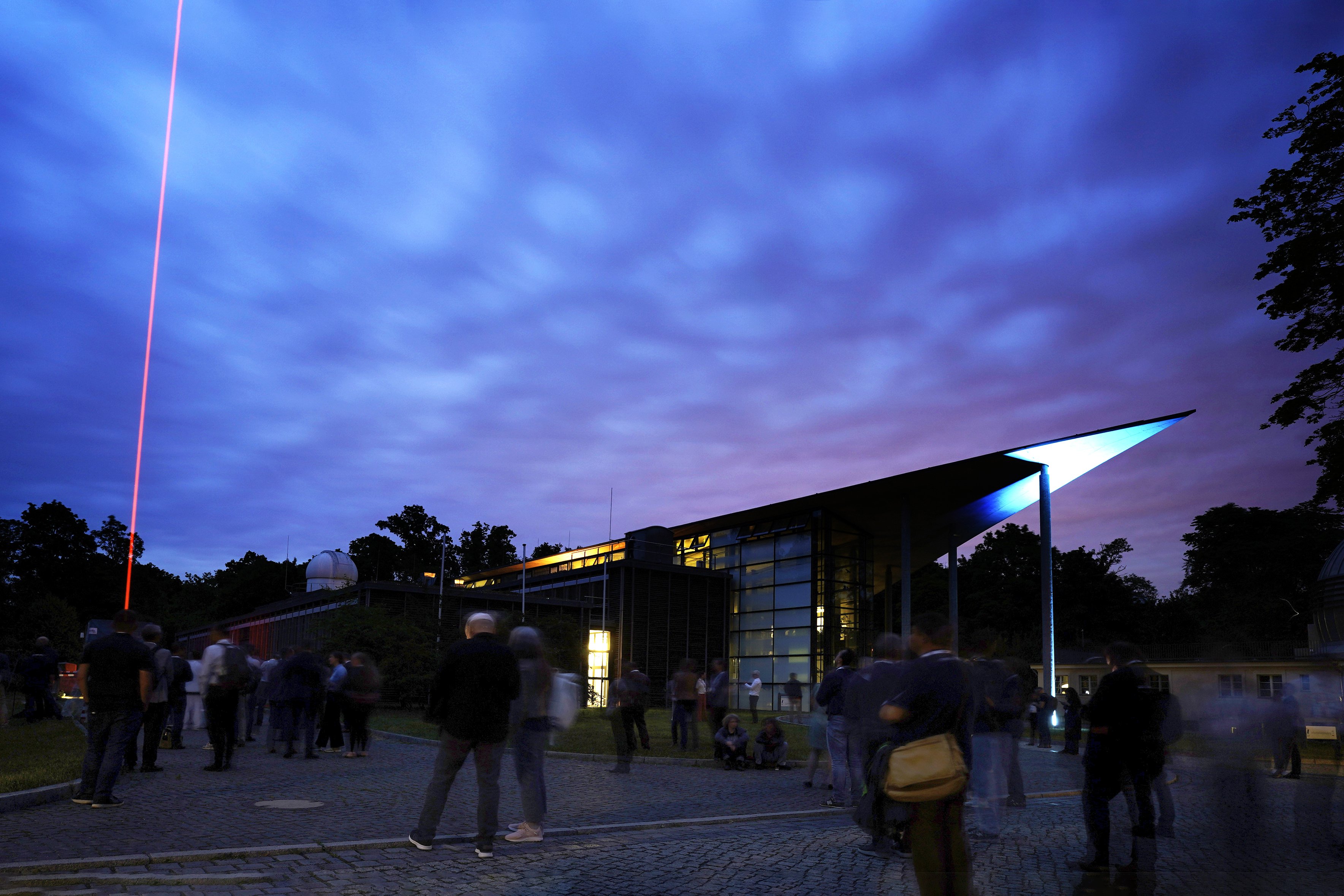
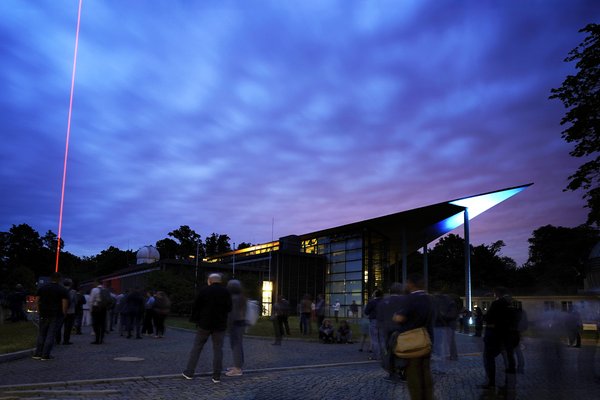
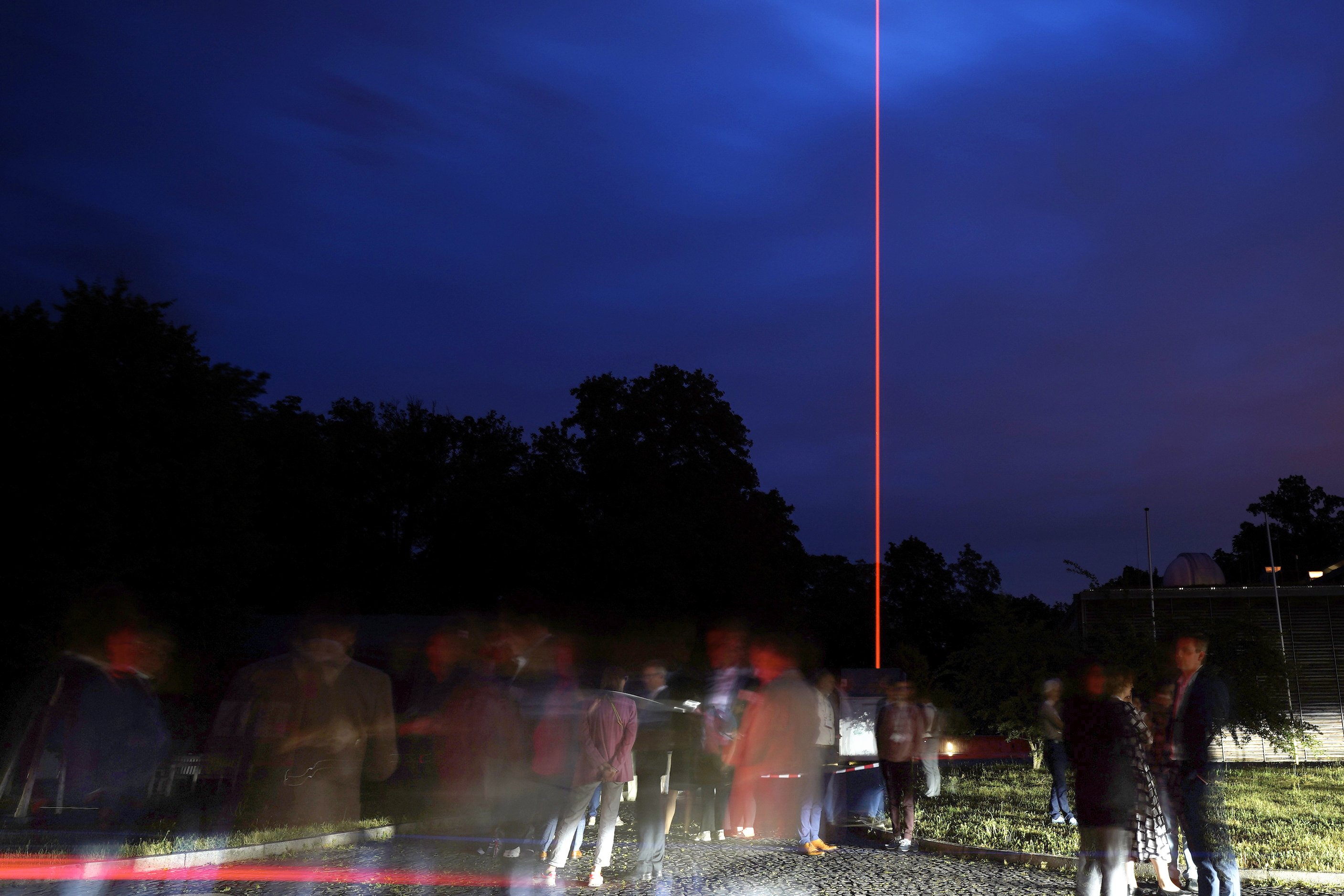
An artificial star was projected over the AIP Campus on Monday evening
Credit: AIPAn artificial star above Potsdam became a visible symbol on Monday evening of a success story from the Berlin-Brandenburg region. During a joint event hosted by the Leibniz Institute for Astrophysics Potsdam (AIP) and TOPTICA EAGLEYARD, representatives from science, industry, and business came together to recognize the international significance of the German capital region as a center for photonics, laser, and space technologies.
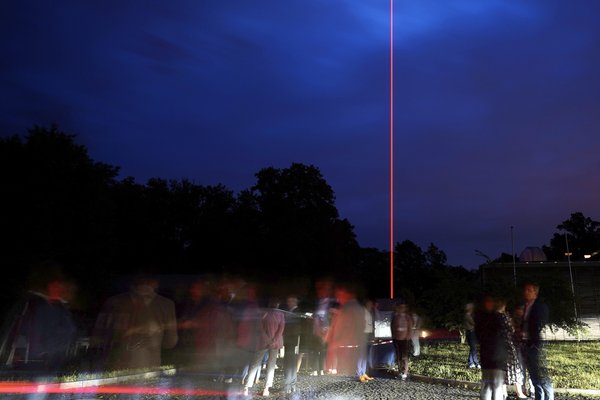
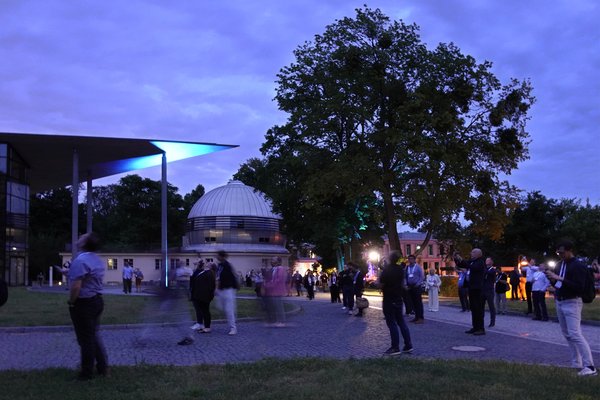
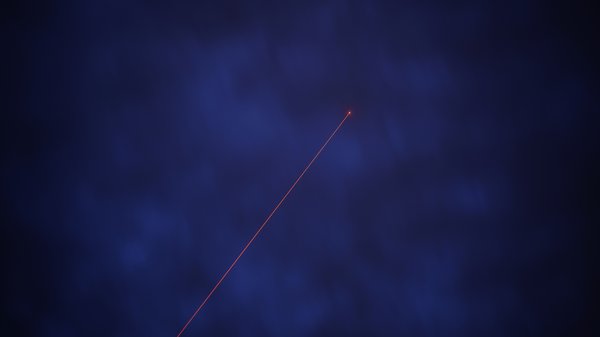
The highlight of the evening was a live demonstration of a guide star laser from TOPTICA PROJECTS. This technology creates an artificial reference star in the Earth's atmosphere, enabling modern large-scale telescopes to compensate for distortions caused by the atmosphere. The result is significantly sharper images of the universe – a key technology for modern astronomy. This technology was demonstrated directly to the guests through an impressive yellow laser beam projected into the night sky above Potsdam.
However, the real story extends far beyond this spectacular moment. Today, Berlin-Brandenburg ranks among the world's leading locations for photonics and laser technology. Companies and research institutions throughout the region develop key technologies that are used in science, industry, medical technology, and increasingly also in space applications.
“When people think about space, they often think first of rockets or satellites. What is less visible are the enabling technologies behind them. This is precisely where Berlin-Brandenburg is among the world's leading regions. The region develops technologies that help us better understand the universe and make future space missions possible in the first place,” said Claus Heitmann, Managing Director of TOPTICA EAGLEYARD. The company develops and manufactures high-power laser diodes for demanding applications in science, industry, life sciences, and space. These laser diodes are used worldwide wherever the highest levels of precision, reliability, and performance are required, including in NASA and ESA missions.
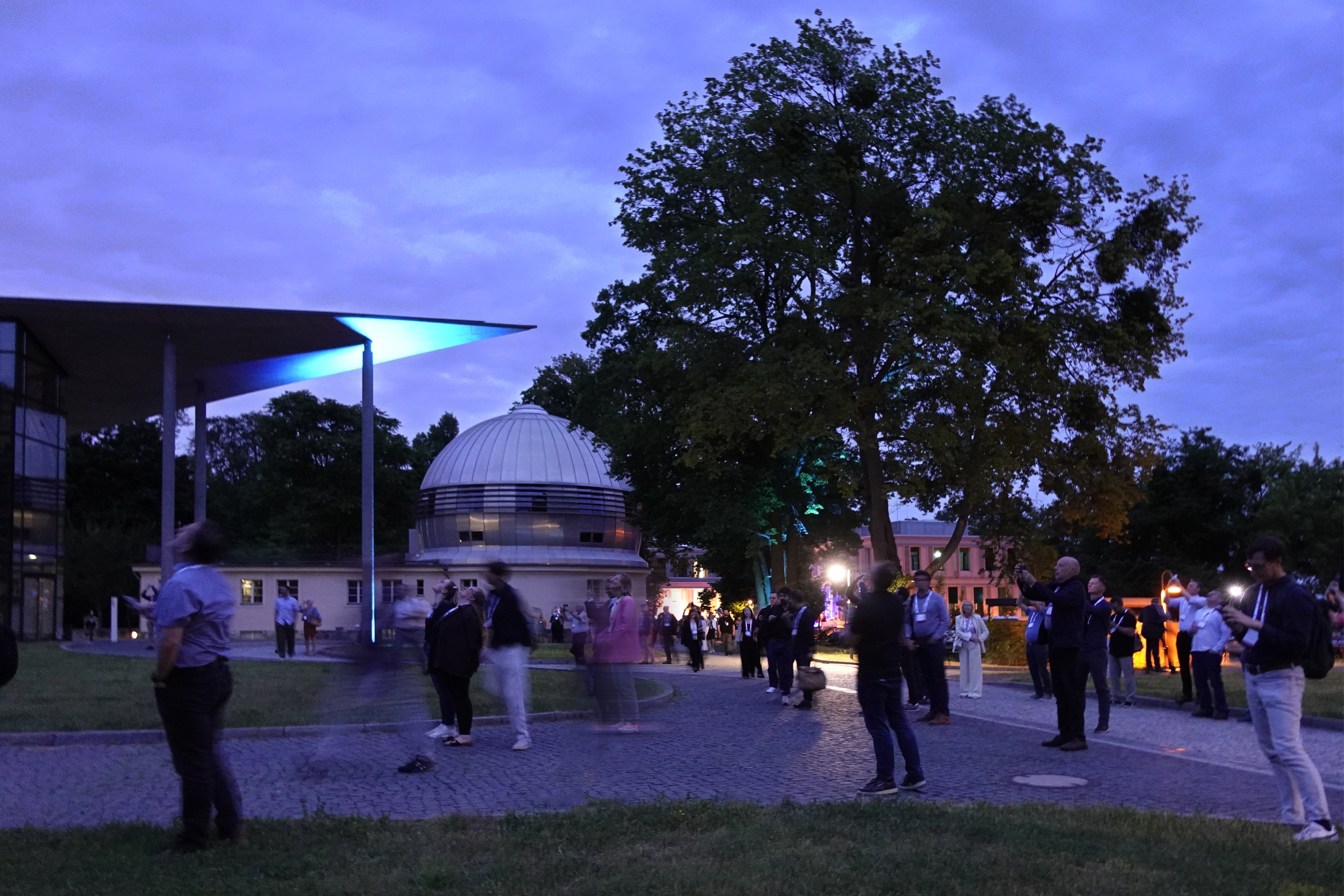
The event took place following the international EPIC Technology Meeting on Photonics for Space and New Space and brought together renowned representatives of the European photonics industry. The program included presentations on astronomical research, the future of the European photonics industry, and space missions that rely on state-of-the-art photonics technologies.
“When experts from across Europe, international companies, research institutions, and representatives of major space projects come to Potsdam, it demonstrates the international visibility and appeal this location has developed. The EPIC Technology Meeting clearly highlighted that Berlin-Brandenburg is among the most important centers for photonics and space technologies in Europe. We are proud to have hosted this international platform,” said Prof. Dr. Martin Roth of AIP.
Particular emphasis was placed on the close collaboration between research institutions and companies in the region. While institutions such as AIP focus on fundamental research, companies like TOPTICA EAGLEYARD transform innovative technologies into reliable industrial products that can be manufactured at scale. “The strength of our region lies not only in excellent research, but above all in our ability to turn that research into market-ready technologies. Here, research meets industry – and ideas become solutions with global impact,” Heitmann continued.
The event made clear that many of the technologies that contribute to exploring the universe today or enable future space applications are being developed not only in major international space centers, but also in laboratories, research institutes, and companies throughout Berlin and Brandenburg.
“Anyone who attended this evening experienced what becomes possible when outstanding research meets strong industry. Many of the technologies that will shape the future are already being developed today in Berlin and Brandenburg. That is something we can be proud of—and something we should communicate with confidence,” Claus Heitmann concluded.
About TOPTICA EAGLEYARD
TOPTICA EAGLEYARD, headquartered in Berlin-Adlershof, is a leading supplier of high-power laser diodes covering wavelengths from 630 nm to 1120 nm. The company's products are used worldwide and combine maximum performance, exceptional lifetime, and excellent beam quality, with a particular focus on a high level of integration. These characteristics make the laser diodes especially suitable for demanding applications in industry, medical technology, science, and space.
The company was founded in 2002 as a spin-off from the renowned Ferdinand-Braun-Institut (FBH). Today, TOPTICA EAGLEYARD holds a leading position in its market segment thanks to its unique portfolio of GaAs-based laser diodes. The company transforms research results into market-ready products that are distributed worldwide either directly or through partners. Since 2013, TOPTICA EAGLEYARD has been part of the TOPTICA Group.
Further information
www.toptica-eagleyard.com
Images
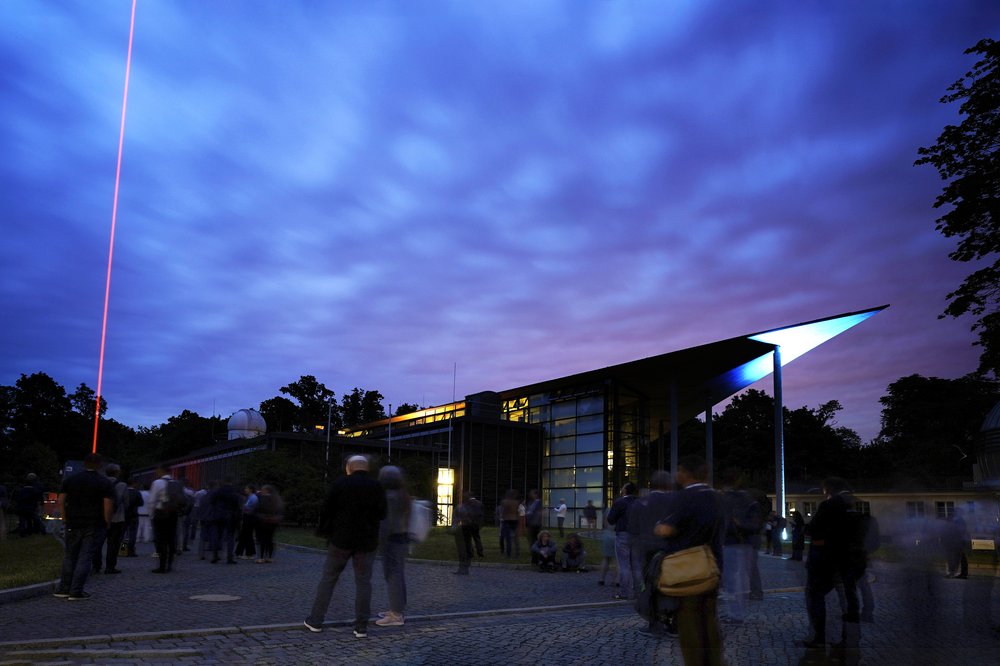
An artificial star was projected over the AIP Campus on Monday evening
Big screen size [1000 x 666, 80 KB]
Original size [3537 x 2359, 970 KB]
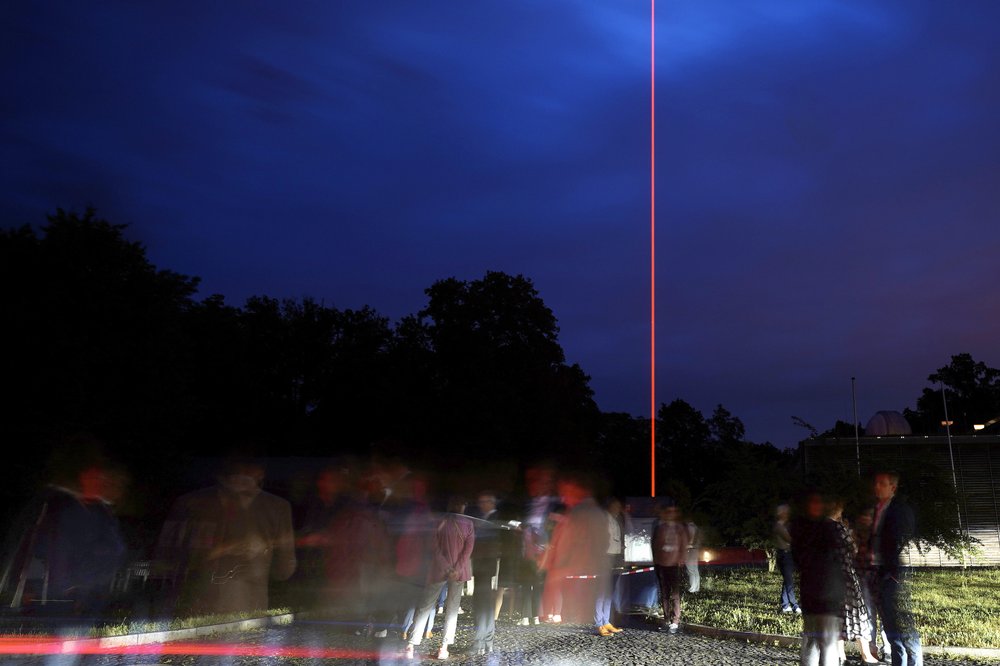
The highlight of the evening was a live demonstration of a guide star laser from TOPTICA PROJECTS.
Big screen size [1000 x 666, 70 KB]
Original size [2814 x 1876, 540 KB]
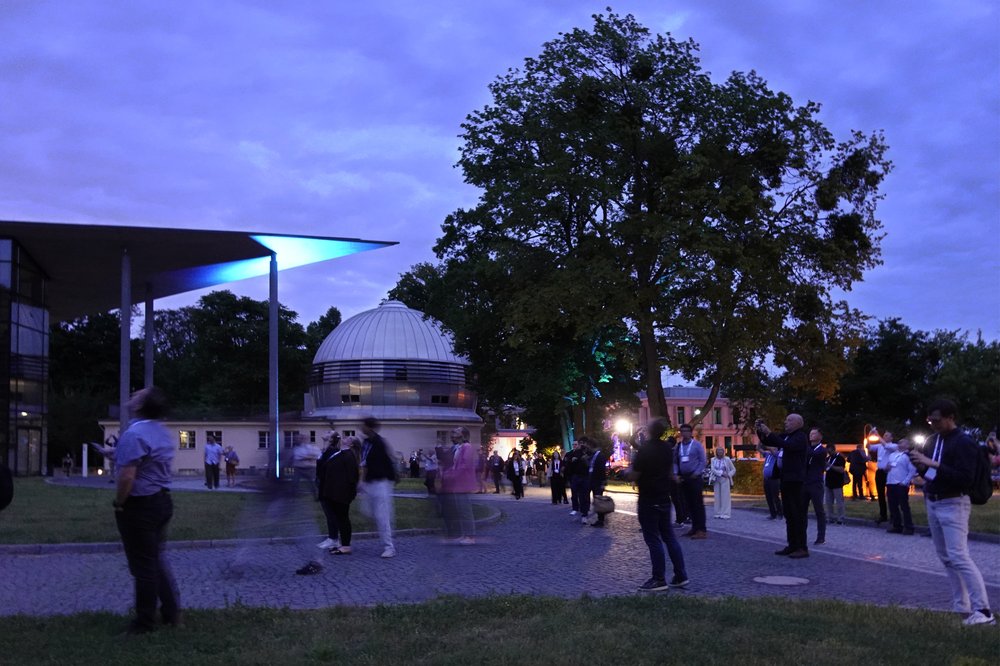
The event took place following the international ‘EPIC Technology Meeting on Photonics for Space and New Space’ and brought together representatives from the photonics industry.
Big screen size [1000 x 666, 130 KB]
Original size [4956 x 3304, 2.1 MB]
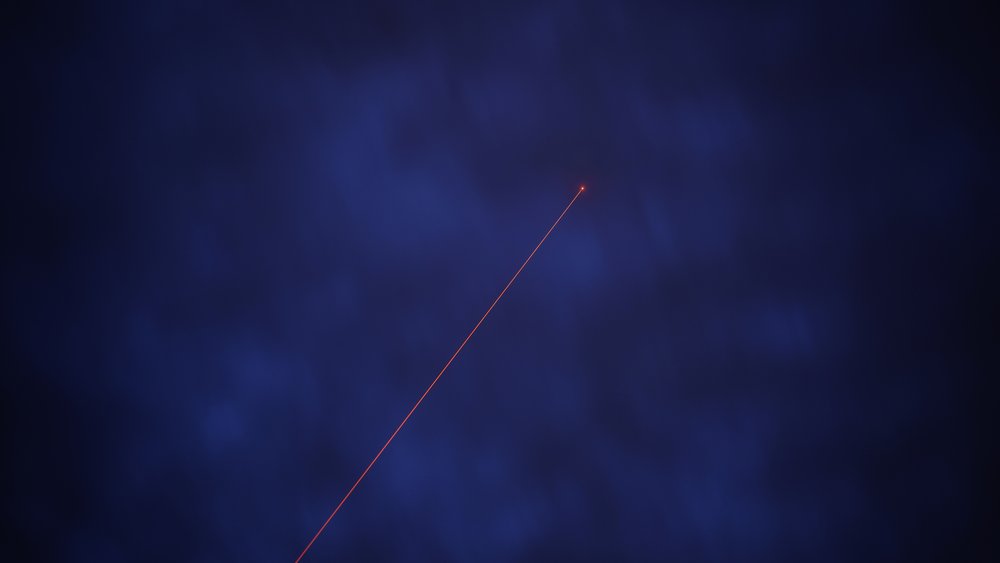
The Guide Star Lasers. This technology creates an artificial reference star in the Earth's atmosphere, enabling modern large-scale telescopes to compensate for distortions caused by the atmosphere.
Big screen size [1000 x 563, 10 KB]
Original size [3936 x 2216, 230 KB]