Partial Solar Eclipse on 12th August 2026
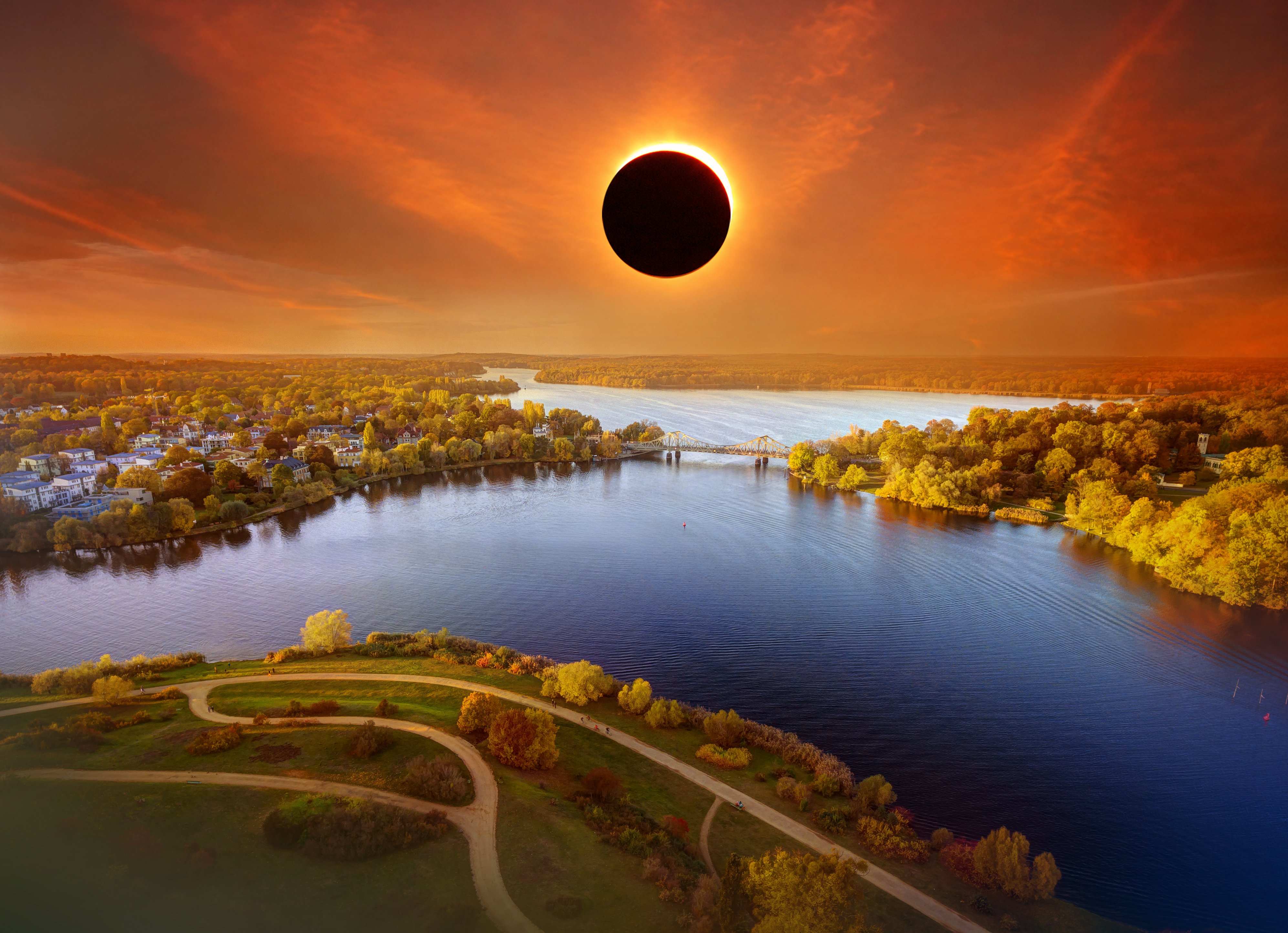
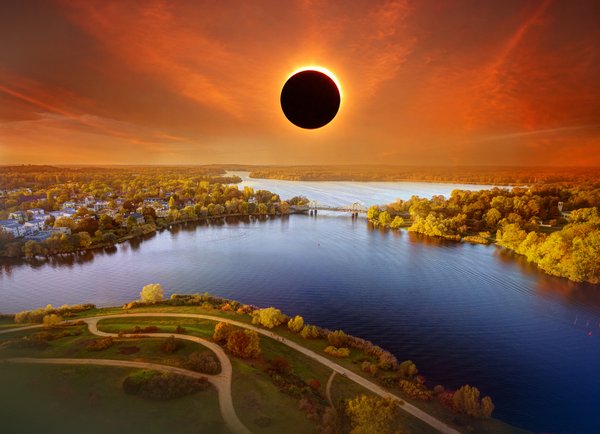
Artistic representation of the solar eclipse over the Glienicker Bridge in Potsdam
Credit: Adobe StockAs part of the Long Night of Astronomy, the AIP is offering a special program for the partial solar eclipse on August 12, 2026.The event starts with talks from the Solar Physics research group, then visitors have the opportunity to watch the Sun in Park Babelsberg.
Visit us at the AIP campus in Babelsberg and enjoy exciting talks about the Sun, as well as a live observation session of this fascinating celestial event. Starting at 5 pm, Dr Christian Vocks will give a talk entitled ‘Solar eclipses – total, partial, annular’. At 6 pm, Dr Carsten Denker will provide insights into modern solar research using large-scale instruments such as the PEPSI instrument in Arizona. As the Sun will already be very low on the horizon at the time of the solar eclipse, we will head to a better vantage point in the park at Castle Babelsberg after the talks. There, from 7 pm, you will have the opportunity to observe the solar eclipse together with scientists from the AIP. By the way: The snack bar by the castle will stay open a little longer that day, so you can grab a bite to eat there.
A solar eclipse is a rare astronomical event. It occurs when the new moon passes exactly between the Earth and the Sun, blocking the Sun's light. The Moon's shadow then falls upon the Earth's surface. During the solar eclipse on August 12, the Moon moves in front of the Sun at 7:15 p.m. Maximum obscuration—reaching 85%—occurs at 8:08 p.m. As the Sun sets at 8.38 pm, the end of the solar eclipse will not be visible in Potsdam.
Important note: Please refrain from looking directly at the Sun without protection. This will lead to permanent damage to your eyes. Our observation station at the Castle Babelsberg will provide special solar eclipse glasses so that you can enjoy the experience safely.
The event on 12 August 2026 connects two astronomical events: a partial solar eclipse, visible throughout Germany in the evening, and the peak of the Perseid meteor shower in the following night.
We look forward to welcoming you – admission is free, no prior registration required.
Program on 12th August 2026
- 5 to 5:30pm
Talk — Dr. Christian Vocks
„Sonnenfinsternisse — Total, partiell, ringförmig“ - 6 to 6:30pm
Talk — Prof. Dr. Carsten Denker
„Moderne Sonnenforschung mit Instrumenten wie PEPSI“ - 7 to 9pm
Sun observation at Castle Babelsberg,
solar eclipse glasses will be provided - Refreshments are also available:
The snack bar next to Castle Babelsberg serves food and hot and cold drinks.
Due to increased enquiries, here are some more details: The solar eclipse glasses will be handed out directly at our observation station at Babelsberg Palace at around 7 pm. It is not possible to reserve or purchase them in advance.
More information on the Long Night of Astronomy 2026: https://www.lange-nacht-der-astronomie.de
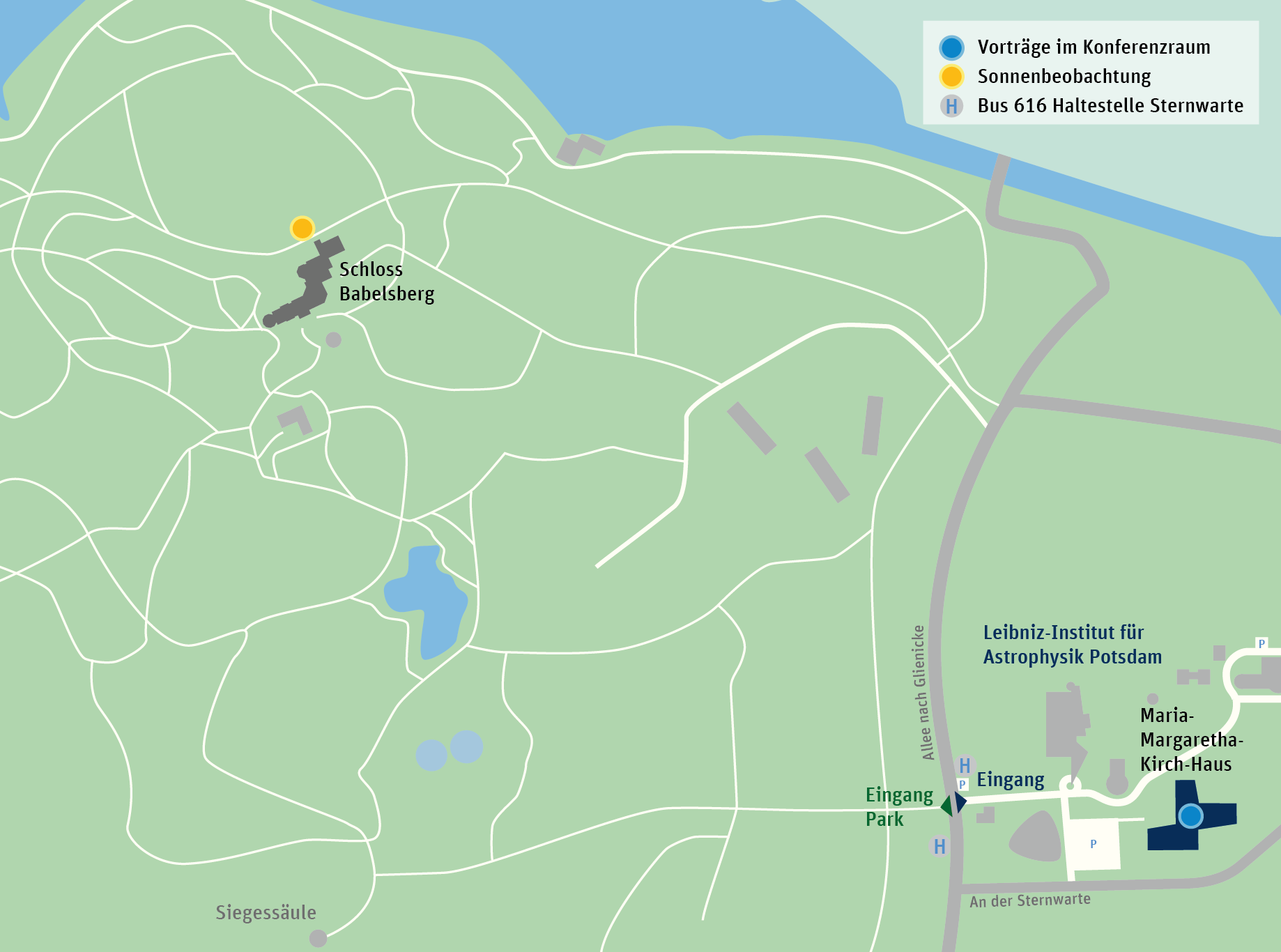
Map of the AIP campus and Babelsberg park. The sun observations will take place in front of the Castle Babelsberg, starting at 7 pm.
Credit: AIPImages
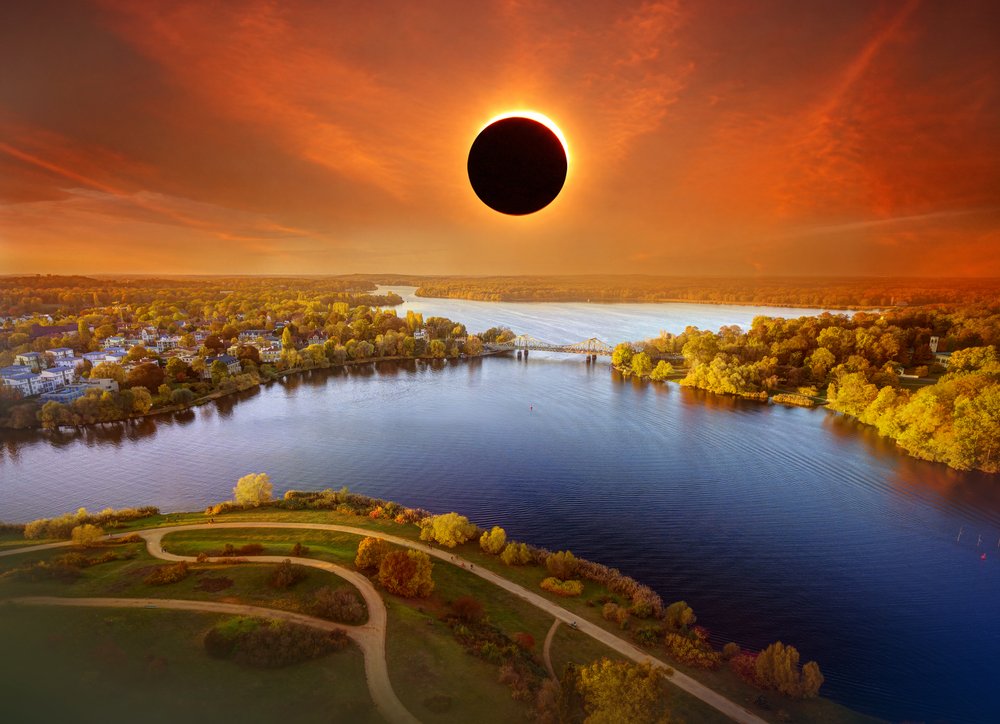
Artistic representation of the solar eclipse over the Glienicker Bridge in Potsdam
Big screen size [1000 x 724, 110 KB]
Original size [3987 x 2887, 1.5 MB]
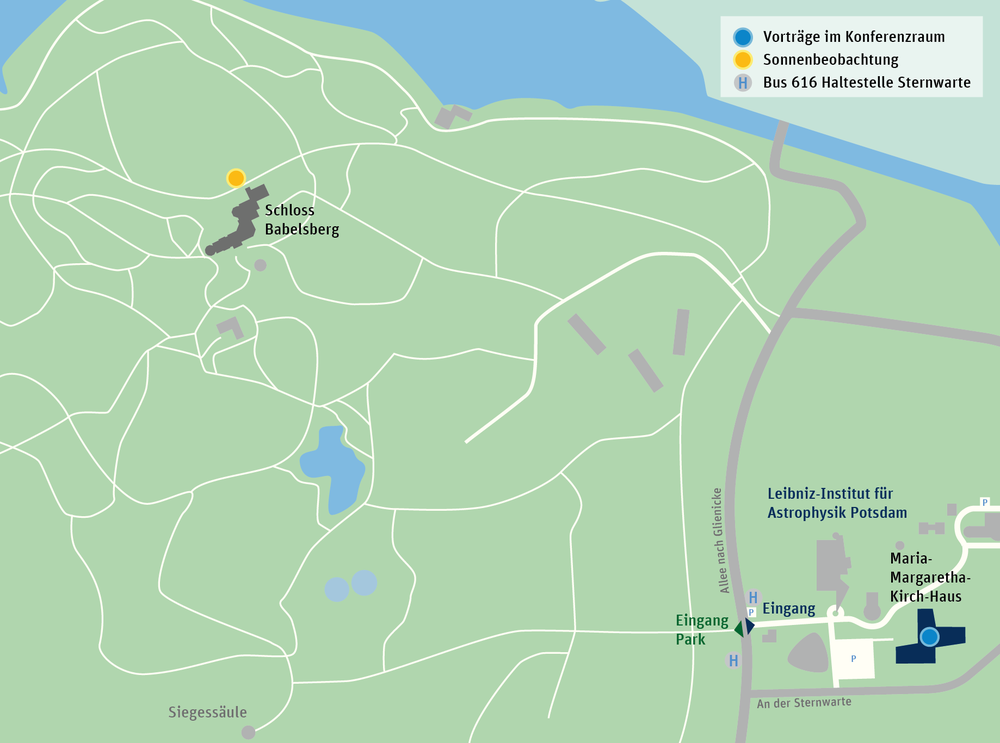
Map of the AIP campus and Babelsberg park. The sun observations will take place in front of the Castle Babelsberg, starting at 7 pm.
Big screen size [1000 x 743, 270 KB]
Original size [1838 x 1366, 260 KB]