Virtual lecture: Babelsberg Starry Night on 18th June 2026
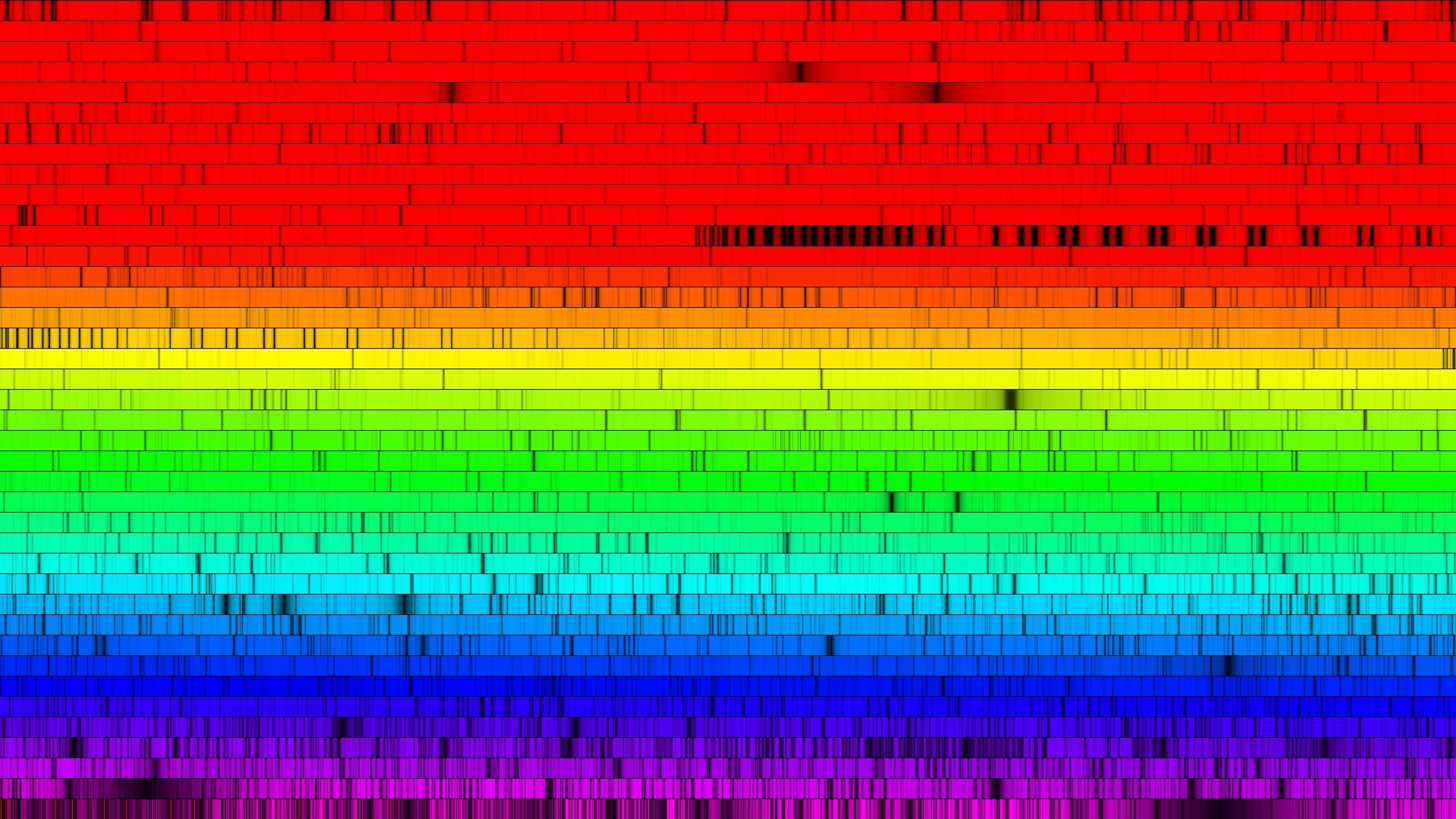
Echelle spectrum of a star, taken with the PEPSI instrument built at AIP.
Credit: AIPOn Thursday, a new lecture from the virtual Babelsberg Starry Nights series will be published on YouTube: Dr. Daniel Sablowski will present how astronomers are “Analysing light”. The video will be available from 18th June, 8 pm, on the YouTube channel “Urknall, Weltall und das Leben” (Big Bang, Universe and Life).
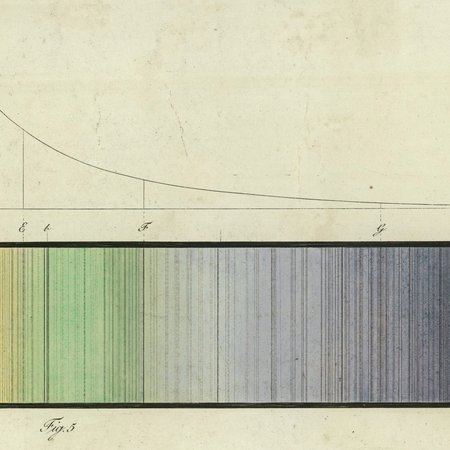
Dr. Daniel Sablowski is a scientist in the Technical Section at the AIP and will give insights in his public lecture, how analyse light ("Licht lesbar machen", in German). Observational astrophysics relies on the study of light – the electromagnetic radiation that reaches us from objects in space. Using spectral analysis, the light is split up into its wavelengths so that it can be quantitatively evaluated. But how does such a measuring instrument work, and what variations of it are used in astronomy? Supplemented by small experiments, the lecture covers spectral analysis from how a diffraction grating works to 3D and Echelle spectroscopy.
The video will be published at 8 p.m. on the YouTube channel Urknall, Weltall und das Leben (Big Bang, Space and Life).
Usually on the 3rd Thursday of each month, starting at 8 p.m., the lectures of the Babelsberg Starry Nights become available at
https://www.aip.de/babelsberger-sternennaechte
and via the YouTube channels "Urknall, Weltall und das Leben" (Big Bang, Universe and Life) or "videowissen" and can be viewed afterwards at any time.
Echelle spectrum of a star, taken with the PEPSI instrument built at AIP.
Credit: AIPOn Thursday, a new lecture from the virtual Babelsberg Starry Nights series will be published on YouTube: Dr. Daniel Sablowski will present how astronomers are “Analysing light”. The video will be available from 18th June, 8 pm, on the YouTube channel “Urknall, Weltall und das Leben” (Big Bang, Universe and Life).
Dr. Daniel Sablowski is a scientist in the Technical Section at the AIP and will give insights in his public lecture, how analyse light ("Licht lesbar machen", in German). Observational astrophysics relies on the study of light – the electromagnetic radiation that reaches us from objects in space. Using spectral analysis, the light is split up into its wavelengths so that it can be quantitatively evaluated. But how does such a measuring instrument work, and what variations of it are used in astronomy? Supplemented by small experiments, the lecture covers spectral analysis from how a diffraction grating works to 3D and Echelle spectroscopy.
The video will be published at 8 p.m. on the YouTube channel Urknall, Weltall und das Leben (Big Bang, Space and Life).
Usually on the 3rd Thursday of each month, starting at 8 p.m., the lectures of the Babelsberg Starry Nights become available at
https://www.aip.de/babelsberger-sternennaechte
and via the YouTube channels "Urknall, Weltall und das Leben" (Big Bang, Universe and Life) or "videowissen" and can be viewed afterwards at any time.