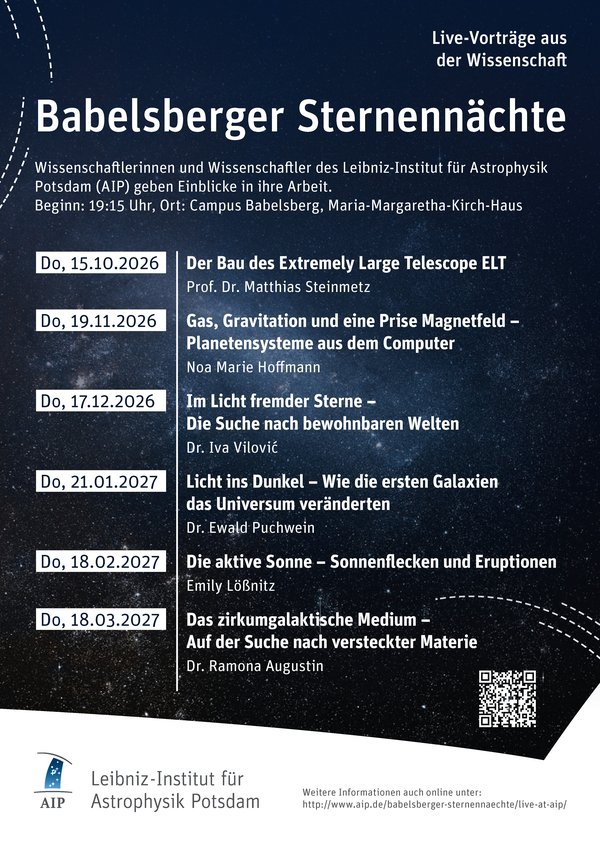
Babelsberg Starry Night Live 2026/27
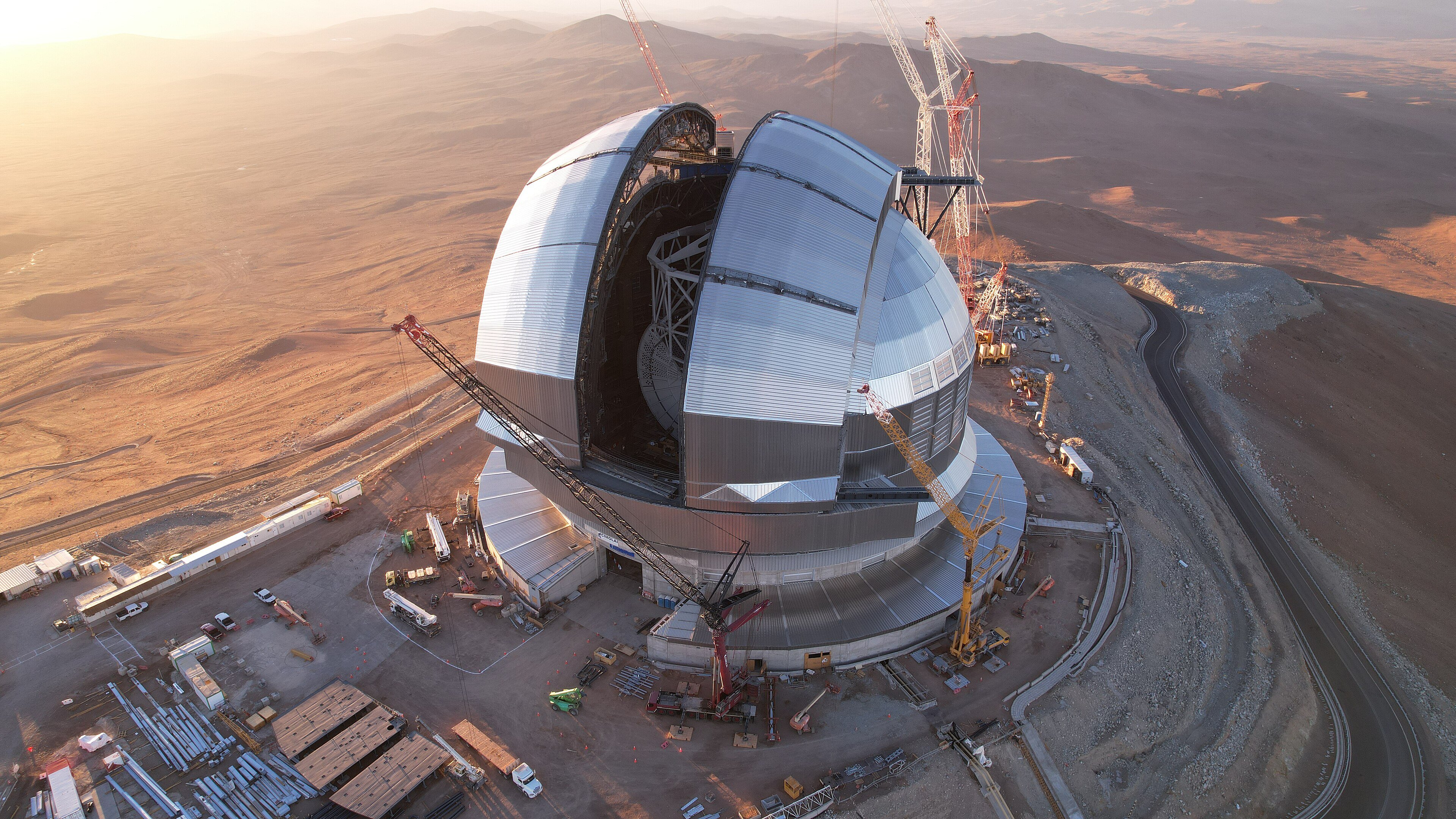
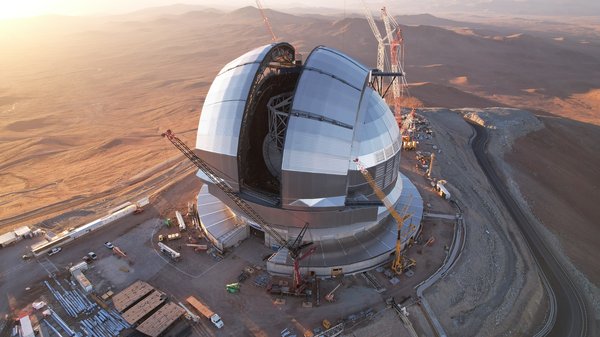
ESO's Extremely Large Telescope (ELT), currently under construction, in April 2026
Credit: ESO/G. VecchiaAs the days grow shorter and the nights longer, the Leibniz Institute for Astrophysics Potsdam (AIP) is once again inviting the public to the Babelsberg Star Nights. From October 2026 to March 2027, the AIP will open its doors on six evenings to everyone interested in astronomy.
What happens in the depths of the universe? How do planetary systems, galaxies, and stars form? How do you build a telescope with a diameter of 39 metres? During the Babelsberg Star Nights, scientists from the AIP will provide insights into their current research.
The series will kick off on 15 October 2026 with a talk by Prof. Dr Matthias Steinmetz, Director of the AIP’s Department of Extragalactic Astrophysics. In his presentation, he will discuss the construction of the world’s largest telescope, the Extremely Large Telescope (ELT).
The ELT of the European Southern Observatory (ESO) is currently under construction on Cerro Armazones in the Atacama Desert in northern Chile. With its 39-metre primary mirror, the ELT will not only be the first of the next generation of 30–50-metre-class telescopes, but also the largest and most powerful. Construction of the telescope is now well advanced, and first light is expected in 2029. This talk will explore the motivation behind building such a modern technological milestone, its scientific potential, the technological challenges to be overcome, and the currently planned instrumentation. It will also feature recent images from the construction site on Armazones.
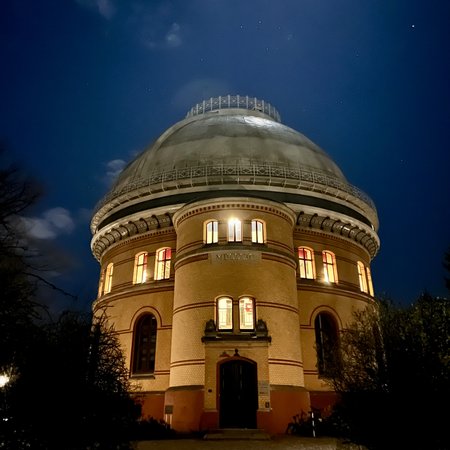
During the winter months, the lectures take place on every third Thursday of the month at 7:15 p.m. at the AIP Babelsberg Campus in Potsdam, in the conference room of the Maria-Margaretha-Kirch-Haus. The talks usually last around 60 minutes. Afterwards, visitors have the opportunity to take a short guided tour and discover the AIP’s historic telescopes in Babelsberg. If weather conditions are favourable, visitors can also observe the night sky.
The series is aimed at people interested in space and astronomy who would like to gain deeper insights into current questions and research topics in modern astrophysics.
No registration is required and admission is free.
Overview of the Talks (all in German)
- 15.10.2026: Der Bau des Extremely Large Telescope (ELT)
Prof. Dr. Matthias Steinmetz - 19.11.2026: Gas, Gravitation und eine Prise Magnetfeld – Planetensysteme aus dem Computer
Noa Marie Hoffmann - 17.12.2026: Im Licht fremder Sterne: Die Suche nach bewohnbaren Welten
Dr. Iva Vilović - 21.01.2027: Licht ins Dunkel – Wie die ersten Galaxien das Universum veränderten
Dr. Ewald Puchwein - 18.02.2027: Die aktive Sonne – Sonnenflecken und Eruptionen
Emily Lößnitz - 18.03.2027: Das zirkumgalaktische Medium – Auf der Suche nach versteckter Materie
Dr. Ramona Augustin
Further information
For those who are unable to attend in person, a new talk by an AIP scientist will be published each month as part of our Virtual Babelsberg Star Nights series on the YouTube channels “Urknall, Weltall und das Leben” or “videowissen”.
Images
ESO's Extremely Large Telescope (ELT), currently under construction, in April 2026
Big screen size [1000 x 562, 120 KB]
Original size [3840 x 2160, 1.9 MB]
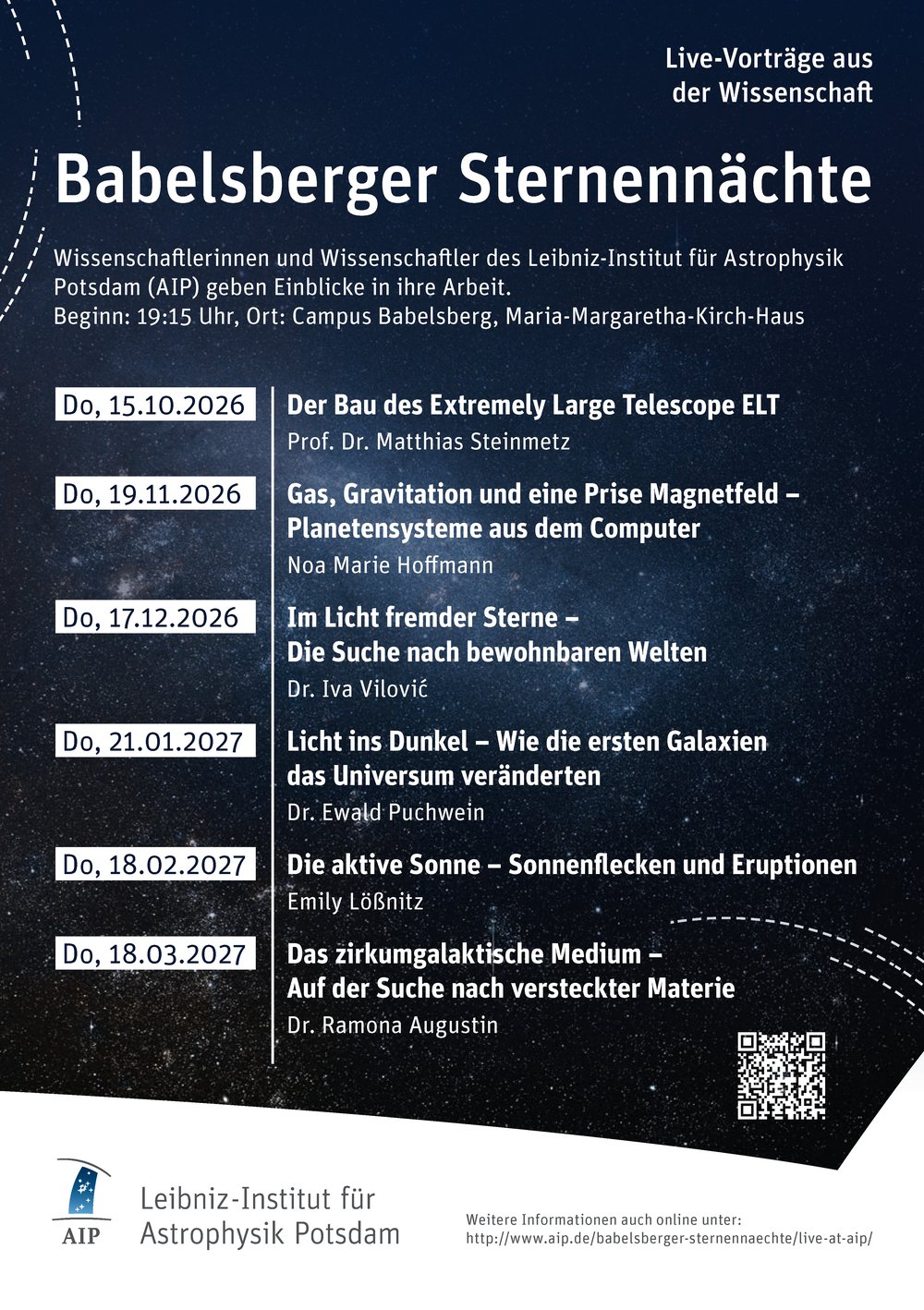
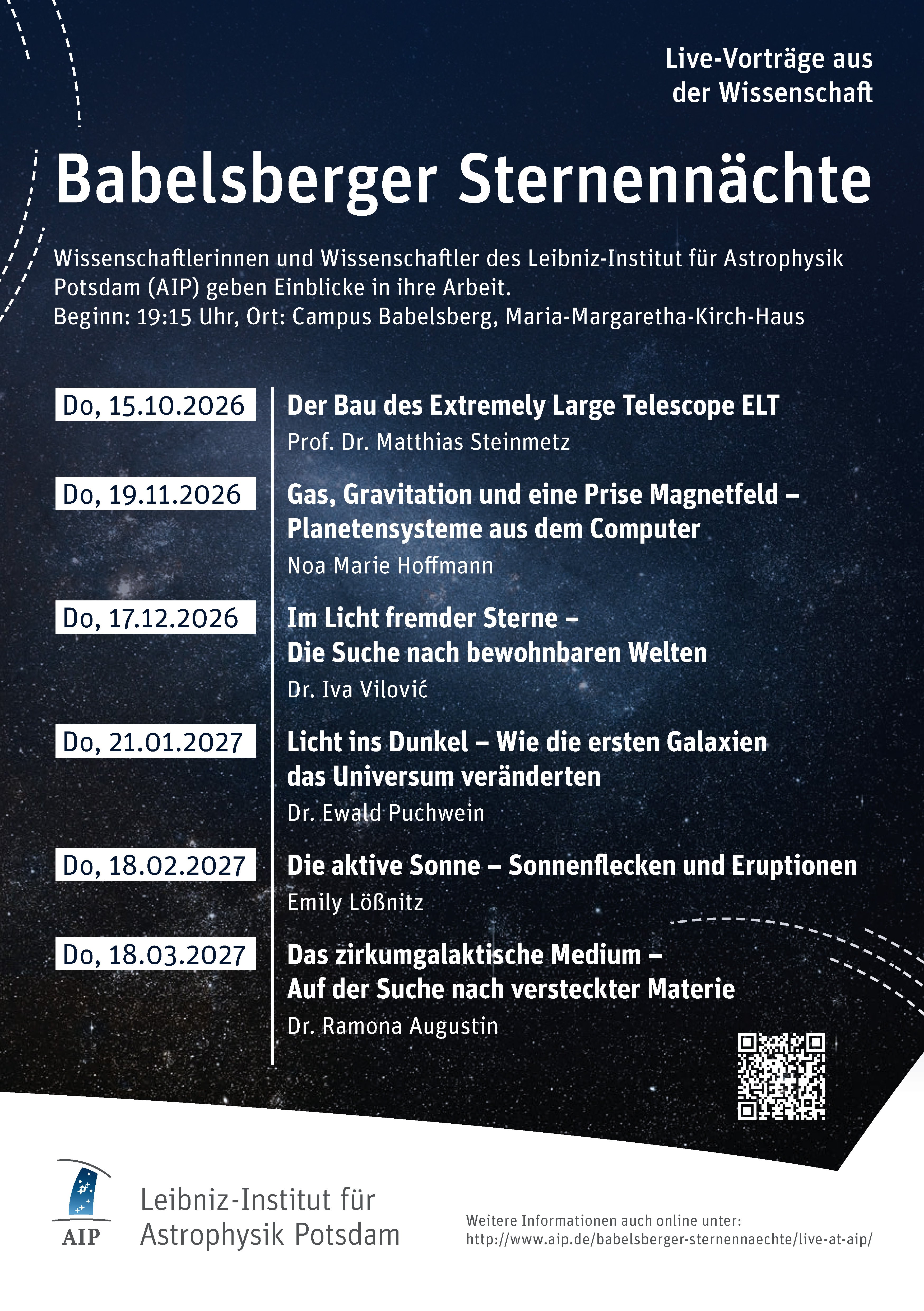
Flyer Babelsberger Sternnächte
Big screen size [1000 x 1418, 310 KB]
Original size [3497 x 4961, 2.1 MB]