Live Babelsberg Starry Night at 19th November 2026
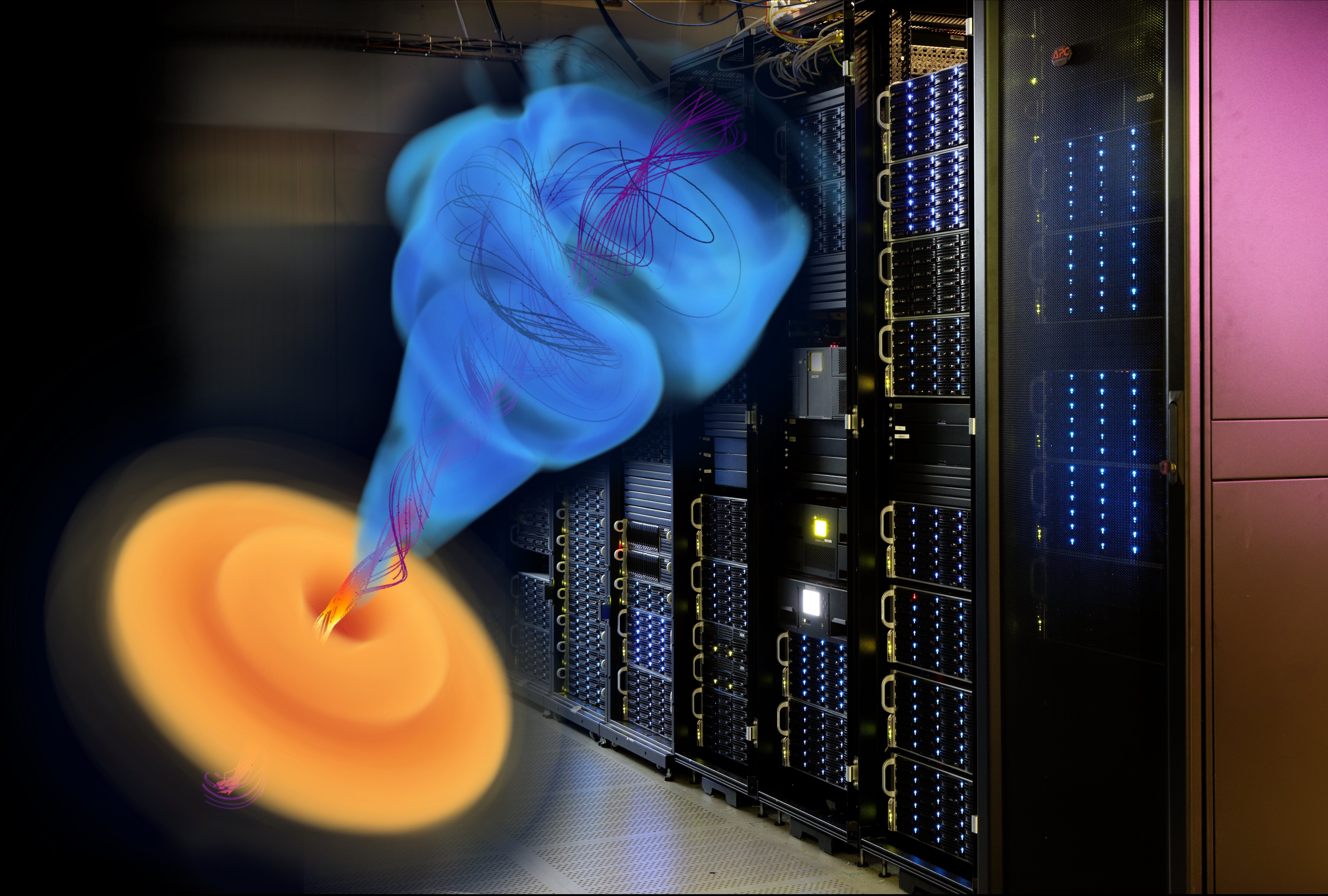
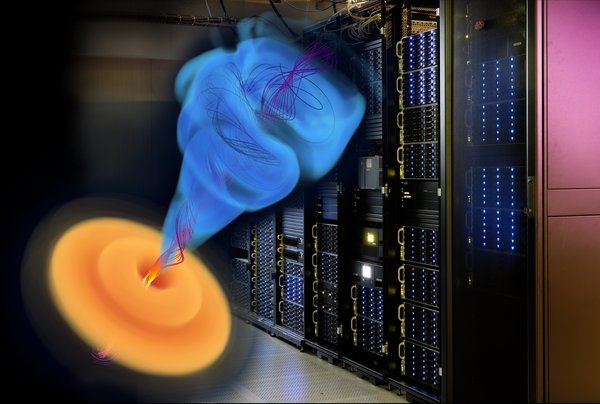
Computer simulations are helping to understand the formation of planetary systems.
Credit: AIP/Noa Marie HoffmannOn Thursday, 19th November 2026, the Leibniz Institute for Astrophysics Potsdam (AIP) invites to the next Live Babelsberg Starry Night. Noa Marie Hoffmann will give a public lecture on “Gas, gravitation and a pinch of magnetic fields – Planet systems from the computer” at the AIP research campus in Babelsberg. On the same evening, the YouTube channel “Urknall, Weltall und das Leben” (Big Bang, Universe and Life) will publish a virtual lecture by Dr. Fabio Lesjak on exoplanets and their winds. Please note that both lectures will be given in German.
Noa Marie Hoffmann is a PhD student in the Magnetohydrodynamics and Turbulence research group and is investigating the formation of planetary systems. Computer simulations are playing an increasingly important role in theoretical research. Scientists use them to simulate not only the formation of planets and stars, but also tomorrow’s weather. Using the world’s most powerful computers, vast and complex simulations even recreate the formation and evolution of entire galaxies and galaxy clusters. This talk explores the fundamentals of these simulations. Why are they so important for astronomical research? What are the underlying methods, and how can such simulations help to unlock the secrets of our Universe? What else is needed, apart from gas, gravity and a pinch of magnetic field, to form planetary systems?
Admission is free and no prior registration is required. After the lecture, visitors are invited to join a guided tour of the AIP research campus in Babelsberg. If the night sky is clear, there will also be an opportunity to observe the night sky through one of the institute’s historic reflecting telescopes.
Also on Thursday, a new lecture from the virtual Babelsberg Starry Nights series will be published on YouTube: Dr. Fabio Lesjak, scientist in the research group Stellar Physikcs and Exoplanets at AIP, will speak about storms and winds on exoplanets. The video will be published at 8 p.m. on the YouTube channel Urknall, Weltall und das Leben (Big Bang, Space and Life).
Live Lecture:
Noa Marie Hoffmann: ‘Gas, gravitation and a pinch of magnetic fields – Planet systems from the computer’ (in German)
Time: 19.11.2026, 7:15 p.m.
Location: Conference room Maria-Margaretha-Kirch-Haus, AIP, An der Sternwarte 16, 14482 Potsdam
Virtual Lecture:
Dr. Fabio Lesjak: ‘Winds on Exoplanets’ (in German).
Time: 19.11.2026, 20 Uhr
YouTube channel Urknall, Weltall und das Leben
Further information
Previous lectures from this series:
Live Babelsberg Starry Nights: https://www.aip.de/en/babelsberger-sternennaechte/live-at-aip/
Virtual Babelsberg Starry Nights: https://www.aip.de/en/babelsberger-sternennaechte/
Further public events of the AIP:
https://www.aip.de/en/pr/public-events/
Images
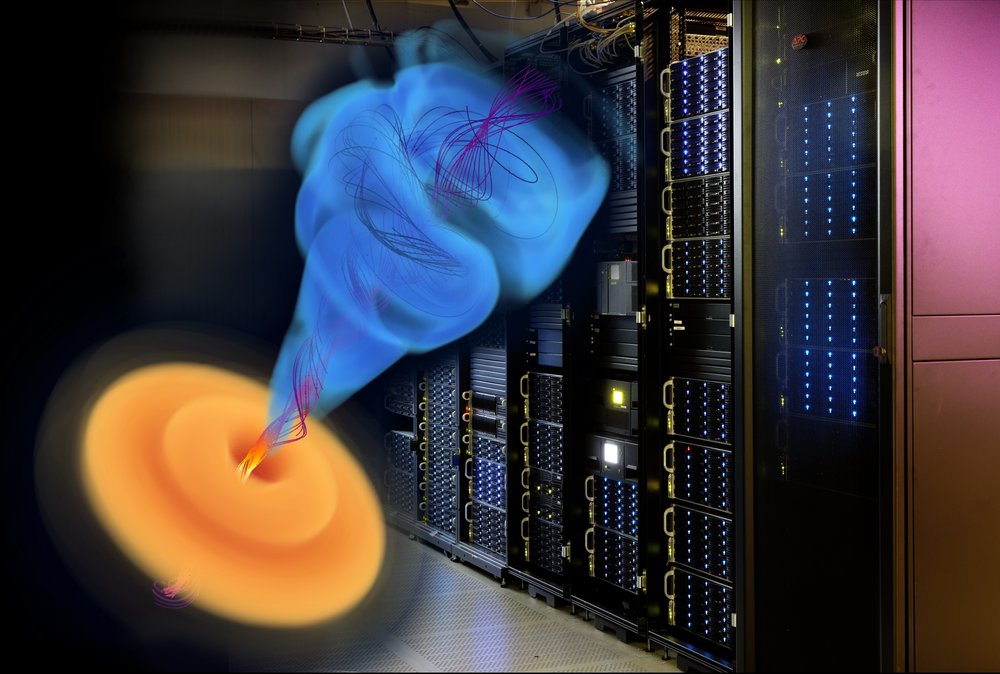
Computer simulations are helping to understand the formation of planetary systems.
Big screen size [1000 x 674, 110 KB]
Original size [5749 x 3879, 2.3 MB]