It takes millions of stars to understand a galaxy – Start of 4MOST survey programme
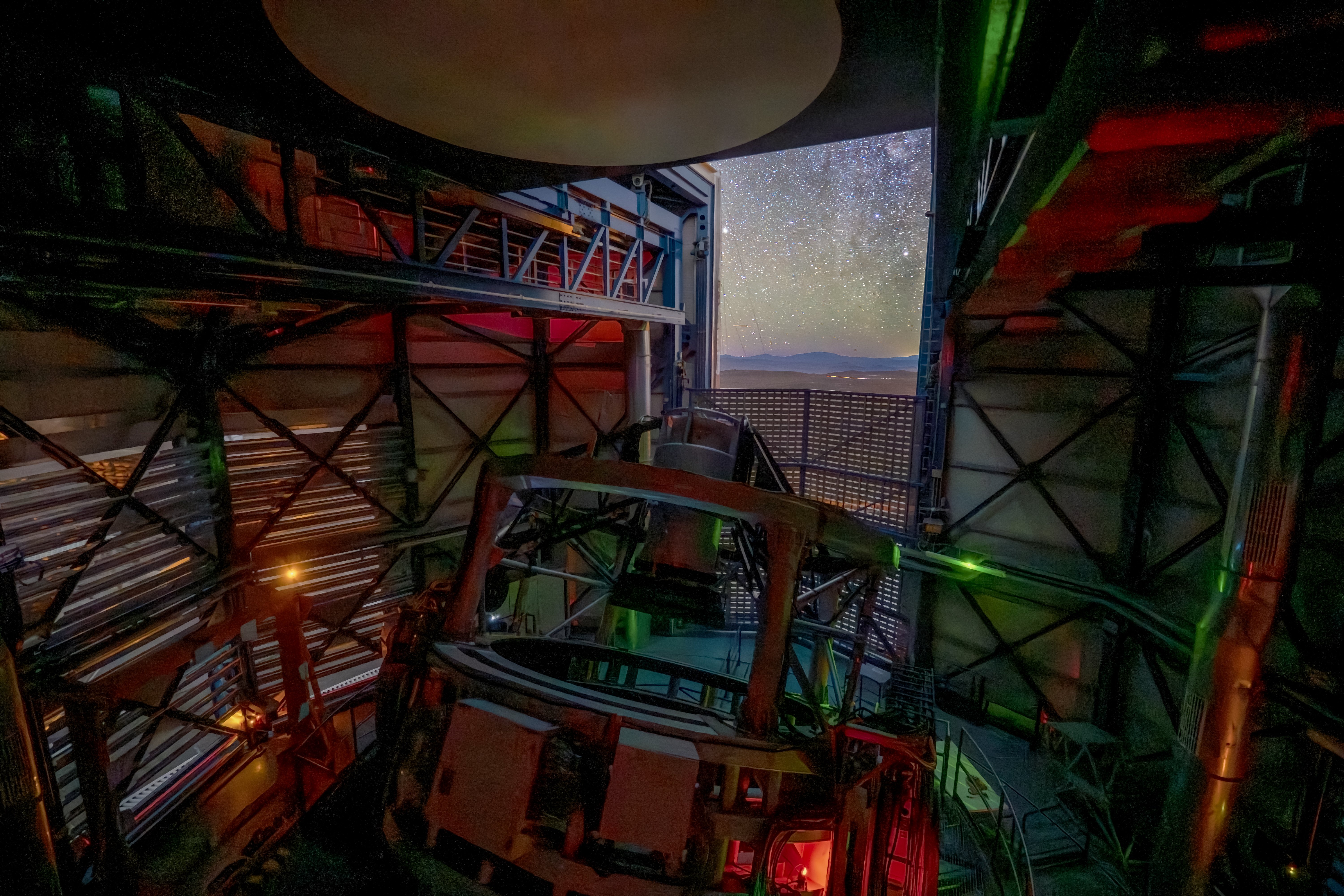
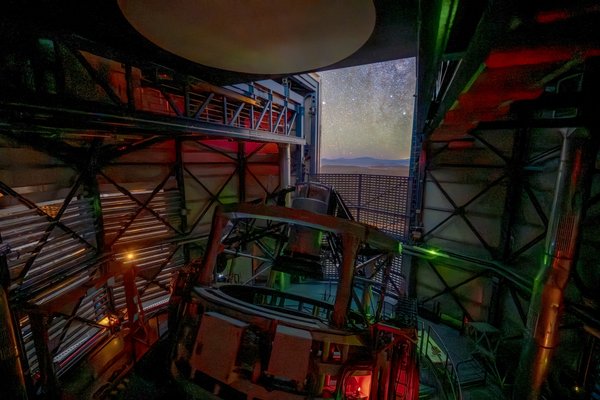
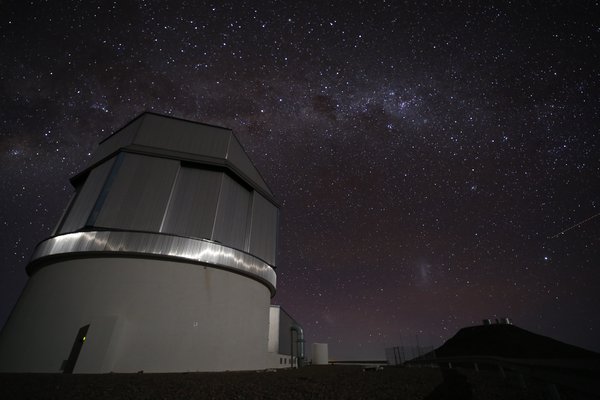
The VISTA telescope in Chile with its dome open at night. 4MOST is using its 2,400 optical fibers to analyze the light from various objects simultaneously.
Credit: 4MOST/ Romain LucchesiThe 4MOST Consortium, led by the Leibniz Institute for Astrophysics Potsdam (AIP), in collaboration with the European Southern Observatory (ESO), is starting its quest to collect more than 50 million spectra of celestial objects in the next 5 years. The 4MOST observational program is unique world-wide bringing together 25 different scientific surveys that will be conducted simultaneously and within one observational campaign.
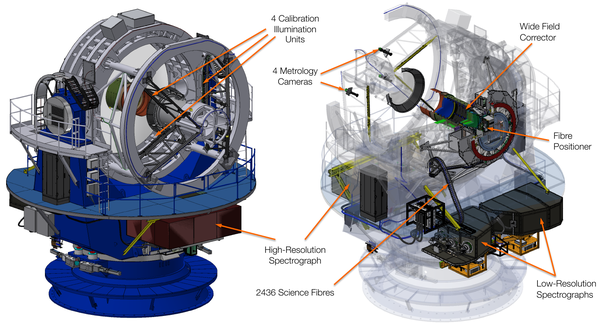
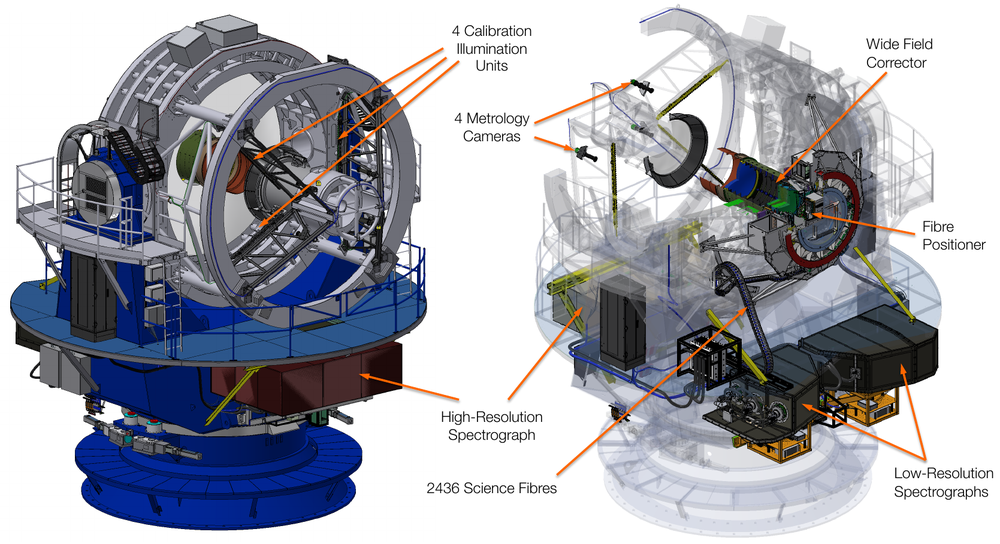
After 16 years of planning and development, the scientists behind 4MOST are now ready to begin this ambitious programme. 4MOST combines 25 individual scientific surveys into a single five-year observing program on the ESO VISTA telescope. This total consists of 10 Consortium Surveys and 15 ESO-selected Community Surveys. By dividing its 2,400 optical fibers across different targets simultaneously, 4MOST executes all of these Galactic and extragalactic surveys in parallel within the same patch of sky. 4MOST brings together 17 consortium and 13 partner institutes across Europe and Australia and involves around 800 active scientists, making 4MOST one of the largest collaborative efforts in modern astronomical spectroscopy.
Dorothee Bär, Federal Minister of Research, Technology and Space, who herself visited ESO telescopes in the Atacama Desert in Chile in February this year, said on the occasion of the start of operations of 4MOST: “With the VISTA telescope, a new chapter in research begins: More than 2,400 celestial objects can now be studied simultaneously. This will create a map of our Milky Way unlike any we have ever seen before. The fact that this globally unique instrument was developed under the leadership of the Leibniz Institute for Astrophysics Potsdam shows that Germany is in the top league when it comes to cutting-edge research. And looking into space also pays off here on Earth. High-precision optics, spectroscopy and the intelligent analysis of huge amounts of data help, for example, to drive new applications in medicine. This is exactly the path from idea to application that we want to pursue consistently.”
At AIP, scientists lead two of the largest 4MOST surveys: 4MIDABLE-LR and 1001 Magellanic Fields (1001MC). 4MIDABLE-LR, the largest 4MOST survey, will map millions of stars across the southern sky, including large parts of the Galactic disc and inner Galaxy that have so far been difficult to study in detail due to the lack of large-multiplex spectroscopic instruments in the Southern Hemisphere. “Unlike surveys that sample the Milky Way through narrow pencil-beam fields, 4MIDABLE-LR will cover large areas of the sky, providing a large and coherent view of our Galaxy’s structure and stellar populations.”, says Cristina Chiappini from AIP. “Combining this coverage with data from the Gaia space mission will add 3D stellar motions, chemical compositions and ages. This will allow us not only to understand the Milky Way as we see it today, but also to reconstruct how it formed and evolved over billions of years,” adds Ivan Minchev from AIP (both co-PIs of 4MIDABLE-LR).
The 1001 Magellanic Fields survey will provide an unprecedented spectroscopic map of the Magellanic Clouds, the Milky Way’s nearest neighbouring galaxies. It will map around one million stars of all types across a thousand square degrees, creating the largest contiguous spectroscopic survey of the Clouds to date. "1001MC will allow us to characterise the chemical, star formation, and dynamical histories of these unique galaxies, and hence piece together a uniquely detailed picture of their storied past", says Lara Cullinane, scientist at AIP and co-PI of 1001MC.
"Each exposure will contain spectra from old stars, young stars, galaxies, and active galactic nuclei driven by supermassive black holes at once. We needed to build a system that allows to plan the observations, carry them out, and analyse the data, while preserving all information that allows to create well-defined samples of like objects from the richness of data. This was an international effort of astronomers from all over the world. Being able to say confidently: we are ready - that is an incredible feeling," adds Jakob Walcher, who was in charge of coordinating the development of the scientific software ecosystem that enables the 4MOST science.
"This is the moment when all the development work of the last 16 years comes together, and a new adventure is started. Experienced astronomers will revel in a dream dataset to find answers to long-standing questions. But also, early career scientists will have the opportunity to learn about our fascinating topic. It will be exciting to see the results of all these studies - hopefully the topic of many a press release to come!" says Roelof de Jong, who has led the project from its inception to this important milestone.
The start of the 4MOST surveys follows an extensive period of testing and science verification. Over the last year, several observing campaigns have been carried out with 4MOST on the VISTA telescope to ensure that the instrument and the scientific infrastructure are ready for the full survey programme. The verification has been particularly useful for the science team.
"We already have more than 800 thousand scientifically useful spectra available to us. This dataset was not only useful to demonstrate that we will be able to do the science we were planning to do. It is also a treasure trove in and by itself, that we have started to exploit, with many science papers in preparation." says Marica Valentini from AIP who led the science verification observation campaign.
With the start of the ambitious five-year survey programme, 4MOST enters its main scientific phase, providing new insights into the Milky Way, its neighbouring galaxies and galaxy evolution across the Universe.
Further information
4MOST project web pages:
https://www.4most.eu/cms/home/
4MOST science and the survey programme:
https://www.4most.eu/cms/science/overview/
4MOST Media: Photo and Video Documentation:
https://www.aip.de/en/research/projects/4most/4most-material/
Images
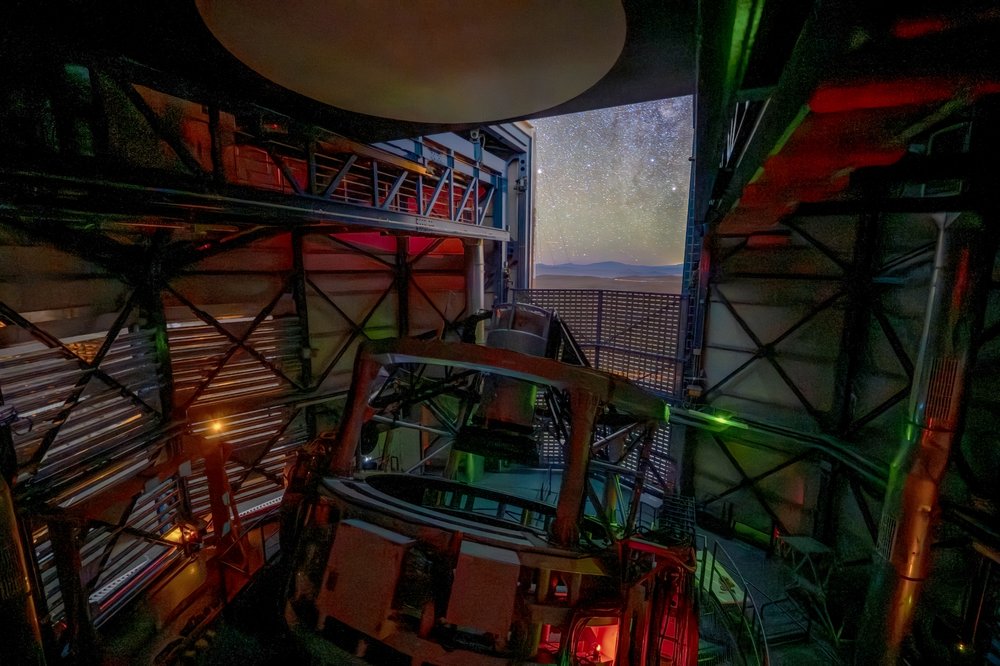
The VISTA telescope in Chile with its dome open at night. 4MOST is using its 2,400 optical fibers to analyze the light from various objects simultaneously.
Big screen size [1000 x 666, 130 KB]
Original size [6000 x 4000, 3.5 MB]
Big screen size [1000 x 544, 600 KB]
Original size [1669 x 909, 1010 KB]

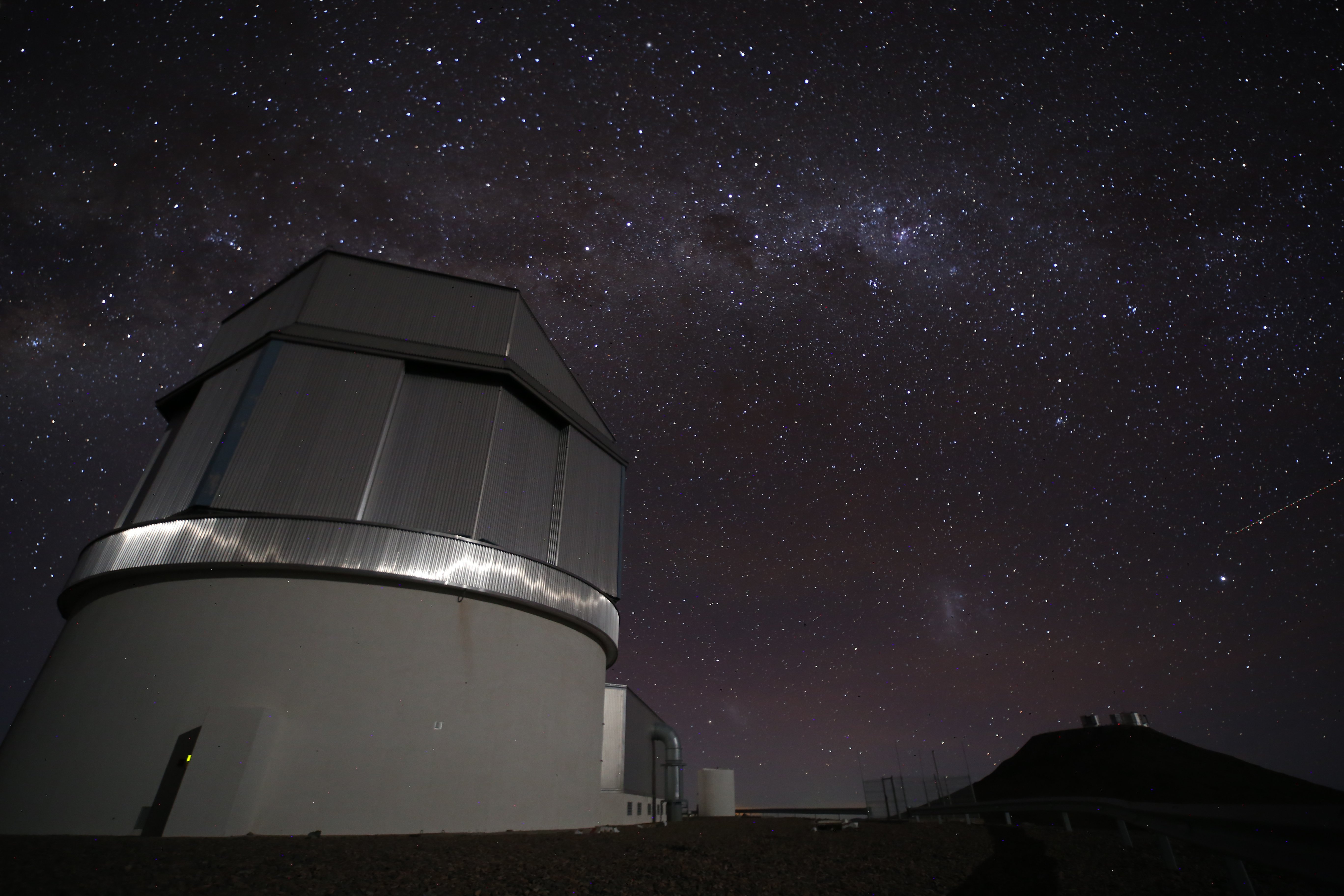
4MOST final destination: the VISTA telescope at the Paranal Observatory in Chile.
Big screen size [1000 x 666, 90 KB]
Original size [5472 x 3648, 1.4 MB]
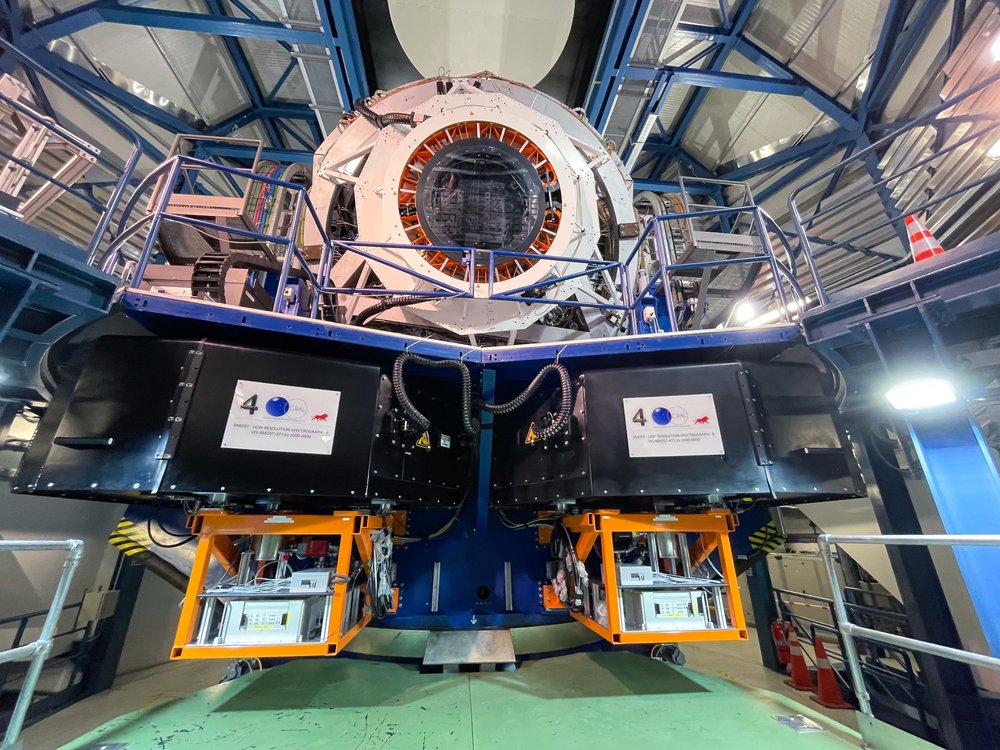
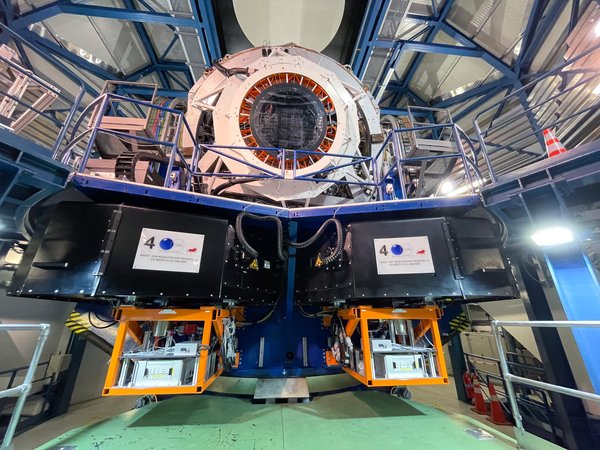
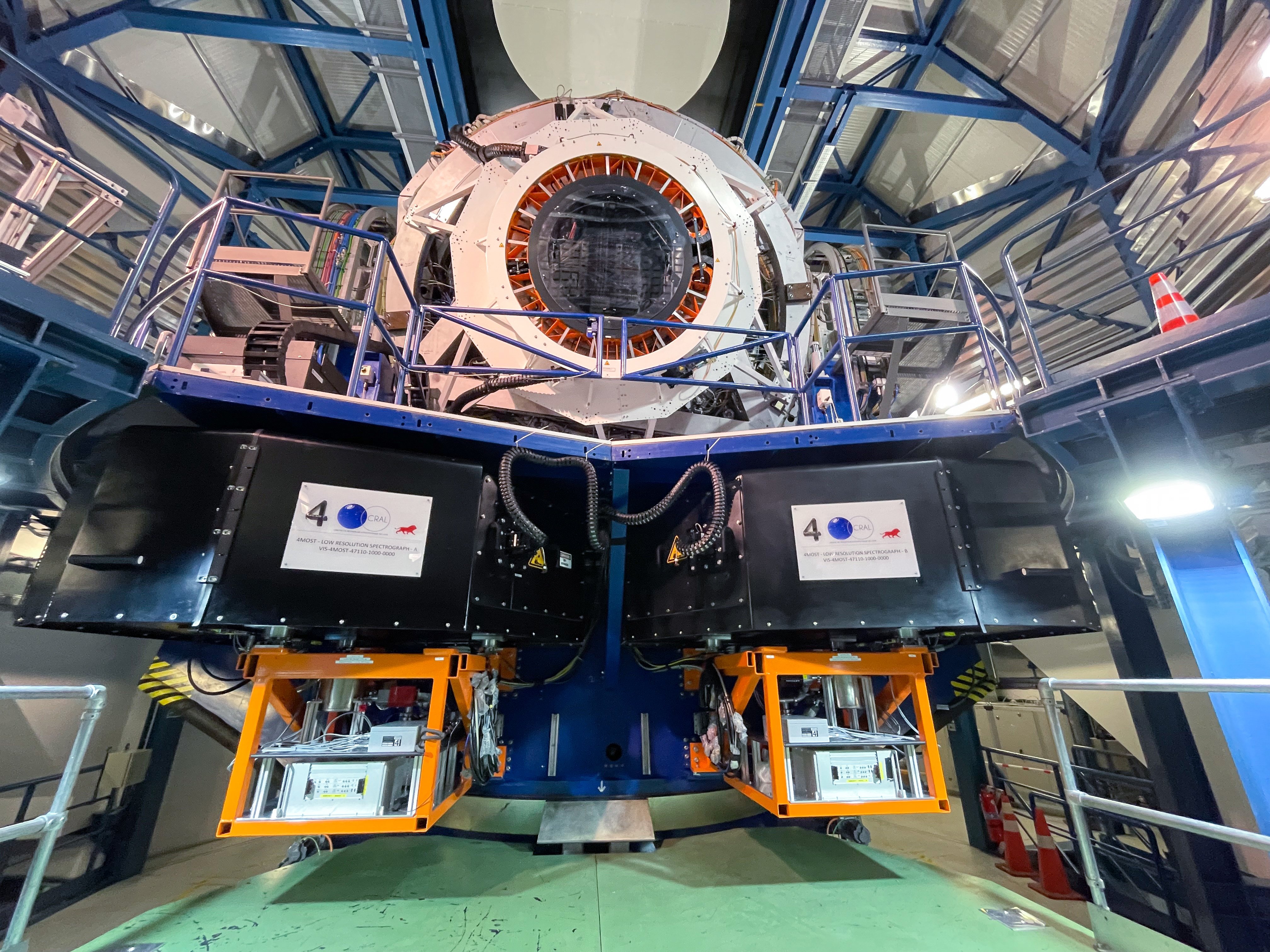
Both low-resolution spectrographs were installed successfully at the VISTA telescope in September 2025.
Big screen size [1000 x 750, 200 KB]
Original size [4032 x 3024, 2.1 MB]