Open Day at the Telegrafenberg on 26th September 2026
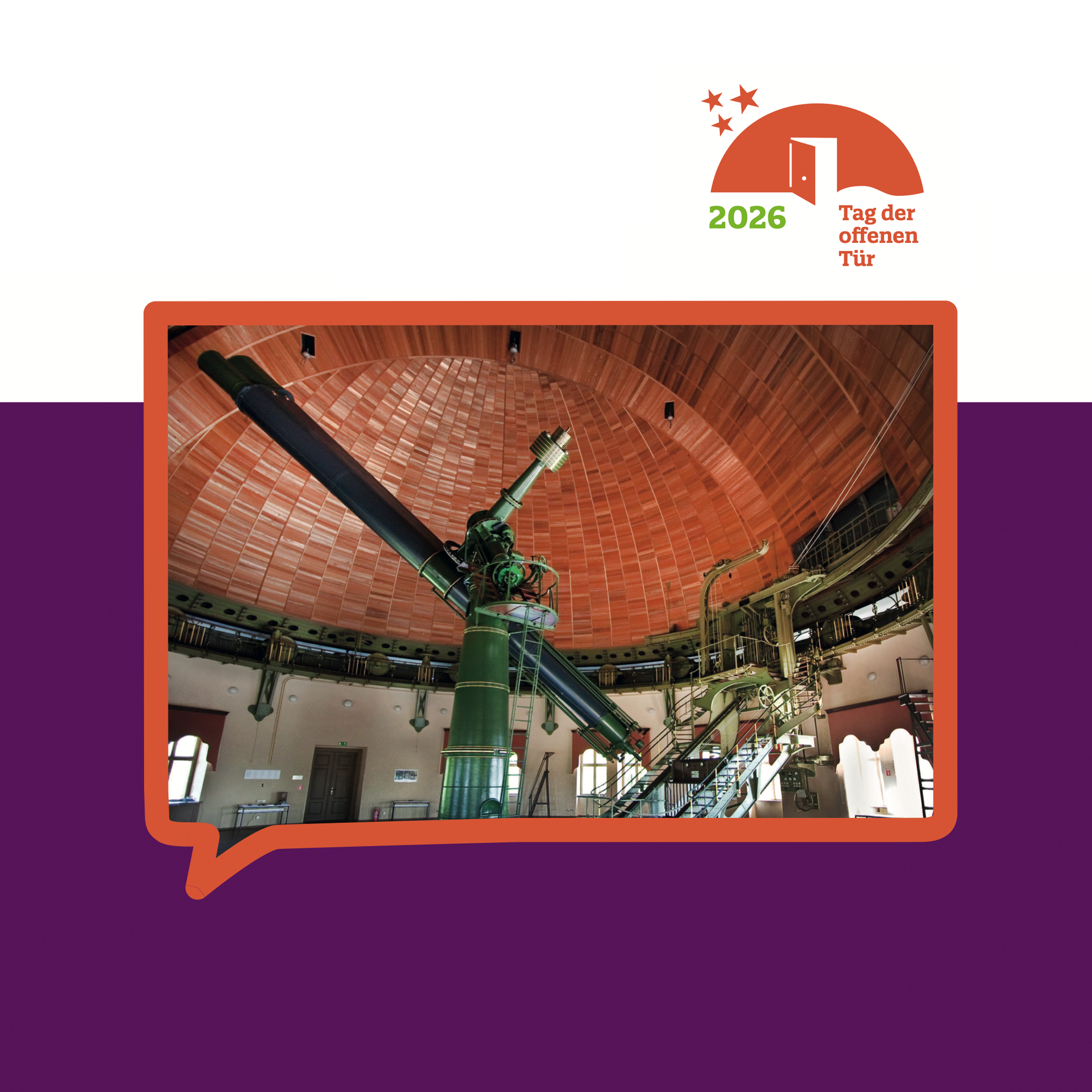
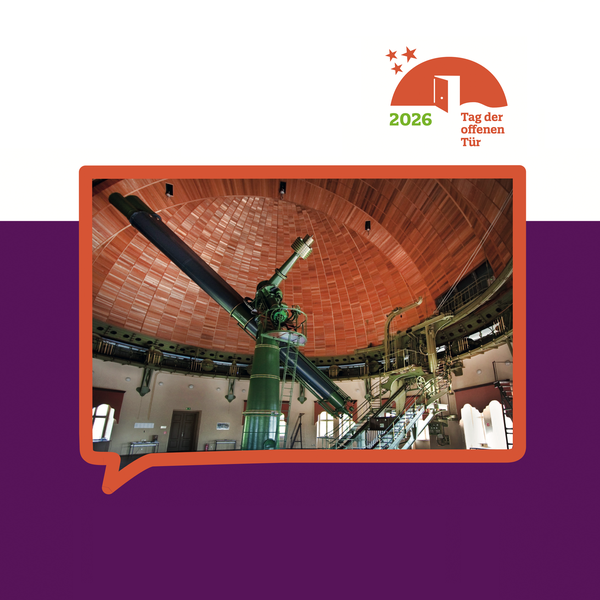
The Great Refraktor will open its doors on Open Day at the Telegrafenberg on 26th September 2026
Credit: AIPOn Saturday the 26th of September 2026, the Telegrafenberg will welcome visitors for an open day from 12 pm to 5 pm. The Alfred Wegener Institute (AWI), Potsdam Institute for Climate Impact Research (PIK), GFZ Helmholtz Centre for Geosciences and the Leibniz Institute for Astrophysics Potsdam (AIP) invite the public to get a close-up look at the ‘Albert Einstein’ Science Park and the top-level research carried out there.
Surrounded by historic buildings, ancient trees and modern research facilities, guests can look forward to an exciting discovery from the Earth’s core to the wonders of the universe. Scientists from all four institutes will offer insights into their work and demonstrate how research in Potsdam is helping to answer the big questions of our time. On this day, visitors can explore ‘Science made in Potsdam’ and get actively involved: take a look behind the scenes, visit research laboratories, carry out experiments themselves, attend fascinating talks and take part in guided tours, ask questions and chat to scientists.
The varied programme offers something interesting for everyone. For younger visitors, there’s an interactive children’s lecture and a research rally with a stamp card and a research certificate. As well as gaining insights into research, visitors can also find out about career opportunities – from work placements, voluntary years and vocational training to a career in science.
Culinary delights and music round off the scientific programme on the Telegrafenberg.
Admission is free.
Some programme highlights from our research – from Earth to space
The Leibniz Institute for Astrophysics Potsdam (AIP) opens the gateway to the stars:
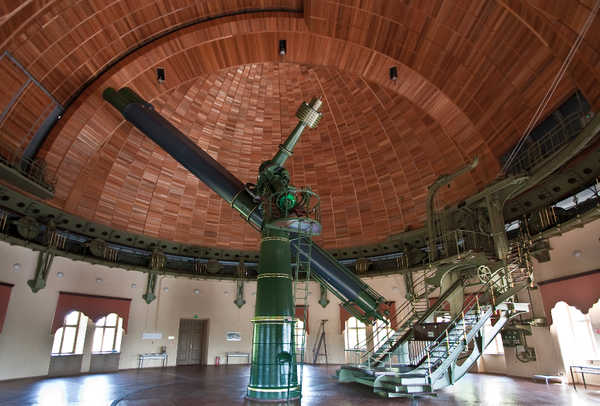
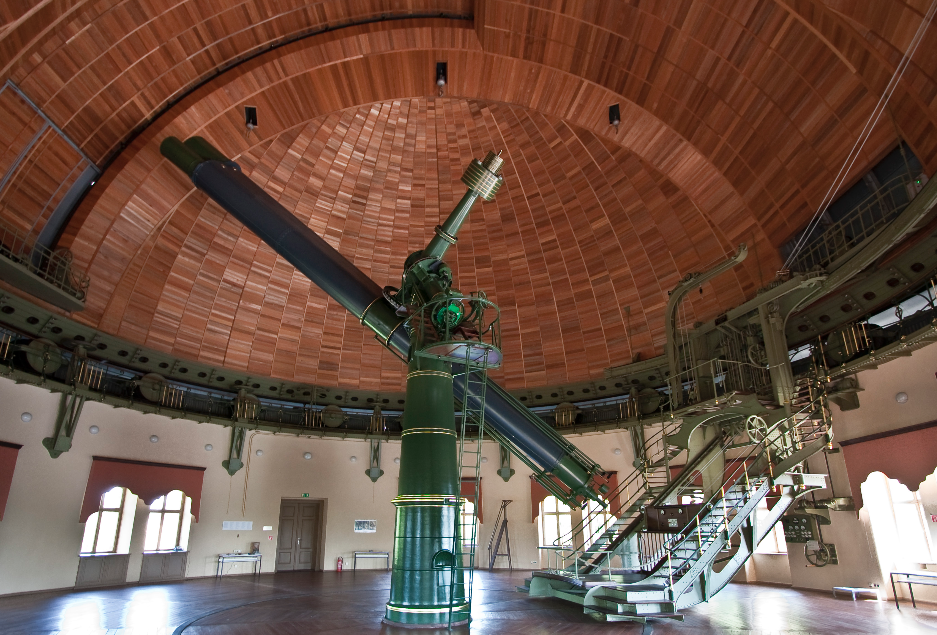
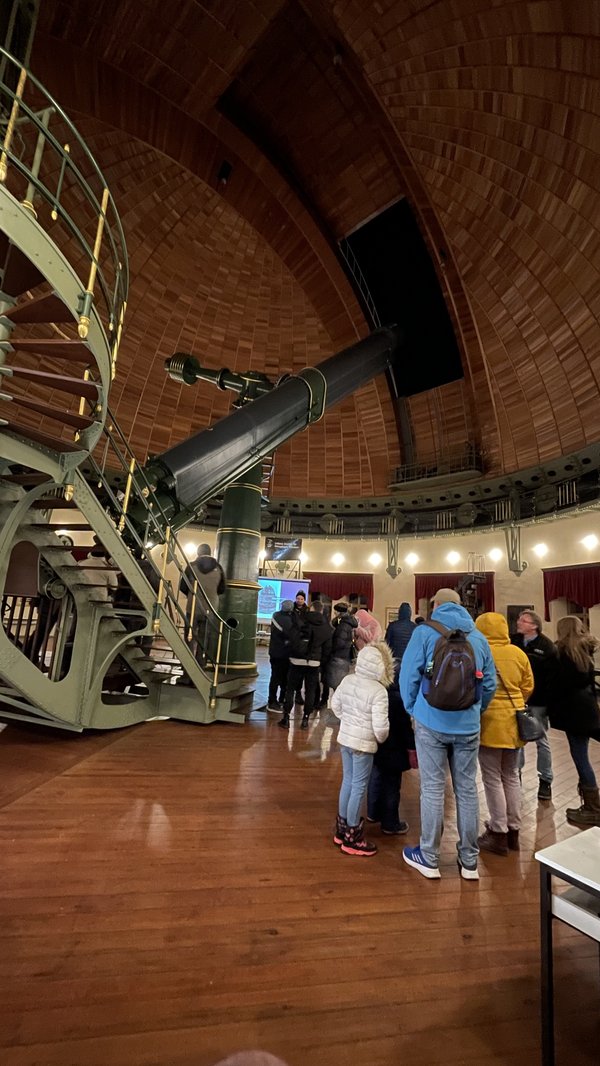
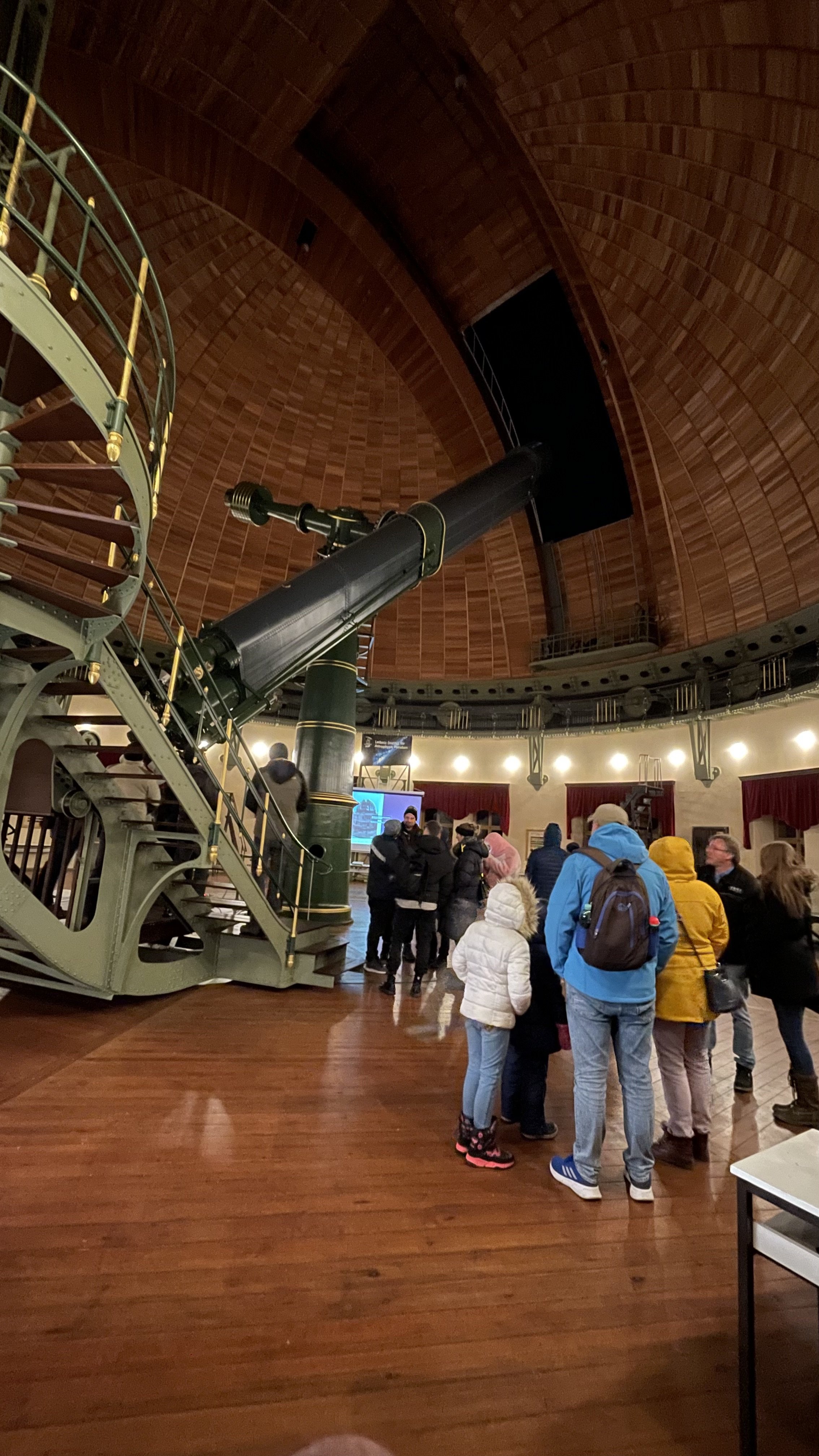
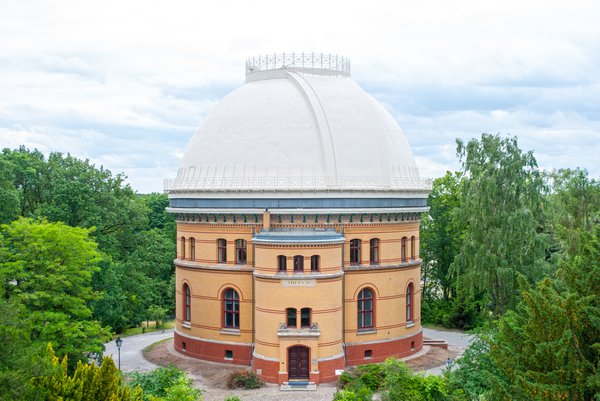
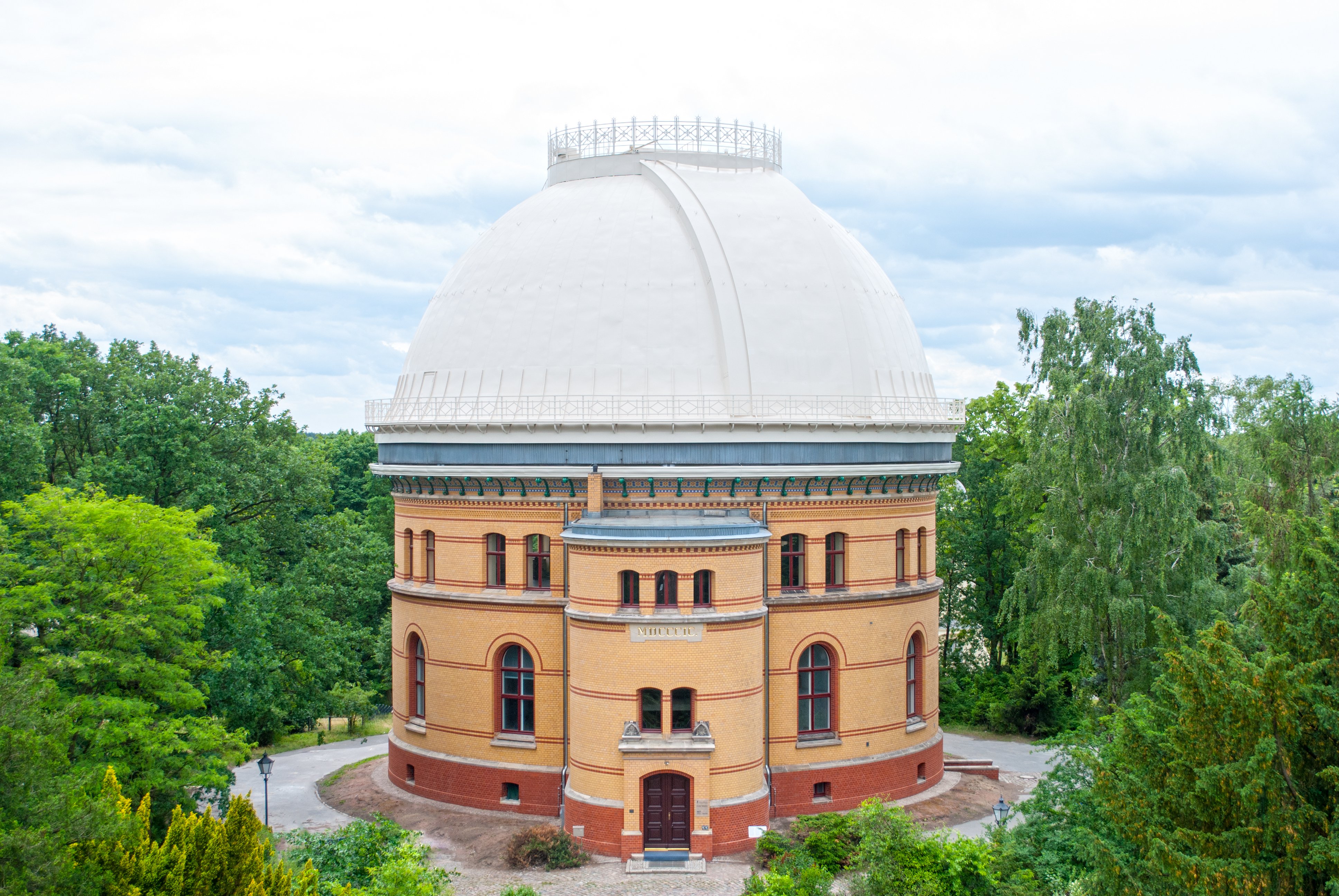
- The Great Refractor is the fourth-largest refracting telescope in the world and one of the famous landmarks of the Telegrafenberg. Scientists explain how the telescope works and present the latest astronomical research.
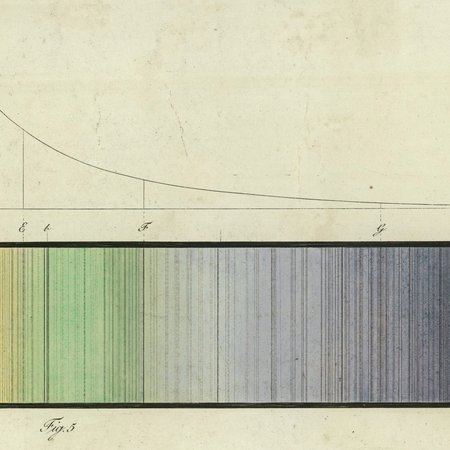
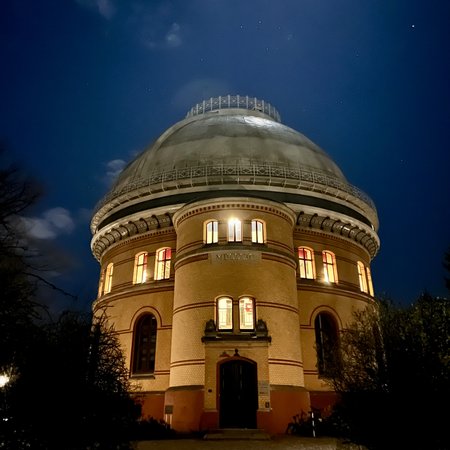
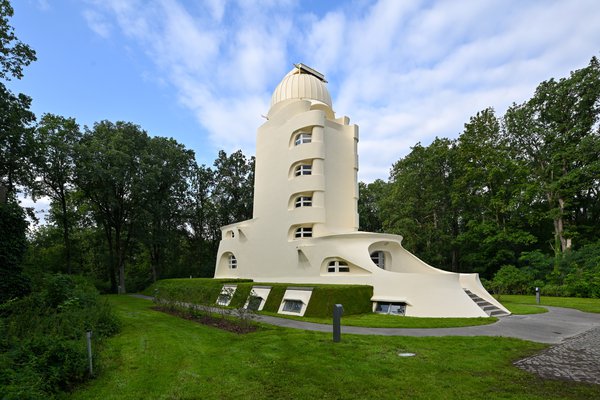
- The Einstein Tower is open. There you can learn about the Sun, modern solar research and the history of the famous observatory, which was once built to experimentally test Einstein’s theory of relativity. Due to the space limitations of this historic building, the number of people allowed in the Einstein Tower at any one time is limited to a maximum of 20. There may therefore be waiting times if there are large numbers of visitors.
- The Michelson experiment is regarded as a key experiment on the path to Einstein’s Special Theory of Relativity. The room where it took place in 1881, and a replica of the experiment, are open to visitors.
The GFZ Helmholtz Centre for Geosciences focuses on the forces and processes that shape our planet, and on solutions to the associated challenges – such as predicting natural hazards and securing resources for the energy transition.
- How do the Northern Lights form, why can they sometimes even be seen in Potsdam, and can they be dangerous?
- Virtual 3D insights into the volcanic landscape beneath the Eifel
- How do microbes influence the formation of minerals, and vice versa? Hands-on experiments
- Which layer provides the best containment? – Site selection for a final repository for high-level radioactive waste in Germany
- How can we achieve a sustainable transport transition and create attractive neighbourhoods in collaboration with local residents? A participatory process in Berlin
At the Alfred Wegener Institute, Helmholtz Centre for Polar and Marine Research (AWI), visitors can experience polar and marine research first-hand:
- How do researchers work under the extreme conditions of the Arctic and Antarctic?
- At the ‘Fashion Station’ for researchers, visitors can try on polar clothing – complete with a photo wall
- What happens when permafrost thaws?
- What is the weather like in the Arctic? A live link-up
- Why the Arctic affects us – changes at the North Pole have a direct impact on the weather in Europe
At the Potsdam Institute for Climate Impact Research (PIK), everything revolves around the consequences of climate change and possible paths to a sustainable future:
- Photo exhibition: Climate change through the eyes of the Maasai in Tanzania
- Four billion years of climate history in 30 minutes
- Ocean current experiment: How the Atlantic Meridional Overturning Circulation (AMOC) responds to changes and influences our climate
- Quiz and talk: What tipping points mean for the Earth system
- Do-it-yourself climate policy: How your own decisions can influence climate change
Open Day at Telegrafenberg
Saturday, 26 September 2026, 12 noon–5 pm
‘Albert Einstein’ Science Park, Telegrafenberg, 14473 Potsdam
Free Admission
We are looking forward to your visit!
Further information
The Great Refraktor will open its doors on Open Day at the Telegrafenberg on 26th September 2026
Credit: AIPOn Saturday the 26th of September 2026, the Telegrafenberg will welcome visitors for an open day from 12 pm to 5 pm. The Alfred Wegener Institute (AWI), Potsdam Institute for Climate Impact Research (PIK), GFZ Helmholtz Centre for Geosciences and the Leibniz Institute for Astrophysics Potsdam (AIP) invite the public to get a close-up look at the ‘Albert Einstein’ Science Park and the top-level research carried out there.
Surrounded by historic buildings, ancient trees and modern research facilities, guests can look forward to an exciting discovery from the Earth’s core to the wonders of the universe. Scientists from all four institutes will offer insights into their work and demonstrate how research in Potsdam is helping to answer the big questions of our time. On this day, visitors can explore ‘Science made in Potsdam’ and get actively involved: take a look behind the scenes, visit research laboratories, carry out experiments themselves, attend fascinating talks and take part in guided tours, ask questions and chat to scientists.
The varied programme offers something interesting for everyone. For younger visitors, there’s an interactive children’s lecture and a research rally with a stamp card and a research certificate. As well as gaining insights into research, visitors can also find out about career opportunities – from work placements, voluntary years and vocational training to a career in science.
Culinary delights and music round off the scientific programme on the Telegrafenberg.
Admission is free.
Some programme highlights from our research – from Earth to space
The Leibniz Institute for Astrophysics Potsdam (AIP) opens the gateway to the stars:
- The Great Refractor is the fourth-largest refracting telescope in the world and one of the famous landmarks of the Telegrafenberg. Scientists explain how the telescope works and present the latest astronomical research.
- The Einstein Tower is open. There you can learn about the Sun, modern solar research and the history of the famous observatory, which was once built to experimentally test Einstein’s theory of relativity. Due to the space limitations of this historic building, the number of people allowed in the Einstein Tower at any one time is limited to a maximum of 20. There may therefore be waiting times if there are large numbers of visitors.
- The Michelson experiment is regarded as a key experiment on the path to Einstein’s Special Theory of Relativity. The room where it took place in 1881, and a replica of the experiment, are open to visitors.
The GFZ Helmholtz Centre for Geosciences focuses on the forces and processes that shape our planet, and on solutions to the associated challenges – such as predicting natural hazards and securing resources for the energy transition.
- How do the Northern Lights form, why can they sometimes even be seen in Potsdam, and can they be dangerous?
- Virtual 3D insights into the volcanic landscape beneath the Eifel
- How do microbes influence the formation of minerals, and vice versa? Hands-on experiments
- Which layer provides the best containment? – Site selection for a final repository for high-level radioactive waste in Germany
- How can we achieve a sustainable transport transition and create attractive neighbourhoods in collaboration with local residents? A participatory process in Berlin
At the Alfred Wegener Institute, Helmholtz Centre for Polar and Marine Research (AWI), visitors can experience polar and marine research first-hand:
- How do researchers work under the extreme conditions of the Arctic and Antarctic?
- At the ‘Fashion Station’ for researchers, visitors can try on polar clothing – complete with a photo wall
- What happens when permafrost thaws?
- What is the weather like in the Arctic? A live link-up
- Why the Arctic affects us – changes at the North Pole have a direct impact on the weather in Europe
At the Potsdam Institute for Climate Impact Research (PIK), everything revolves around the consequences of climate change and possible paths to a sustainable future:
- Photo exhibition: Climate change through the eyes of the Maasai in Tanzania
- Four billion years of climate history in 30 minutes
- Ocean current experiment: How the Atlantic Meridional Overturning Circulation (AMOC) responds to changes and influences our climate
- Quiz and talk: What tipping points mean for the Earth system
- Do-it-yourself climate policy: How your own decisions can influence climate change
Open Day at Telegrafenberg
Saturday, 26 September 2026, 12 noon–5 pm
‘Albert Einstein’ Science Park, Telegrafenberg, 14473 Potsdam
Free Admission
We are looking forward to your visit!
Further information
Images
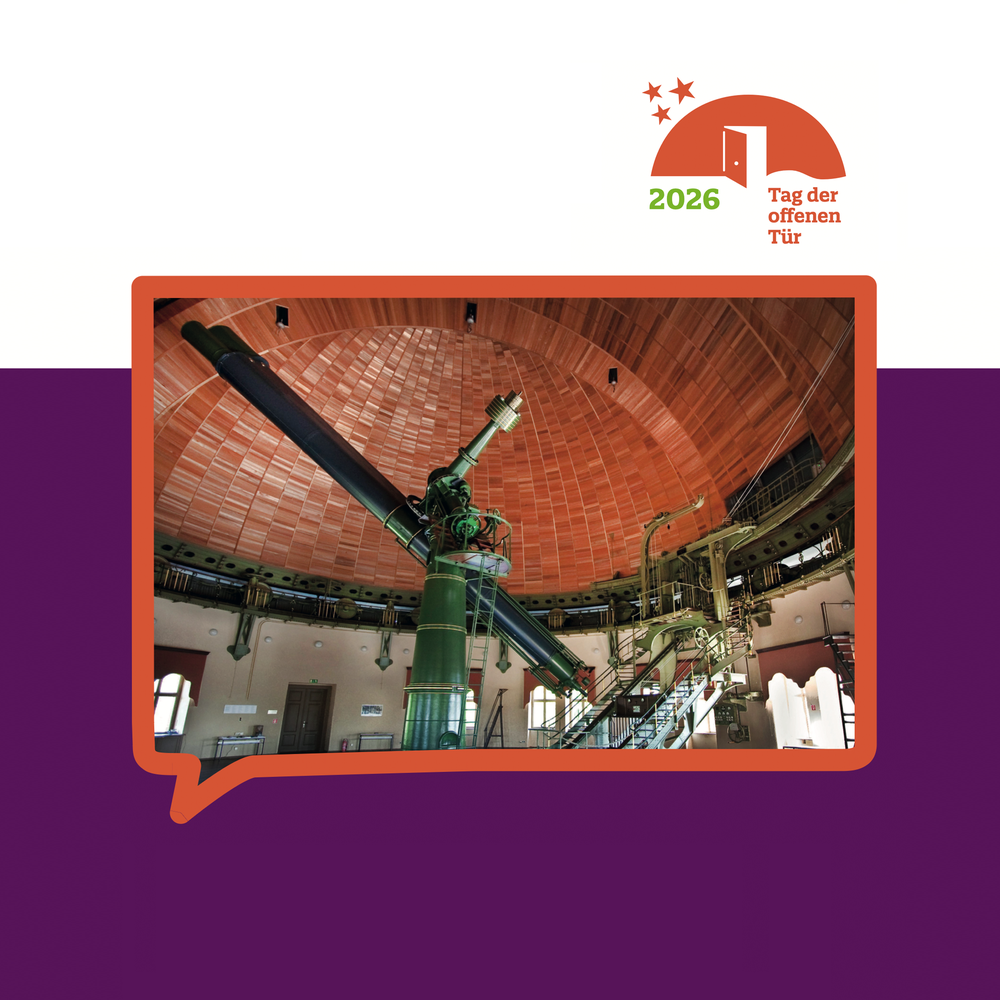
The Great Refraktor will open its doors on Open Day at the Telegrafenberg on 26th September 2026
Big screen size [1000 x 1000, 760 KB]
Original size [2212 x 2212, 2.9 MB]
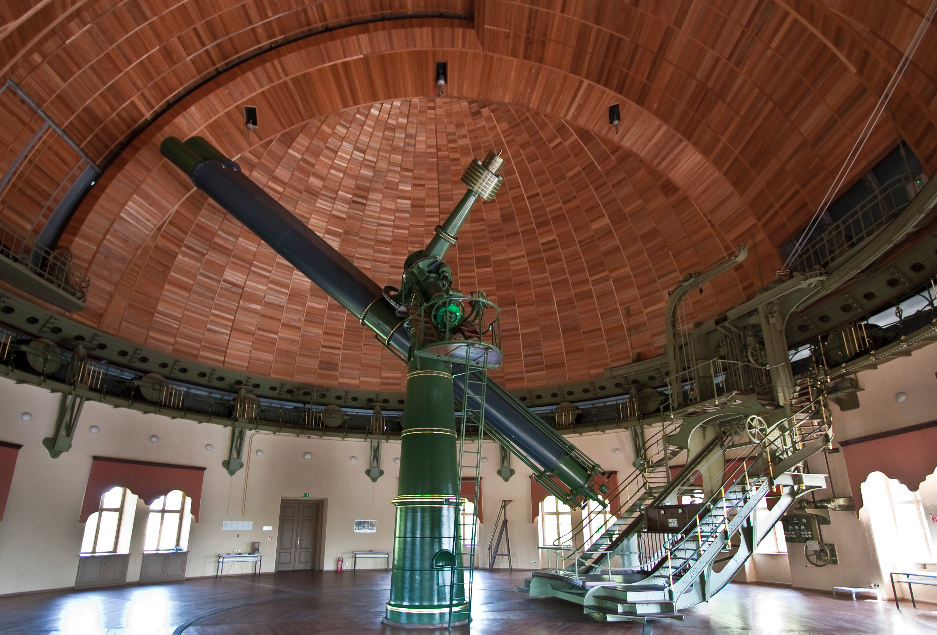
The fourth largest refracting telescope of the world was built in 1899.
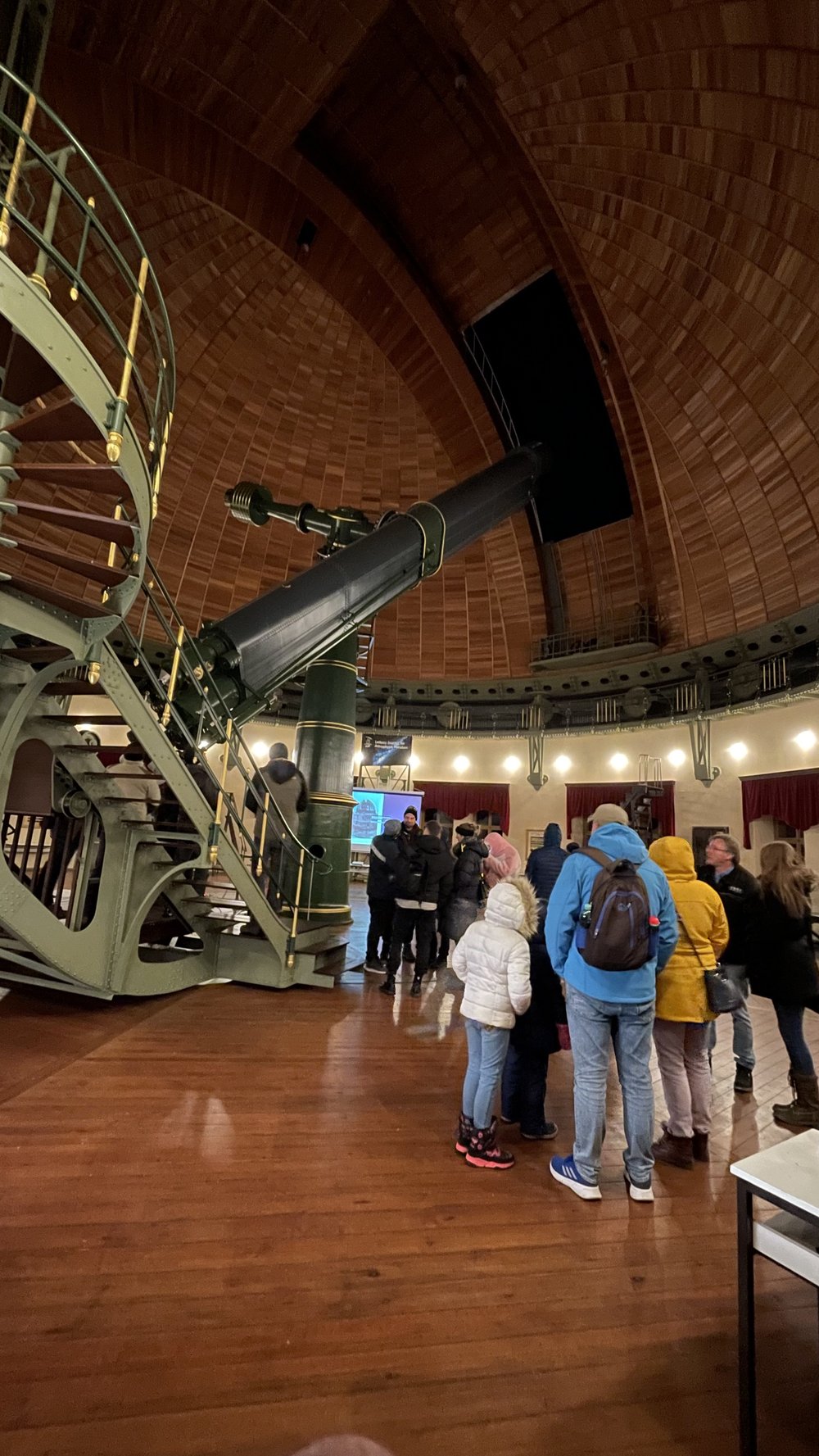
The impressive large refractor is worth a visit.
Big screen size [1000 x 1777, 310 KB]
Original size [2268 x 4032, 1.3 MB]
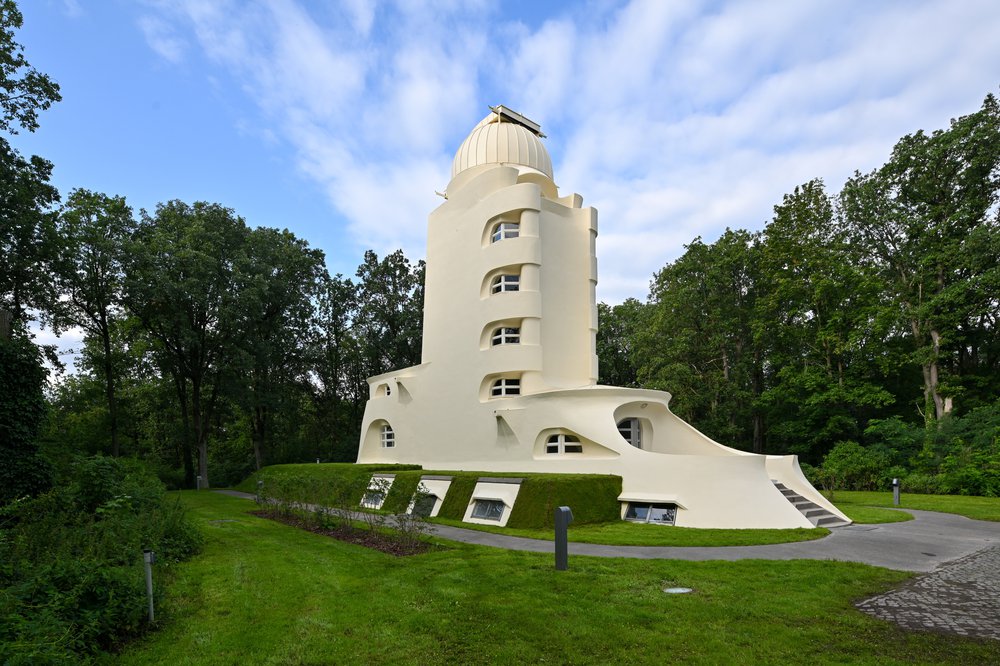
The Einstein Tower in the Science Park "Albert Einstein" at the Telegrafenberg in Potsdam.
Big screen size [1000 x 666, 150 KB]
Original size [3000 x 2000, 1.2 MB]
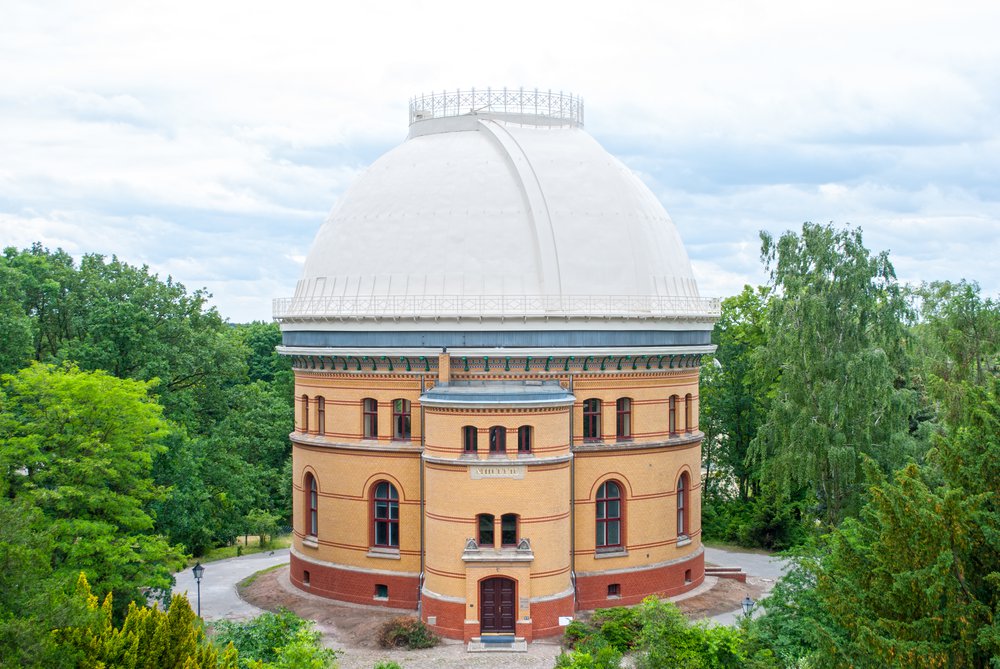
The building with the Great Refractor
Big screen size [1000 x 669, 150 KB]
Original size [3872 x 2592, 1.7 MB]