Stellar eruptions in the laboratory: First experimental evidence for their suppression in strong magnetic fields
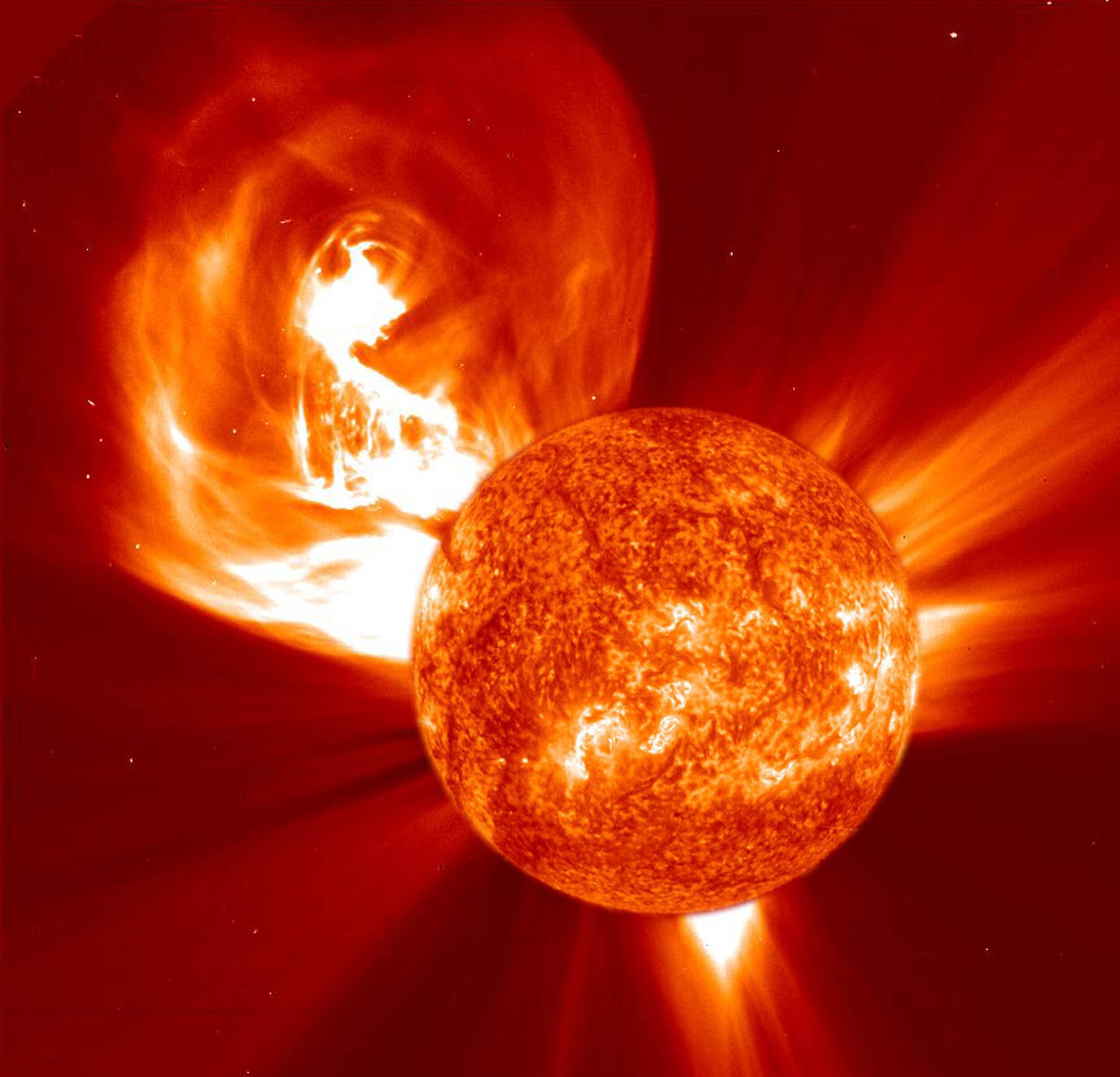
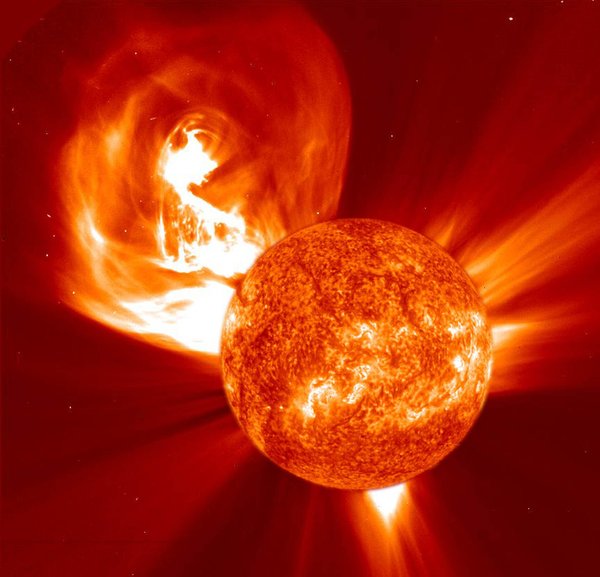
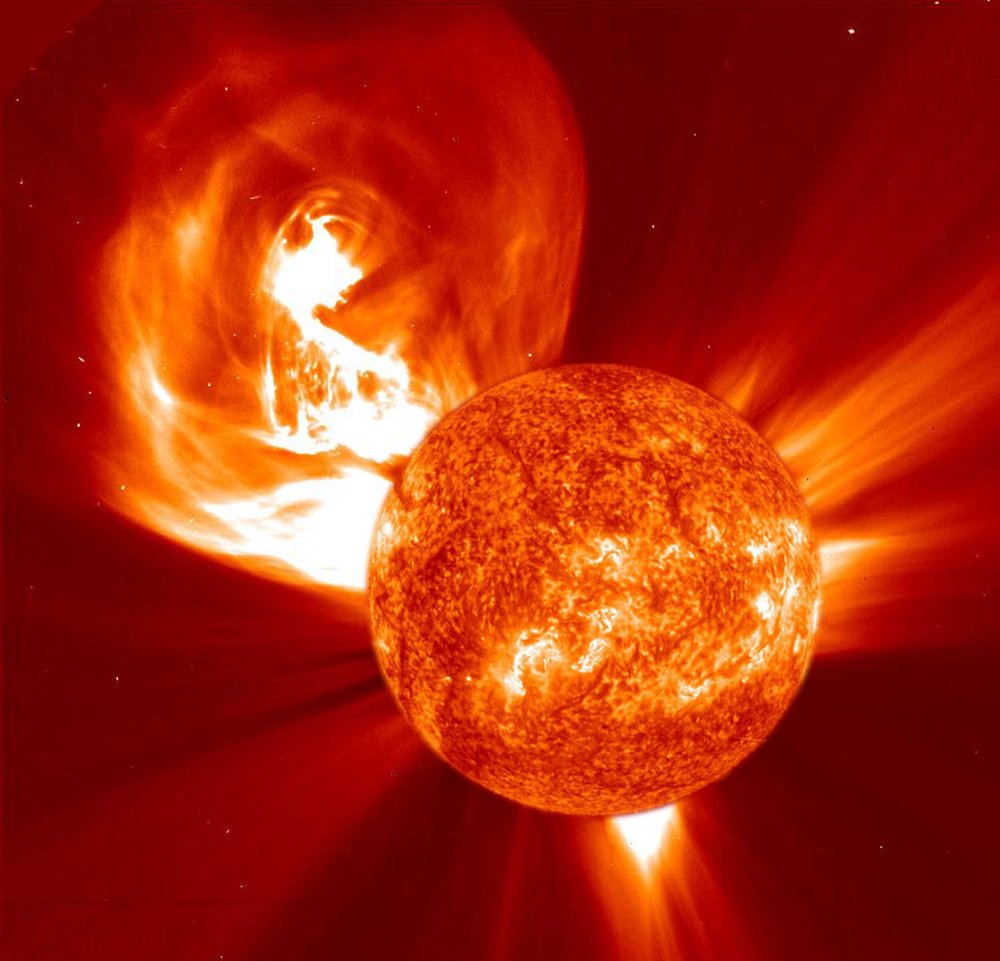
A coronal mass ejection of the Sun, observed by the Solar and Heliospheric Observatory (SOHO). Such events occur regularly at the Sun, but are very rarely observed for other stars.
Credit: SOHO/ESA/NASAAn international team of astrophysicists and plasma physicists has provided the first experimental evidence that strong magnetic fields surrounding active stars can completely suppress coronal mass ejections. This gives clues to understanding why massive stellar eruptions are rarely observed on stars other than the Sun.
Coronal mass ejections (CMEs) are giant expulsions of huge amounts of magnetised plasma from a star’s atmosphere into space. They play a major role in shaping stellar evolution, driving mass and angular momentum loss, and influencing the space weather environments of orbiting planets. While they are routinely observed on the Sun, convincing detections around other stars have remained surprisingly scarce.
The current study, recently published in the scientific journal “Physical Review Letters”, combines astrophysical simulations, high-energy laser-plasma experiments, and advanced 3D plasma numerical modelling. The results show that strong magnetic fields of active stars can completely suppress CMEs before they escape into space. “The unique combination of theory, laboratory tests, and numerical simulations provides the first experimental evidence supporting a long-standing prediction that stellar magnetic fields can confine these large-scale eruptions.” explains Julián D. Alvarado-Gomez, senior scientist in the Stellar Physics and Exoplanets research group at the Leibniz Institute for Astrophysics Potsdam (AIP). He contributed the astrophysical modeling that connects the laboratory experiments to real stellar environments.
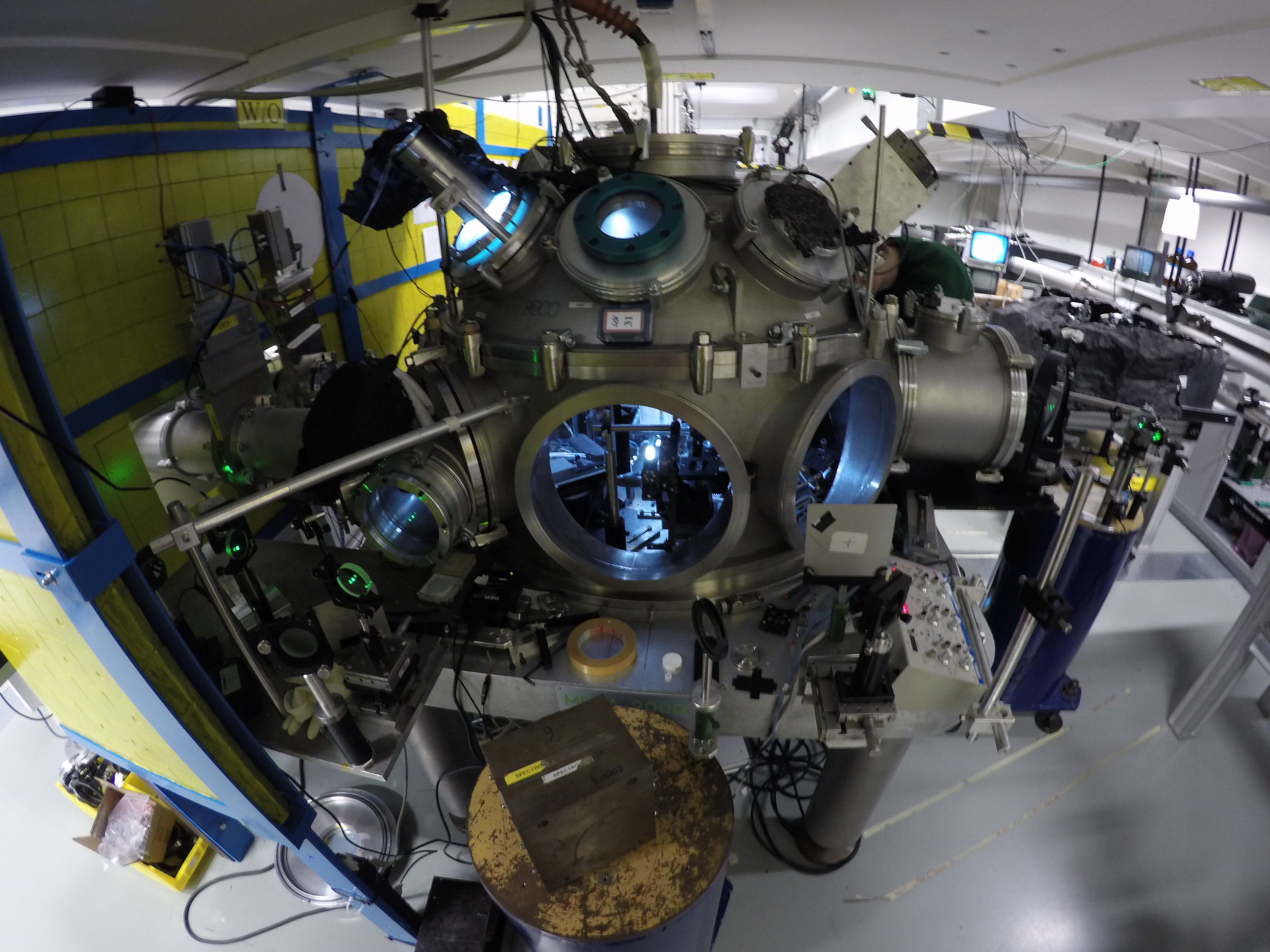
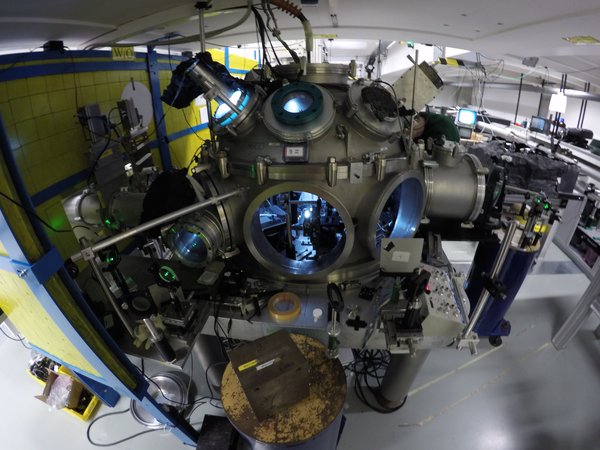
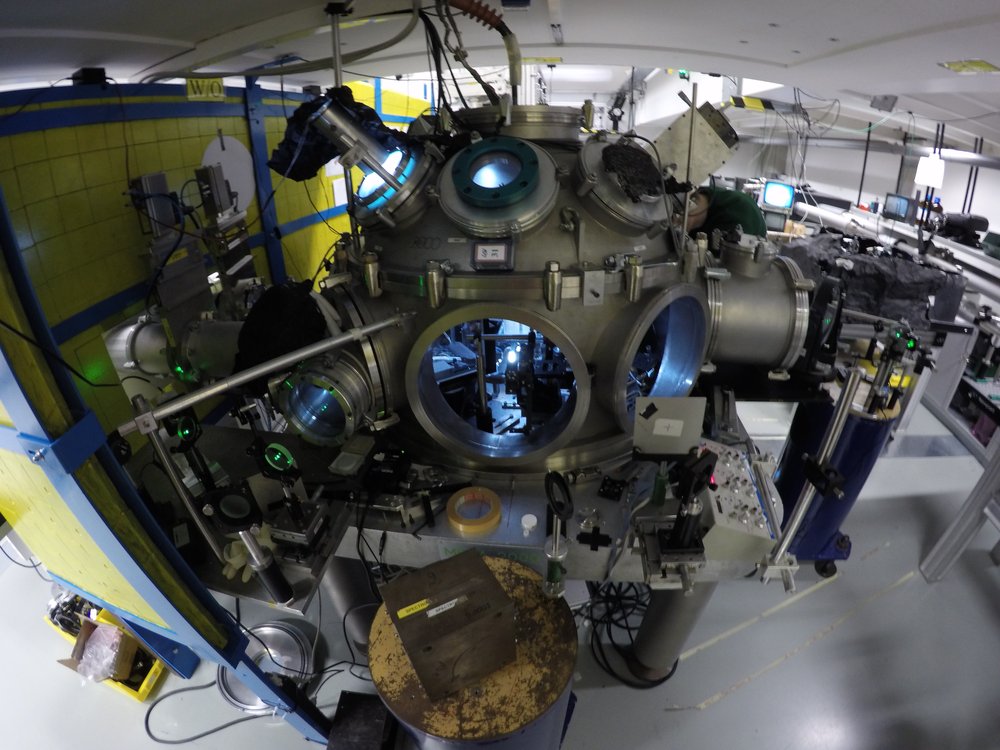
The laboratory set-up at the Ecole Polytechnique where the experiments for recreating stellar eruptions were performed.
Credit: Julien Fuchs, Sorbonne Université, Ecole PolytechniqueUsing scaling laws that faithfully reproduce astrophysical conditions, the international team generated laser-driven plasma flows in the laboratory to mimic the core of stellar CMEs. When exposed to relatively weak ambient magnetic fields, the plasma propagated freely. However, stronger magnetic fields caused the flow to fragment, become unstable, and ultimately stop altogether. “This actually came as a surprise when we were increasing the magnetic field strength and observed the change in behaviour of the propagating plasma, but this is the essence of experimental discovery”, says Julien Fuchs, then senior scientist at LULI/CNRS in France and now professor at Technion in Israel.
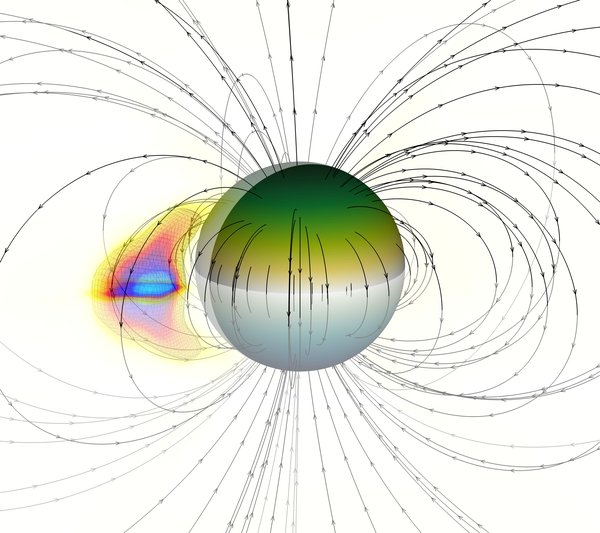
Detailed numerical plasma simulations identified a kink instability as the physical mechanism responsible for disrupting the eruption. In the laboratory experiment the eruption was triggered by the laser hitting the target, increasing its thermal pressure and causing the plasmoid to expand and move. The kink instability occurred on the plasma flow when the external magnetic field was strong enough causing it to bend and even travel backwards. This helps to understand why CMEs are so rare for stars: Although active stars produce enormous flares that should also generate powerful CMEs, the new results indicate that many of these eruptions may never escape the star at all, instead becoming trapped by the surrounding large-scale magnetic field.
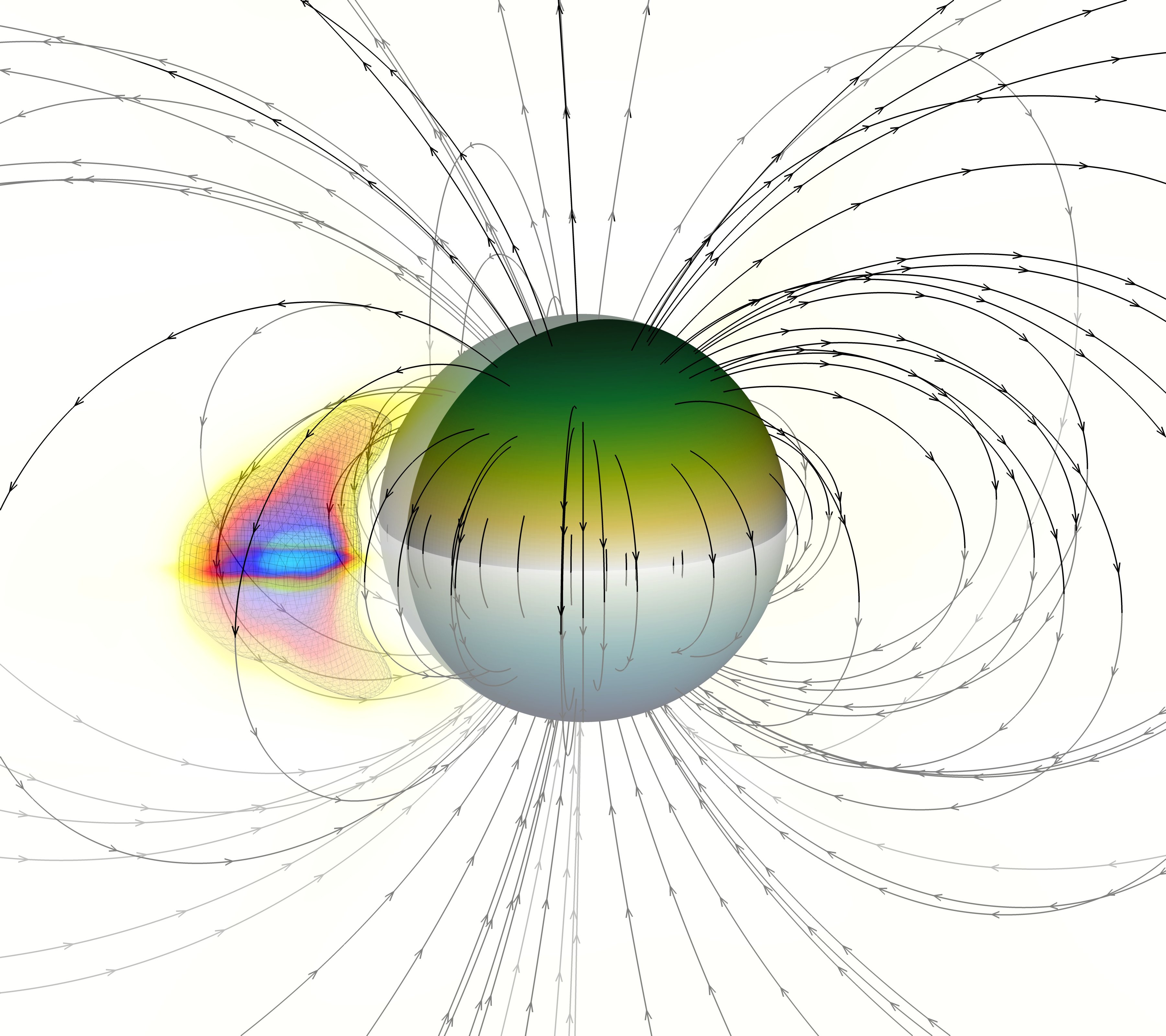
Computer simulation of a coronal mass ejection for a star (green) with a strong magnetic field (lines). The eruption is confined by the magnetic field and thus does not escape the star.
Credit: AIP/J. Alvarado-GómezThe findings also have important implications for exoplanets: CMEs represent an extreme form of stellar space weather and can even strip the planetary atmospheres or change their chemistry, thus affecting the long-term habitability of planets. If many CMEs are magnetically suppressed, some exoplanets may be exposed to a less hostile space environment than previously anticipated, improving their prospects for retaining atmospheres over billions of years.
The research was supported by the European Research Council (ERC) Project GENESIS, ELI-NP, the Romanian Ministry of Research and Innovation, the U.S. National Science Foundation (NSF), and major French and European high-performance computing infrastructures.
Further information
Publication
S. N. Chen, K. Burdonov, W. Yao, J-D. Alvarado-Gómez et al.: “Experimental evidence for coronal mass ejection suppression in strong stellar magnetic fields”, Physical Review Letters,
DOI:10.1103/hm32-h8q3
Images
A coronal mass ejection of the Sun, observed by the Solar and Heliospheric Observatory (SOHO). Such events occur regularly at the Sun, but are very rarely observed for other stars.
Big screen size [1000 x 961, 110 KB]
Original size [2495 x 2400, 330 KB]
The laboratory set-up at the Ecole Polytechnique where the experiments for recreating stellar eruptions were performed.
Big screen size [1000 x 750, 130 KB]
Original size [4000 x 3000, 1.4 MB]
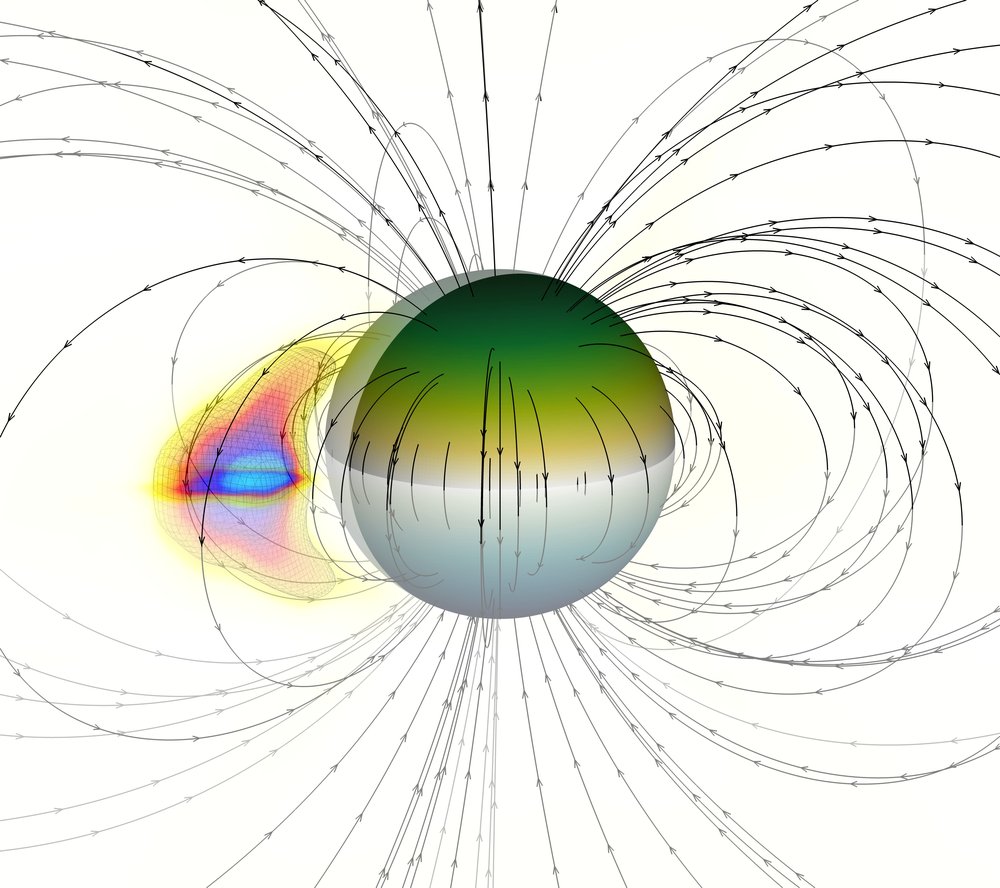
Computer simulation of a coronal mass ejection for a star (green) with a strong magnetic field (lines). The eruption is confined by the magnetic field and thus does not escape the star.
Big screen size [1000 x 888, 140 KB]
Original size [3600 x 3200, 830 KB]