Virtual lecture: Babelsberg Starry Night on 21st May 2026
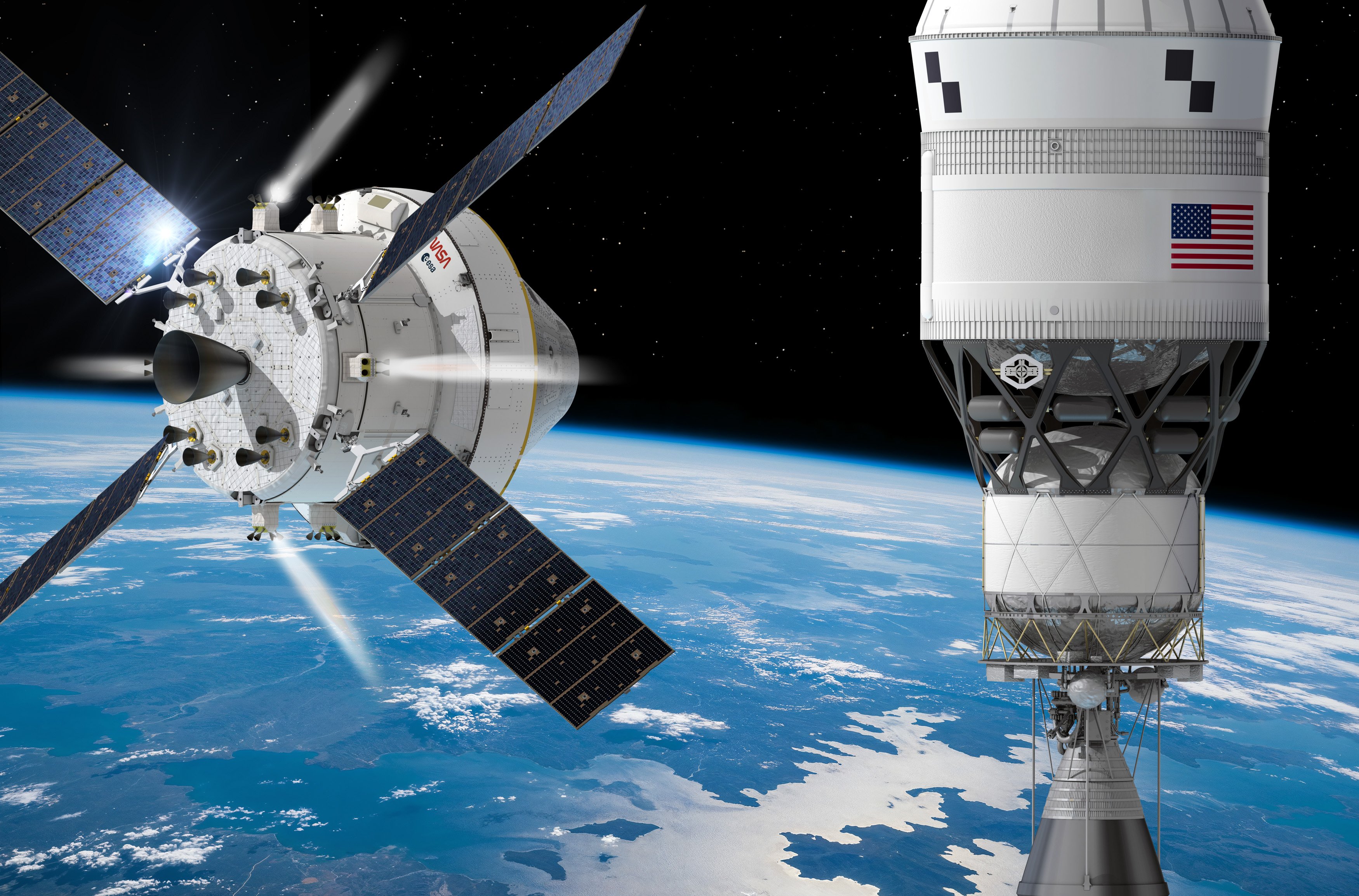
Artist's impression of the Orion space capsule with the astronauts and the European Service Module
Credit: ESA/D. DucrosIn the next talk of the Virtual Babelsberg Starry Nights, Dr. Mirko Krumpe speaks about the recent Artemis mission: "Artemis II: To the moon and back". Those who missed the live talk at AIP in April or who want to enjoy it again, can watch the virtual version of the talk at Thursday, 21st May, 8 pm, on the YouTube channel “Urknall, Weltall und das Leben” (Big Bang, Universe and Life).
Dr Mirko Krumpe is a researcher in the ‘X-ray Astronomy’ research group at the AIP and has extensive experience with satellites, particularly through his work on eROSITA and with XMM-Newton. In his virtual lecture, he takes us on a journey ‘To the Moon and Back’. He does not only explain the background and course of the Artemis II mission, but also highlights the various challenges – both minor and major – that the astronauts had to overcome on their journey before they could successfully orbit the Moon and return safely to Earth.
Usually on the 3rd Thursday of each month, starting at 8 p.m., the lectures of the Babelsberg Starry Nights become available at
https://www.aip.de/babelsberger-sternennaechte
and via the YouTube channels "Urknall, Weltall und das Leben" (Big Bang, Universe and Life) or "videowissen" and can be viewed afterwards at any time.
Artist's impression of the Orion space capsule with the astronauts and the European Service Module
Credit: ESA/D. DucrosIn the next talk of the Virtual Babelsberg Starry Nights, Dr. Mirko Krumpe speaks about the recent Artemis mission: "Artemis II: To the moon and back". Those who missed the live talk at AIP in April or who want to enjoy it again, can watch the virtual version of the talk at Thursday, 21st May, 8 pm, on the YouTube channel “Urknall, Weltall und das Leben” (Big Bang, Universe and Life).
Dr Mirko Krumpe is a researcher in the ‘X-ray Astronomy’ research group at the AIP and has extensive experience with satellites, particularly through his work on eROSITA and with XMM-Newton. In his virtual lecture, he takes us on a journey ‘To the Moon and Back’. He does not only explain the background and course of the Artemis II mission, but also highlights the various challenges – both minor and major – that the astronauts had to overcome on their journey before they could successfully orbit the Moon and return safely to Earth.
Usually on the 3rd Thursday of each month, starting at 8 p.m., the lectures of the Babelsberg Starry Nights become available at
https://www.aip.de/babelsberger-sternennaechte
and via the YouTube channels "Urknall, Weltall und das Leben" (Big Bang, Universe and Life) or "videowissen" and can be viewed afterwards at any time.