Willkommen!

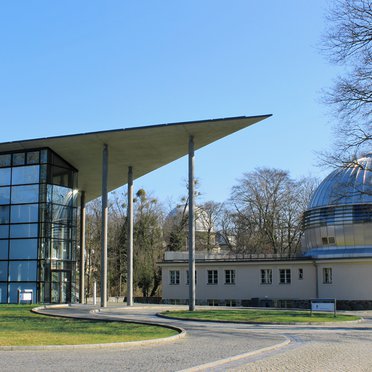
Das Leibniz-Institut für Astrophysik Potsdam (AIP) widmet sich astrophysikalischen Fragen, die von der Untersuchung unserer Sonne bis zur Entwicklung des Kosmos reichen. Seine Schwerpunkte liegen in der Erforschung der Sternphysik, Sonnenphysik und Exoplaneten, in der extragalaktischen Astrophysik sowie in der Entwicklung von Forschungstechnologien in den Bereichen Spektroskopie, robotische Teleskope und E-Science.

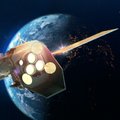
Artemis_II_proximity_operations
BOX_Campus
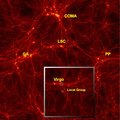
hubbleflow_no_text
Sun-magnetic_field_lines
MUSE Ultra Deep Field

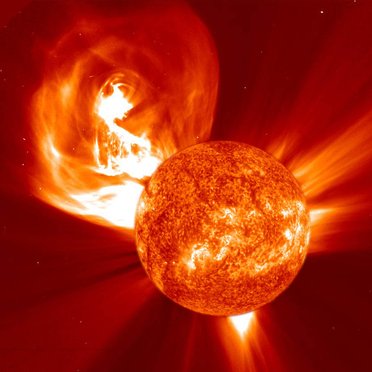
Im nächsten Vortrag der virtuellen Babelsberger Sternennächte spricht Dr. Mirko Krumpe über die Artemis-Mission: „Artemis II: Einmal Mond und zurück“. Wer den Live-Vortrag im April am AIP verpasst hat oder ihn einfach noch mal genießen möchte, kann den virtuellen Vortrag ab Donnerstag, 21. Mai 2026, 20 Uhr, auf dem YouTube-Kanal „Urknall, Weltall und das Leben“ anschauen.

[mehr]

Mit dem neuen Leibniz-WissenschaftsCampus „Multiscale Challenges: from Astrophysics to Climate Models“ bündelt die Leibniz Gemeinschaft erstmals Expertise aus Astrophysik, Klimaforschung und angewandter Mathematik. Zugleich markiert die Förderung einen Meilenstein für Brandenburg.

[mehr]

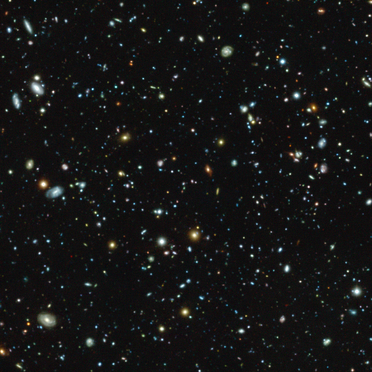
Zwei neue Studien haben die Expansion des Universums in unserer unmittelbaren kosmischen Nachbarschaft mit einer neuartigen Methode gemessen. Sie analysiert die Bewegung zweier nahegelegener Galaxiengruppen innerhalb ihres umgebenden kosmischen Flusses. Die Ergebnisse deuten darauf hin, dass sich das lokale Universum langsamer ausdehnt als bisher angenommen.

[mehr]

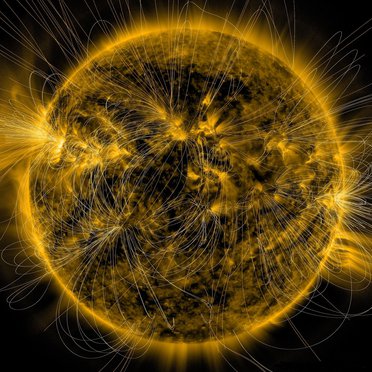
Das kosmische Geschehen wird von zwei Naturkräften bestimmt: der Gravitation und den Magnetfeldern. Die Magnetfeld-Forschungen am AIP konzentrieren sich im Wesentlichen auf Fragestellungen der magnetohydrodynamischen (MHD) Simulationsrechnung, der magnetisch bedingten Aktivitäten auf der Sonne und den Sternen, der solaren Koronaphysik sowie des Weltraumwetters in unserem Sonnensystem und bei Planeten um andere Sterne.

[mehr]

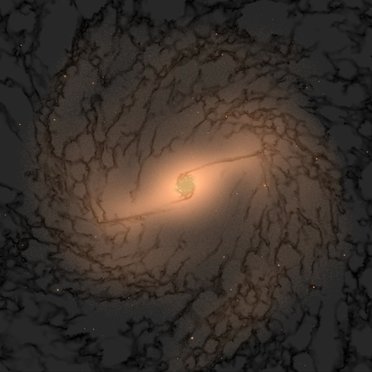
Galaxien sind grundlegende Bausteine des Kosmos. Auf den größten Skalen dienen sie als Marker, um die Verteilung der Materie im Universum zu untersuchen - aktive Galaxien und Quasare sind aufgrund ihrer intrinsischen Helligkeit besonders wichtig. Nahe Objekte lassen sich räumlich auflösen und bestehen aus Populationen mit sehr unterschiedlichen Bewegungsmustern, Sternentstehungsgeschichten und chemischen Häufigkeiten.

[mehr]

Im nächsten Vortrag der virtuellen Babelsberger Sternennächte spricht Dr. Mirko Krumpe über die Artemis-Mission: „Artemis II: Einmal Mond und zurück“. Wer den Live-Vortrag im April am AIP verpasst hat oder ihn noch einmal genießen möchte, kann den virtuellen Vortrag ab Donnerstag, 21. Mai 2026, 20 Uhr, auf dem YouTube-Kanal „Urknall, Weltall und das Leben“ anschauen.

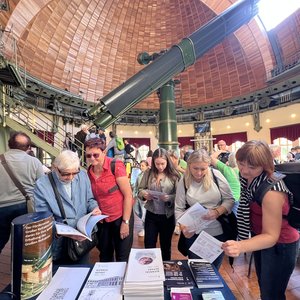
Am Infostand des Leibniz-Instituts für Astrophysik Potsdam (AIP) auf dem Potsdamer Tag der Wissenschaften 2026 nehmen wir die Besucherinnen und Besucher mit auf eine Reise durch das All.

Das Leibniz-Institut für Astrophysik Potsdam (AIP) veranstaltet ab dem 4. Mai eine internationale Tagung mit dem Titel „The Legacy and Future of Large Surveys: The Milky Way in Context“. Das fünftägige Treffen bringt führende Expertinnen und Experten für stellare Durchmusterungen, galaktische Dynamik, chemo-dynamische Modellierung und kosmologische Simulationen zusammen, um zu untersuchen, wie großskalige Daten unser Verständnis der Milchstraße verändern.


Aktuelle Publikationen

High resolution spectroscopy of comet C/2023 A3 (Tsuchinshan─ATLAS) from LBT/PEPSI observations

Munaretto, G., ... Ilyin, I., ...
Icarus, 455, 117124 – Veröffentlicht September 2026

Structural Parameters of the Globular Cluster M15

Petkova, M. V., Petrov, G. P., Kacharov, N. M., Nedialkov, P. L.
Research in Astronomy and Astrophysics, 26, 6, 065020 – Veröffentlicht Juni 2026

C IV wind properties of the SDSS-V X-ray selected quasars: strong optical-to-UV emission is key regardless of X-ray strength

Rankine, A. L., Homan, D., ... Krumpe, M., Lamer, G., ... Tubín-Arenas, D., ...
Monthly Notices of the Royal Astronomical Society, 548, 4, stag734 – Veröffentlicht Juni 2026

Observational Constraints on the Origin of the Elements. X. Combining Non─Local Thermodynamic Equilibrium and Machine Learning for Chemical Diagnostics of 4 Million Stars in the 4MIDABLE-HR Survey

Storm, N., ... Sun, W., ...
The Astrophysical Journal, 1003, 1, 27 – Veröffentlicht Mai 2026

Warped and Hooked: Mapping the Magellanic Clouds in Three Dimensions Using Red Clump Stars

Oden, S. J., ... Cioni, M.-R. L., ... Cullinane, L., ...
The Astrophysical Journal, 1003, 1, 9 – Veröffentlicht Mai 2026

An FUV-optical Approach for Studying Hierarchical Star Formation in Nearby Galaxies with UVIT

Ananthu, S., ... Subramanian, S., ...
The Astrophysical Journal, 1002, 2, 220 – Veröffentlicht Mai 2026

Double White Dwarf Binaries in SDSS-V DR19: A Catalog of DA White Dwarf Binaries and Constraints on the Binary Population

Adamane Pallathadka, G., ... Schwope, A. D., ...
The Astrophysical Journal, 1002, 2, 207 – Veröffentlicht Mai 2026

Plasma Dynamics of Radiative Cooling Accretion Flow in AM Herculis with XRISM

Terada, Y., ... Schwope, A. D., ...
The Astrophysical Journal, 1002, 2, 196 – Veröffentlicht Mai 2026

Stars Born in the Wind. II. Widespread Extra-planar Star Formation in M82's Halo

Rao, V. V., ... de Jong, R. S.
The Astrophysical Journal, 1002, 2, 133 – Veröffentlicht Mai 2026

Coronal mass ejection precursors in Sun-like stars: Flux rope modelling and coronal signatures

Cécere, M., Costa, A., Amazo-Gómez, E. M., Alvarado-Gómez, J. D.
Astronomy and Astrophysics, 709, A169 – Veröffentlicht Mai 2026

MUSE-DARK: II. 3D morpho-kinematic modelling of lensed galaxies: Tully-Fisher relation of z ∼ 1 star-forming galaxies

Jeanneau, A., ... Krajnović, D., ...
Astronomy and Astrophysics, 709, A120 – Veröffentlicht Mai 2026

Prominence signatures in the Fraunhofer G-band: Testing ionization memory with multi-line prominence diagnostics

Pietrow, A. G. M., Balthasar, H., ... Kamlah, R., Stork, A., Denker, C., Verma, M.
Astronomy and Astrophysics, 709, A137 – Veröffentlicht Mai 2026

Accurate spectroscopic redshift estimation using nonnegative matrix factorization: Application to MUSE spectra

Bourahma, M., ... Urrutia, T., ...
Astronomy and Astrophysics, 709, A129 – Veröffentlicht Mai 2026

BlazEr1: The eROSITA blazar catalog: Blazars and blazar candidates in the first eROSITA survey

Hämmerich, S., ... Bahic, S., Tubín-Arenas, D., Krumpe, M., Homan, D., ...
Astronomy and Astrophysics, 709, A37 – Veröffentlicht Mai 2026

Confirmation of Fe I on MASCARA-5 b's Dayside Observed With EXPRES

Sikora, J. T., ... Désert, J.-M., ...
The Astronomical Journal, 171, 5, 322 – Veröffentlicht Mai 2026

Changing-look Active Galactic Nuclei in SDSS-V: Host-galaxy Properties and Black Hole Scaling Relations

Zeltyn, G., ... Krumpe, M., ...
The Astrophysical Journal, 1002, 1, 61 – Veröffentlicht Mai 2026

Emission-line Variable Active Galactic Nuclei at Cosmic Noon from HETDEX

Liu, C., ... Krumpe, M., ... Powell, M. C., ...
The Astrophysical Journal Supplement Series, 284, 1, 12 – Veröffentlicht Mai 2026

Antisolar Differential Rotation May Have Revived Magnetic Braking in the Subgiant 31 Aquilae

Metcalfe, T. S., ... Ilyin, I. V., ... Strassmeier, K. G.
The Astronomical Journal, 171, 5, 287 – Veröffentlicht Mai 2026

Steady-state or not? The evolution of cosmic ray electron spectra in galaxies

Werhahn, M., Pfrommer, C., Whittingham, J., Jlassi, L., ...
Monthly Notices of the Royal Astronomical Society, 548, 3, stag682 – Veröffentlicht Mai 2026

A striking excess of red quasars with steep radio spectral slopes: a dusty blow-out phase revealed through AGN-driven shocks?

Sargent, C. L., ... Meenakshi, M., ...
Monthly Notices of the Royal Astronomical Society, 548, 2, stag597 – Veröffentlicht Mai 2026

[Liste der AIP Publikationen] [AIP Publikationen im ADS]

21.05.2026, 14:30 – 15:30
Wissenschaftliches

Speaker: Alessandro Morbidelli (Observatoire de la Cote d'Azur | Nice, France)
Title: Formation and evolution of a protoplanetary disk: combining observations, simulations and cosmochemical constraints

21.05.2026, 20:00 – 21:00
Öffentliches

Vortrag: Artemis II - Einmal Mond und zurück (Mirko Krumpe)

01.06.2026 – 05.06.2026
Wissenschaftliches
04.06.2026, 14:30 – 15:30
Wissenschaftliches

Speaker: Eric F. Bell (University of Michigan)
Title: TBD

05.06.2026, 19:30 – 22:00
Öffentliches

Benefizkonzert im Großen Refraktor auf dem Telegrafenberg mit Axel Schwope als Solist. Nur nach vorheriger Anmeldung.

09.06.2026, 14:30 – 15:30
Wissenschaftliches

Speaker: Junais (AIP)
Title: Identification and characterisation of dwarf galaxies from Euclid observations using foundation models

16.06.2026, 14:30 – 15:30
Wissenschaftliches

Speaker: Geraint Lewis (University of Sydney)
Title: TBD

16.06.2026, 14:30 – 15:30
Internes
18.06.2026, 14:30 – 15:30
Wissenschaftliches

Speaker: Serena Criscuoli (National Solar Observatory | Boulder, CO, USA)
Title: TBD

18.06.2026, 20:00 – 21:00
Öffentliches

Vortrag: Licht lesbar machen (Daniel Sablowski)

25.06.2026, 14:30 – 15:30
Wissenschaftliches

Speaker: Paul Groot (UCT/SAAO and Radboud University)
Title: Ultra-compact binaries and gravitational-wave progenitors

30.06.2026 – 02.07.2026
Wissenschaftliches
01.07.2026, 15:00 – 18:00
Internes
07.07.2026, 14:30 – 15:30
Wissenschaftliches

Speaker: Kaffeerunde (AIP)
Title: Kaffeerunde

Speaker: Nic Scott (Georgia State University (The CHARA Array))
Title: Recent technical and scientific highlights from the CHARA Array

Öffentliches
Wissenschaftliches
Internes
Feiertage