News

Here you can find latest news and event announcements of the AIP. Older news can be browsed in the News archive.
On 1 August 2026, Jaromír Balcar began conducting research at the ZZF in Potsdam into the history of the city’s major scientific research institutions during periods of political upheaval in the first half of the 20th century.

The ESPD Patricia Edwin PhD Thesis Prize, which is given annually to recognise outstanding doctoral theses in the field of solar physics, has been awarded this year to Dr Robert Kamlah. The prize honours his high-resolution spectroscopic observations, through which he has significantly advanced our understanding of the formation and dynamics of sunspots.

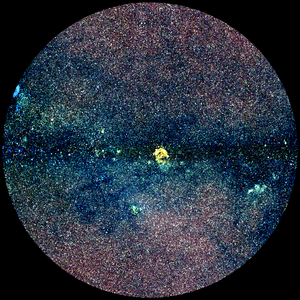
The German eROSITA Consortium (eROSITA-DE), with the participation of the Leibniz Institute for Astrophysics Potsdam (AIP), has released its second major public dataset, eROSITA Data Release 2 (DR2). Built from the first three all-sky scans of the eROSITA telescope aboard the Spectrum-Roentgen-Gamma (SRG) mission, DR2 provides the most sensitive and comprehensive catalogue of the X-ray sky currently available to the public.

As part of the Long Night of Astronomy, the AIP is offering a special program for the partial solar eclipse on August 12, 2026.The event starts with talks from the Solar Physics research group, then visitors have the opportunity to watch the Sun in Park Babelsberg.

A new ultra-faint dwarf galaxy has been discorved in the vicinity of Andromeda (M31), the Milky Way’s large neighbouring galaxy. The study suggests that the galaxy named And XXXVI is one of the faintest satellite galaxies discovered around Andromeda to date.

On Saturday the 26th of September 2026, the Telegrafenberg will welcome visitors for an open day from 12 pm to 5 pm. The Alfred Wegener Institute (AWI), Potsdam Institute for Climate Impact Research (PIK), GFZ Helmholtz Centre for Geosciences and the Leibniz Institute for Astrophysics Potsdam (AIP) invite the public to get a close-up look at the ‘Albert Einstein’ Science Park and the top-level research carried out there.

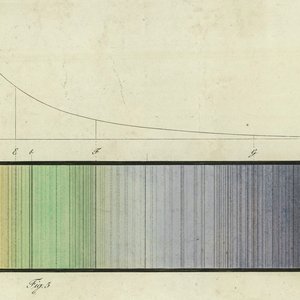
On Thursday, a new lecture from the virtual Babelsberg Starry Nights series will be published on YouTube: Dr. Daniel Sablowski will present how astronomers are “Analysing light”. The video will be available from 18th June, 8 pm, on the YouTube channel “Urknall, Weltall und das Leben” (Big Bang, Universe and Life).

An artificial star above Potsdam became a visible symbol on Monday evening of a success story from the Berlin-Brandenburg region. During a joint event hosted by the Leibniz Institute for Astrophysics Potsdam (AIP) and TOPTICA EAGLEYARD, representatives from science, industry, and business came together to recognize the international significance of the German capital region as a center for photonics, laser, and space technologies.

The Hobby-Eberly Telescope Dark Energy Experiment (HETDEX) - which recently completed the largest survey ever taken of the early universe - has released all of its immense, information-rich database to the public. It will allow astronomers to study how the first galaxies formed and evolved, measure how gas and stars were distributed within these galaxies, map the large-scale structure of the cosmos, and investigate rare and unexpected objects.

New stellar motion measurements reveal that the Small Magellanic Cloud is expanding and out of equilibrium due to interactions with the Large Magellanic Cloud. A new study presents the most detailed map yet of stellar motions, uncovering clear evidence that the nearby dwarf galaxy is being stretched and disrupted even in its central region by gravitational interactions from its larger neighbour.

The Leibniz Institute for Astrophysics Potsdam (AIP) and the Centro Astronómico Hispano en Andalucía, Observatorio de Calar Alto (CAHA), jointly celebrate 25 years of operation of PMAS, the Potsdam Multi-Aperture Spectrophotometer: It was on May 29th, 2001, when the PMAS team, supported by CAHA staff, achieved First Light for the then new instrument at the 3.5m Telescope on Calar Alto.

In the next talk of the Virtual Babelsberg Starry Nights, Dr. Mirko Krumpe speaks about the recent Artemis mission: "Artemis II: To the moon and back". Those who missed the live talk at AIP in April or who want to enjoy it again, can watch the virtual version of the talk at Thursday, 21st May, 8 pm, on the YouTube channel “Urknall, Weltall und das Leben” (Big Bang, Universe and Life).

More news are available in the News archive.